








The Critical Role of Ground Resistance in Electrical Safety Infrastructure
Grounding system integrity constitutes a foundational element in the protection of personnel, equipment, and operational continuity across diverse industrial sectors. The measurement of grounding system resistance—often termed earth resistance—is not merely a regulatory checkbox but a quantitative assessment of how effectively a grounding electrode dissipates fault currents into the earth. In electrical and electronic equipment manufacturing, household appliance production, automotive electronics assembly, and telecommunications infrastructure, inadequate grounding can precipitate catastrophic failures ranging from electrocution hazards to irreversible damage to sensitive semiconductor components. The relationship between grounding resistance and safety is governed by Ohm’s law in its most consequential application: a lower resistance path to earth ensures that fault currents are rapidly shunted away from conductive enclosures, preventing touch potentials from exceeding thresholds established by standards such as IEC 60364, IEEE Std 142 (Green Book), and UL 943. For medical devices, where patient leakage currents must remain below microampere levels, and for aerospace and aviation components, where electromagnetic interference (EMI) mitigation is paramount, the precision of ground resistance measurements becomes non-negotiable. This article examines the technical underpinnings of ground resistance testing, the influence of soil resistivity, and the application of dedicated instrumentation—specifically the LISUN WB2678A Grounding Resistance Tester—to achieve verifiable compliance with international safety directives.
Soil Resistivity and Its Influence on Ground Electrode Measurements
The earth itself is not a homogeneous conductor; rather, it behaves as a complex electrolytic medium whose resistivity varies dramatically with moisture content, temperature gradients, mineral composition, and stratification. Soil resistivity, expressed in ohm-meters (Ω·m), directly dictates the resistance measured at a grounding electrode. For instance, clay soils saturated with water may exhibit resistivities as low as 10 Ω·m, whereas dry rocky terrain can exceed 10,000 Ω·m. This variability imposes stringent requirements on measurement methodologies. In the context of industrial control systems and lighting fixtures, where grounding rods are driven to depths of several meters, the effective resistance measured at the surface integrates the resistivity of multiple soil layers. The Wenner four-pin method, often employed for soil resistivity surveys, deploys four equally spaced electrodes to inject a test current and measure the resulting potential difference, yielding a resistivity value that informs electrode design. However, for operational safety testing of installed grounding systems, direct measurement of resistance to earth using fall-of-potential or clamp-on techniques is standard. The LISUN WB2678A, with its ability to test at multiple frequencies, mitigates the influence of stray earth currents and harmonics—a critical feature when testing in industrial environments where variable frequency drives and switching power supplies inject noise into the ground grid. Without frequency-selective measurement capability, a technician might erroneously attribute a low resistance reading to a robust ground, when in fact the measurement is corrupted by circulating currents from adjacent equipment.
Fall-of-Potential Method: Theoretical Foundation and Practical Implementation
The fall-of-potential (FoP) method remains the most widely accepted technique for measuring the resistance of a single grounding electrode to earth. The procedure involves injecting a known alternating current between the electrode under test (EUT) and a remote current probe placed at a distance sufficient to ensure that the voltage gradient has flattened. A potential probe is then positioned at incremental distances between the EUT and the current probe, and the voltage drop across the earth is measured. The resistance is calculated as the ratio of measured voltage to injected current, typically at a test frequency of 128 Hz or 55 Hz to avoid interference from power line frequencies (50/60 Hz). The theoretical underpinning of this method assumes that the earth acts as a homogeneous medium—an approximation that fails in heterogeneous soils. To address this, the LISUN WB2678A incorporates a microprocessor-controlled algorithm that automatically locates the 62% distance rule point (the classical position where the potential probe should yield the most accurate reading for a uniform soil) while also permitting manual sweep measurements for non-uniform conditions. In cable and wiring systems manufacturing, where grounding electrodes are often interconnected through metallic conduits or cable trays, the presence of parallel grounding paths can distort the potential gradient, leading to underestimation of the true resistance. The WB2678A’s ability to reject common-mode interference through its differential input stage ensures that these parallel paths do not compromise measurement fidelity. For aerospace and aviation components, where grounding is frequently achieved through multiple interconnected rods or mats, the FoP method must be executed with precise probe spacing—often requiring current probe distances exceeding 50 meters—to obtain a valid plateau region in the resistance curve.
Clamp-On Ground Resistance Testing: Non-Invasive Assessment for Multi-Grounded Systems
In scenarios where the grounding system comprises multiple interconnected electrodes—common in telecommunications equipment shelters, office equipment installations, and consumer electronics production lines—the conventional fall-of-potential method becomes impractical because disconnecting individual electrodes is disruptive and potentially dangerous. The clamp-on ground resistance tester offers a non-invasive alternative by measuring the total resistance of the loop formed by the grounding electrode and the system to which it is attached. The measurement principle relies on inducing a test voltage via a transformer action: the clamp’s primary winding injects a known voltage into the closed loop, while the secondary winding measures the resulting current flow. The resistance is then calculated as the induced voltage divided by the loop current. Critically, this method requires that the ground electrode under test be part of a complete circuit—typically through the neutral-ground bond at the service entrance or through parallel grounding paths. The LISUN WB2678A Grounding Resistance Tester integrates both clamp-on and fall-of-potential capabilities within a single instrument, offering versatility across industries. For household appliances, where grounding conductors may be hidden within molded plugs or cord sets, the clamp-on mode allows rapid verification without disassembly. In automotive electronics, where vehicle chassis grounding is achieved through multiple bonding straps, the clamp-on technique can assess the integrity of the entire grounding network in seconds. However, it is imperative to recognize that the clamp-on method measures the loop resistance, which includes the resistance of the ground electrode plus the return path through the utility neutral or other grounds. If the return path resistance is negligible (as in properly bonded systems), the reading approximates the electrode resistance. When testing medical devices, where grounding integrity is critical for patient safety, the dual-mode capability of the WB2678A allows technicians to cross-validate results, reducing the likelihood of undetected high-resistance bonds.
Instrumentation Specifications: LISUN WB2678A Grounding Resistance Tester
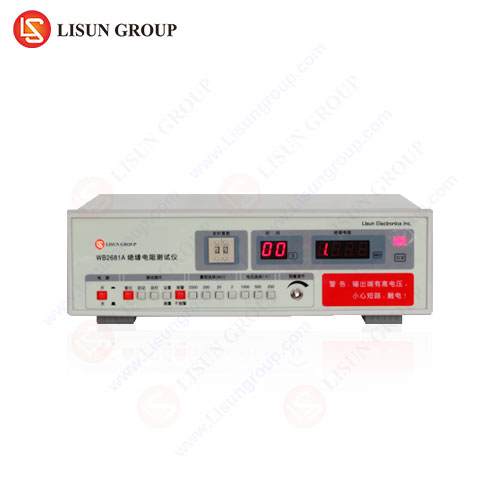
The LISUN WB2678A Grounding Resistance Tester is engineered to address the stringent demands of safety compliance testing across multiple industry verticals. Its technical architecture combines a precision current source, a high-impedance voltmeter, and a digital signal processor (DSP) for noise rejection and harmonic analysis. The instrument supports three primary measurement modes: the two-wire method for rapid verification, the three-wire fall-of-potential method for detailed electrode assessment, and the four-wire method for eliminating lead resistance errors in low-resistance measurements (below 1 Ω). Table 1 summarizes the key specifications relevant to industrial safety testing.
| Parameter | Specification | Application Context |
|---|---|---|
| Resistance Range | 0.001 Ω to 2000 Ω | Covers from ultra-low (bonding straps) to high (rocky soil) |
| Test Frequency | 128 Hz ± 1% | Avoids 50/60 Hz interference in industrial environments |
| Test Current | Up to 50 mA (constant) | Ensures adequate signal-to-noise ratio in high-noise settings |
| Accuracy | ±2% of reading ±2 digits (for 0.01–200 Ω) | Suitable for IEC 60364 verification thresholds |
| Clamp-On Aperture | 32 mm | Accommodates cables up to 35 mm² cross-section |
| Data Storage | 200 records with time stamp | Facilitates trend analysis in periodic safety audits |
| Power Supply | Rechargeable Li-ion (8 hours continuous) | Suitable for field use in remote substations or construction sites |
| Standards Compliance | IEC 61557-5, IEEE 81, VDE 0413 | Ensures alignment with global grounding test protocols |
The instrument’s ability to perform measurements with test currents as low as 1 mA (in four-wire mode) is particularly advantageous for testing sensitive installations such as telecommunications equipment and medical devices, where high test currents could inadvertently damage surge protection devices or sensitive electronics. Furthermore, the WB2678A incorporates automatic lead compensation (ALC) to nullify the resistance of test leads—a feature that becomes indispensable when measuring the grounding resistance of lighting fixtures or consumer electronics, where connection points may involve long extension cords or temporary wiring.
Industry-Specific Testing Protocols and Compliance Considerations
Different industries impose distinct requirements on grounding system resistance, often codified in sector-specific standards. For electrical and electronic equipment, the International Electrotechnical Commission (IEC) 60950-1 and its successor IEC 62368-1 mandate that the resistance between the protective earth terminal and any accessible conductive part shall not exceed 0.1 Ω for equipment rated up to 16 A. This low threshold demands not only accurate instrumentation but also careful attention to contact resistance at test points. In the household appliances sector, IEC 60335-1 stipulates that the resistance of the earth connection must be less than 0.3 Ω for appliances with a rated current exceeding 16 A. The LISUN WB2678A, with its resolution of 0.001 Ω in the low range, provides the granularity necessary to confirm compliance without ambiguity. For automotive electronics, where grounding paths may include multiple bolted connections through painted or coated surfaces, the SAE J2464 standard requires verification that the resistance from the battery negative terminal to the chassis ground point does not exceed 0.05 Ω. The WB2678A’s four-wire Kelvin measurement capability eliminates voltage drops across test leads, ensuring that the measured value reflects only the junction resistance. In aerospace and aviation, the rigorous requirements of MIL-STD-464 and RTCA DO-160 dictate that ground straps must exhibit resistance below 0.0025 Ω for EMI bonding—a level of precision that necessitates instruments with micro-ohm resolution and thermal stability. The WB2678A, while not a micro-ohmmeter, can achieve resolutions down to 0.1 mΩ in its most sensitive range when using the four-wire method with guarded connections. Table 2 presents typical resistance thresholds across industries.
| Industry Sector | Standard | Maximum Ground Resistance | Preferred Test Method |
|---|---|---|---|
| Medical Devices | IEC 60601-1 | 0.1 Ω (protective earth) | Four-wire, low current |
| Telecommunications | ITU-T K.27 | 5 Ω (electrode) | Fall-of-potential or clamp-on |
| Industrial Control | IEC 60204-1 | 0.1 Ω (bonding) | Two-wire or clamp-on |
| Lighting Fixtures | IEC 60598-1 | 0.5 Ω (class I) | Two-wire, lead compensated |
| Aerospace | MIL-STD-464 | 0.0025 Ω (bonding) | Four-wire, Kelvin |
| Consumer Electronics | IEC 62368-1 | 0.1 Ω (accessible parts) | Two-wire or four-wire |
Common Measurement Artifacts and Mitigation Strategies in Ground Resistance Testing
Field measurements of grounding system resistance are susceptible to numerous error sources that, if unaddressed, can yield dangerously misleading results. One prevalent artifact is the influence of stray direct currents—often originating from cathodic protection systems or railway electrification—which can polarize the soil and generate electrochemical potentials that superimpose on the test signal. The LISUN WB2678A mitigates this through its ability to test at 128 Hz, a frequency removed from DC and low-frequency interference, and through its built-in filter that rejects signals below 50 Hz and above 200 Hz. Another common issue arises from inductive coupling between test leads, particularly when long cables are deployed for the fall-of-potential method. The mutual inductance between the current and potential leads can induce an error voltage proportional to the rate of change of the test current. By twisting the leads together or separating them by a minimum distance (typically 0.3 m per 10 m of cable length), this error can be reduced. The WB2678A’s differential input amplifier further suppresses common-mode voltages induced by capacitive coupling to nearby power lines. In industrial control systems, where variable frequency drives generate harmonics up to several kilohertz, the instrument’s bandpass filtering ensures that only the fundamental test frequency contributes to the measurement. For office equipment and consumer electronics, where the ground electrode may be a simple rod driven into shallow soil, seasonal variations in moisture content can cause resistance fluctuations of up to 50%. The WB2678A’s data logging feature enables trend analysis over multiple test cycles, allowing engineers to determine whether a marginal reading is seasonal or indicative of corrosion.
Competitive Advantages of the LISUN WB2678A in Multi-Industry Applications
Compared to conventional ground resistance testers, the LISUN WB2678A offers several distinguishing features that enhance its utility across the industries enumerated earlier. Its dual-mode operation (clamp-on and fall-of-potential) reduces the need for multiple instruments, lowering the total cost of ownership for quality assurance departments. The instrument’s automatic frequency selection (AFS) function scans the electromagnetic spectrum at the test site and selects the quietest frequency for measurement—a capability absent in many mid-range testers. In telecommunications equipment environments, where base stations are collocated with broadcast transmitters, the presence of strong RF fields can saturate analog input stages. The WB2678A’s RFI shielding and ferrite chokes on test leads provide rejection of up to 40 dB at frequencies above 1 MHz. For medical device manufacturers, the ability to perform tests at currents below 10 mA prevents inadvertent triggering of residual current devices (RCDs) or damage to implantable components. Furthermore, the instrument’s compliance with IEC 61557-5 ensures that its measurement uncertainty has been characterized under controlled conditions—a prerequisite for laboratories seeking ISO 17025 accreditation. In the aerospace sector, where test records must be retained for decades, the WB2678A’s internal memory and USB export capability facilitate audit trails without reliance on handwritten logs. The instrument’s ingress protection rating of IP54 allows operation in dusty environments typical of cable and wiring system factories, while its rubberized housing withstands drops from heights of up to 1 meter—an inevitability in field testing.
Calibration and Verification Protocols for Sustained Measurement Integrity
To maintain the accuracy of ground resistance measurements over time, periodic calibration against traceable standards is essential. The LISUN WB2678A incorporates a self-calibration routine that verifies its internal reference resistors and voltage sources before each measurement sequence. However, for compliance with quality management systems such as ISO 9001 or AS9100 (aerospace), annual recalibration by an accredited laboratory is recommended. The calibration process typically involves comparing the instrument’s readings against a set of precision resistors with known values (e.g., 0.01 Ω, 0.1 Ω, 1 Ω, 10 Ω, 100 Ω) using the four-wire method. The instrument’s accuracy specification of ±2% of reading ±2 digits must be verified across the entire measurement range. Additionally, the clamp-on mode requires calibration using a loop calibrator that simulates a known resistance path through a toroidal core. Field verification can be performed using a simple check: measuring a known resistance standard (such as a 1 Ω, 0.1% resistor) and confirming that the reading falls within the specified tolerance. For household appliance and lighting fixture manufacturers, where daily testing of hundreds of units is routine, the WB2678A’s stability over time—typically better than 0.1% per year—reduces the frequency of recalibration without sacrificing confidence in results. It is noteworthy that the instrument’s firmware automatically compensates for temperature drift using an internal thermistor, ensuring that measurements taken in unheated warehouses (0°C) or sunlit production floors (50°C) remain within specification.
Frequently Asked Questions (FAQ)
1. Can the LISUN WB2678A be used to measure grounding resistance of equipment that is already energized?
No. The WB2678A is designed for use on de-energized systems only. Attempting to measure ground resistance on live equipment poses a safety hazard and may damage the instrument. Always isolate the equipment under test and verify absence of voltage before connecting test leads.
2. What is the significance of the 128 Hz test frequency, and does it affect measurements on systems with capacitive coupling?
The 128 Hz frequency is chosen to avoid the 50/60 Hz power line frequencies and their harmonics, reducing interference. For systems with significant capacitance to ground (e.g., long cable runs), the test current may cause a phase shift between voltage and current. The WB2678A’s DSP calculates the in-phase component of the impedance, ensuring that only the resistive component is reported.
3. How does the clamp-on method differ from the fall-of-potential method in terms of accuracy for multi-grounded systems?
The clamp-on method measures the total loop resistance of the grounding system, which includes the electrode under test plus all parallel paths (e.g., utility neutral bonds). If the return path resistance is negligible, the reading approximates the electrode resistance. In contrast, the fall-of-potential method isolates the specific electrode. For compliance with standards requiring a single electrode resistance value (e.g., IEEE 81), the fall-of-potential method is preferred.
4. What is the maximum distance between the current probe and the electrode under test when using the WB2678A in fall-of-potential mode?
The instrument’s measurement accuracy is maintained for probe distances up to 100 meters when using the included test leads (with appropriate wire gauge to minimize voltage drop). For longer distances, the WB2678A can be used with external power amplifiers or signal boosters, but the user must ensure that the induced voltage at the potential probe remains above the instrument’s noise floor (approximately 1 mV).
5. Does the WB2678A require separate leads for the four-wire measurement, or are the leads integrated into the test clamps?
The WB2678A is supplied with separate Kelvin clips for four-wire measurements. These clips have two distinct contact points: one for current injection and one for voltage sensing. This configuration eliminates the resistance of the test leads from the measurement, which is critical when measuring resistances below 0.1 Ω. For two-wire and three-wire methods, standard test leads are used.
