





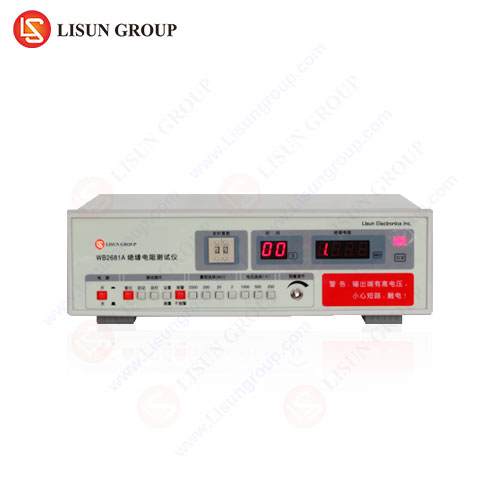



The Scientific Foundation of Hipot Testing and Its Role in Preventing Dielectric Breakdown
High Potential (Hipot) testing, also referred to as dielectric withstand testing, constitutes a fundamental nondestructive evaluation method employed to verify the adequacy of electrical insulation within a device under test (DUT). The underlying principle is deceptively straightforward: a voltage significantly higher than the nominal operating voltage is applied between conductive parts and ground, or between isolated circuits, for a predetermined duration. Should the insulation system exhibit leakage current exceeding a defined threshold, or if a flashover or breakdown event occurs, the DUT is deemed noncompliant. The physics governing this process involve the deliberate stressing of dielectric materials to uncover latent weaknesses—such as voids, cracks, contamination, or improper creepage distances—that might otherwise manifest only after months or years of field service.
From a standards perspective, organizations including the International Electrotechnical Commission (IEC), Underwriters Laboratories (UL), and the European Committee for Electrotechnical Standardization (CENELEC) mandate hipot testing as a routine production line procedure and as a type test for design validation. For instance, IEC 60950-1 for information technology equipment requires a test voltage of 1,000 V plus twice the working voltage for basic insulation, while IEC 60601-1 for medical electrical devices imposes even more stringent criteria due to patient safety concerns. The test voltage waveform, typically 50/60 Hz AC or DC with a specified rise time, must be precisely controlled to avoid subjecting the insulation to unnecessary transient overvoltages. This is where instrumentation such as the LISUN WB2671A Withstand Voltage Test instrument becomes integral, offering programmable voltage ramping, real-time leakage current monitoring, and automatic shutdown upon fault detection. The WB2671A is engineered to deliver test voltages up to 5 kV AC and 6 kV DC, with a measurement accuracy of ±2% of reading, ensuring repeatable results that withstand regulatory scrutiny.
Critical Parameters Governing Hipot Test Accuracy and Repeatability
The reliability of a hipot test hinges on the precise control and measurement of several interrelated electrical parameters. The most obvious is the test voltage, which must be maintained within tight tolerances—typically ±1.5% to ±3% for commercial instruments—across the full load range. However, the leakage current measurement is equally consequential. This current comprises both resistive (conduction) and capacitive (displacement) components; at higher frequencies, the capacitive element dominates, potentially masking a genuine insulation defect. Therefore, many modern hipot testers incorporate a true RMS measurement circuit capable of discriminating between these components, or they apply a DC test where the capacitive charging current decays to near zero, leaving only the resistive leakage attributable to insulation degradation.
Another critical factor is the voltage ramp rate. A sudden application of full test voltage can cause destructive transients, particularly in devices with significant internal capacitance. Standards such as UL 991 and IEC 62368-1 recommend a ramp rate not exceeding 500 V/s, a requirement fully supported by the LISUN WB2671A. This instrument features an adjustable ramp time from 1 to 999 seconds, allowing operators to match the voltage rise to the specific DUT’s time constant. Additionally, the dwell time at maximum voltage must be sufficient to allow any incipient breakdown mechanisms to develop. For production line testing, a typical dwell time is 1 to 2 seconds, whereas type testing may require 60 seconds or longer. The WB2671A’s programmable timer, ranging from 1 to 999 seconds, accommodates both scenarios without requiring external timing modules.
Leakage current thresholds must be set based on the insulation class and the surface area of the DUT. For small electronic components such as switches or sockets, thresholds as low as 0.1 mA may be appropriate, whereas for large industrial control cabinets or cable assemblies, thresholds up to 10 mA or higher are common. The WB2671A offers a settable leakage current alarm range from 0.01 mA to 20 mA, with a resolution of 0.01 mA. This granularity is essential for distinguishing between a benign capacitive leakage and a genuine dielectric failure, especially when testing devices with high stray capacitance such as long cable runs or filtering capacitors.
Industrial Use Cases and Compliance Across Diverse Sectors
Electrical and Electronic Equipment and Household Appliances
In the domain of electrical and electronic equipment, hipot testing is a gatekeeper for product release. For example, a manufacturer of household appliances—such as washing machines, microwave ovens, or refrigerators—must ensure that the insulation between the mains input and the metallic enclosure can withstand a voltage of 1,250 V AC for double-insulated products (per IEC 60335-1). A typical failure mode involves the breakdown of the insulating layer on the motor windings or the degradation of the power cord’s jacket due to repeated flexing. Using the LISUN WB2671A, a quality assurance technician can program a test sequence that ramps to 1.5 kV AC over 3 seconds, holds for 2 seconds, and monitors leakage current with a pass/fail criterion of 0.5 mA. If the device draws more than this value, the instrument triggers an audible and visual alarm, halting the production line. This rapid feedback loop prevents defective units from progressing to packaging.
Automotive Electronics and Lighting Fixtures
Automotive electronics present unique challenges due to the harsh operating environment—temperature extremes, vibration, and exposure to moisture and road salts. The ISO 16750 standard specifies hipot testing for electronic control units (ECUs) at voltages up to 1,000 V DC, with leakage current limits typically below 1 mA. For lighting fixtures, particularly those employing LED drivers, the insulation between the primary and secondary sides must be verified per IEC 61347-1. A common defect in LED luminaires is insufficient clearance between the live traces on the printed circuit board and the heat sink. The WB2671A’s DC test mode is advantageous here because it eliminates the influence of capacitive coupling from the LED array, providing a true measure of the insulation resistance. In one documented case, a lighting manufacturer detected a batch of drivers with leakage currents averaging 2.3 mA at 1.5 kV DC, far exceeding the 0.5 mA limit. Investigation revealed a misalignment in the potting compound application, a defect that would have been missed with AC testing alone.
Medical Devices and Aerospace Components
Medical devices, governed by IEC 60601-1, impose the most stringent requirements for patient and operator safety. The standard mandates a dielectric strength test at 1,500 V AC for basic insulation and 4,000 V AC for reinforced insulation, with leakage current limits often below 0.1 mA. For implantable devices or patient-connected equipment, even microampere-level leakage currents can cause fibrillation or burns. The LISUN WB2671A, with its low-current resolution of 0.01 mA and programmable high-voltage output, is well-suited for this demanding sector. In aerospace and aviation components, the RTCA DO-160 standard for environmental testing includes hipot testing for avionics boxes. The test voltage may range from 500 V to 2,000 V depending on the altitude and humidity categories. A notable application involves testing the insulation of wiring harnesses that run through the fuselage; a single pinhole defect can lead to arcing and catastrophic failure in flight. The WB2671A’s ability to perform both AC and DC tests with selectable ramp rates allows engineers to simulate the voltage stress conditions experienced during high-altitude operations where air density is reduced.
Industrial Control Systems, Telecommunications, and Cable Systems
Industrial control systems, including programmable logic controllers (PLCs) and variable frequency drives (VFDs), must withstand voltage surges from switching transients and lightning strikes. IEC 61131-2 and UL 508 specify hipot testing at 2,200 V AC for 1 second. The WB2671A is frequently integrated into automated test fixtures where it communicates via RS232 or GPIB interfaces with a central controller, enabling hands-free testing of thousands of units per shift. For telecommunications equipment, such as base station power supplies or fiber optic transceivers, the Telcordia GR-1089 standard requires a dielectric test at 1,500 V AC between the power input and the chassis. Cable and wiring systems, particularly those used in building infrastructure, are tested per IEC 60439-1. Here, the challenge is the distributed capacitance of long cable runs, which can generate high capacitive leakage currents that may falsely trigger a fail criterion. The WB2671A’s adjustable trip current setting allows operators to set a higher threshold—say 5 mA for a 100-meter cable—while still detecting a genuine fault where the leakage exceeds the capacitive baseline by a significant margin.
Comparative Advantages of the LISUN WB2671A in the Testing Ecosystem
The market offers numerous hipot testers, but the LISUN WB2671A distinguishes itself through a combination of technical specifications, user interface design, and long-term reliability. The instrument provides both AC and DC test modes, a feature not universally available in mid-range testers. In AC mode, the output is a pure sine wave with less than 3% total harmonic distortion (THD), ensuring that the test voltage closely replicates the grid waveform. In DC mode, the output ripple is less than 5%, critical for accurate insulation resistance measurements. The maximum output power of 500 VA (for AC) and 60 W (for DC) ensures that the instrument can drive capacitive loads up to 1 μF at full voltage without significant voltage droop—an important consideration when testing power cables or motor windings.
The user interface employs a large backlit LCD display showing real-time voltage, current, and test status, with a menu-driven navigation system that reduces operator training time. Safety features include a dual-layered interlock circuit that prevents high voltage output unless the test leads are properly connected and the start button is deliberately pressed. Additionally, the WB2671A incorporates a flashover detection algorithm that distinguishes between a transient arc (e.g., from a loose connection) and a sustained breakdown. This reduces false failures and improves production throughput.
From a compliance documentation perspective, the instrument stores up to 100 test profiles, each containing voltage, ramp time, dwell time, and leakage limit settings. The internal memory also logs the last 500 test results with time stamps, facilitating traceability audits by certification bodies such as TÜV or UL. The RS232 and USB interfaces allow for remote data logging and integration with laboratory information management systems (LIMS). This capability is particularly valuable for manufacturers who must submit statistical process control data as part of their quality management system under ISO 9001 or IATF 16949.
Standards Compliance Matrix and Test Voltage Selection Guidelines
Selecting the appropriate test voltage and leakage current limits requires careful consideration of the applicable standards and the DUT’s insulation class. The following table summarizes key requirements for the industries discussed:
| Industry | Applicable Standard | Test Voltage (AC or DC) | Typical Leakage Limit | Dwell Time | WB2671A Mode |
|---|---|---|---|---|---|
| Household Appliances | IEC 60335-1 | 1,250 V AC (double insulation) | 0.5 mA | 2 s | AC, 1.5 kV |
| Automotive Electronics | ISO 16750 | 1,000 V DC | 1.0 mA | 1 s | DC, 1.2 kV |
| Medical Devices | IEC 60601-1 | 1,500 V AC (basic), 4,000 V AC (reinforced) | 0.1 mA | 60 s | AC, 4.5 kV |
| Lighting Fixtures | IEC 61347-1 | 1,500 V AC (SELV), 3,000 V AC (non-SELV) | 0.5 mA | 2 s | AC, 3.0 kV |
| Industrial Control | IEC 61131-2 | 2,200 V AC | 2.0 mA | 1 s | AC, 2.5 kV |
| Cable/Wiring | IEC 60439-1 | 2,500 V AC | 5.0 mA (per 100 m) | 5 s | AC, 2.5 kV |
| Aerospace Avionics | RTCA DO-160 | 1,500 V AC (Category A) | 0.5 mA | 60 s | AC, 2.0 kV |
| Telecommunications | Telcordia GR-1089 | 1,500 V AC | 1.0 mA | 2 s | AC, 1.5 kV |
It is important to note that these values are representative and may vary based on altitude derating, humidity conditioning, and specific product categories. For instance, medical devices intended for cardiac applications may require test voltages reduced by 50% to avoid damaging sensitive components, with compensatory increases in leakage current monitoring duration. The WB2671A’s programmable voltage and time settings accommodate such deviations without requiring hardware modifications.
Frequently Asked Questions
Q1: Can the LISUN WB2671A be used for both production line and type testing without reconfiguration?
Yes. The instrument stores up to 100 test profiles, allowing operators to switch between production parameters (e.g., 1.5 kV AC, 2-second dwell, 0.5 mA limit) and type-test parameters (e.g., 3.0 kV AC, 60-second dwell, 0.1 mA limit) with a few keystrokes. The memory retains these settings even after power cycles.
Q2: How does the WB2671A handle capacitive leakage current from long cables or filtering capacitors?
In AC mode, the instrument measures true RMS leakage current and allows the user to set a threshold above the expected capacitive baseline. For very high capacitance loads (above 0.5 μF), using DC mode is recommended because the capacitive charging current decays within milliseconds, leaving only resistive leakage for accurate fault detection.
Q3: What safety features prevent accidental exposure to high voltage during testing?
The WB2671A includes a dual-interlock safety circuit requiring both a front-panel start button and an external remote interlock (typically connected to a safety enclosure door). If the interlock loop is broken, the high-voltage output is immediately disabled. Additionally, the instrument automatically discharges the DUT’s capacitance after each test, reducing the risk of stored charge.
Q4: Is the WB2671A compliant with the latest revisions of IEC 61010-1 (safety requirements for electrical test equipment)?
Yes. The LISUN WB2671A is designed and tested in accordance with IEC 61010-1:2010 (third edition) and its amendment A1:2016. The instrument’s insulation system, creepage distances, and protective bonding meet the standard’s requirements for measurement category II and pollution degree 2.
Q5: Can the WB2671A be integrated into an automated test system using PLC or PC control?
Absolutely. The instrument provides both RS232 and USB communication ports, supporting standard SCPI (Standard Commands for Programmable Instruments) commands. This allows seamless integration with LabVIEW, Python scripts, or industrial PLCs. The command set includes functions for setting voltage, current limits, ramp times, and retrieving test results, enabling fully automated pass/fail decision-making.
