





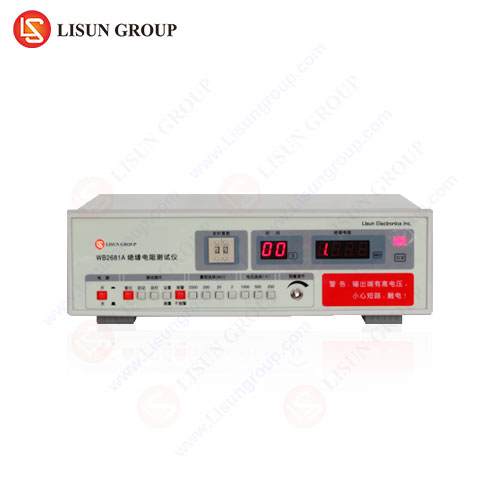



Introduction to Leakage Current Phenomena in Electrical Systems
Leakage current represents an unintentional electrical flow that deviates from its intended closed-loop path, traveling instead through insulation materials, protective conductors, or capacitive couplings to ground. This phenomenon arises from the inherent imperfections in dielectric materials, parasitic capacitance between conductors, and the physical properties of insulating barriers under applied voltage stress. In modern electrical and electronic equipment—spanning household appliances, medical devices, telecommunications infrastructure, and aerospace components—the presence of leakage current poses not only operational reliability concerns but also significant safety hazards for human operators. Regulatory frameworks such as IEC 60990, IEC 62368-1, and UL 101 have established stringent limits for permissible leakage current levels, typically ranging from 0.5 mA for Class II appliances to 5 mA for Class I equipment under normal operating conditions. The measurement and characterization of these currents require specialized instrumentation capable of resolving microampere-level signals while maintaining galvanic isolation and compliance with test standards. Understanding the operational principles of leakage current testers is therefore fundamental for engineers, quality assurance professionals, and compliance specialists working across industries where electrical safety is paramount.
Fundamental Measurement Topology of Leakage Current Testers
The architecture of a leakage current tester is predicated on the principle of converting an unknown current flowing through a defined impedance network into a measurable voltage signal, subsequently processed through precision amplification and filtering stages. At the core of this measurement chain lies a current-to-voltage converter, often implemented using a low-noise operational amplifier configured as a transimpedance amplifier. The device under test (DUT) is connected to the tester through a simulated human body impedance network—typically a 1.5 kΩ resistor in parallel with a 0.15 µF capacitor, as specified in IEC 60990 for touch current measurements. This network models the electrical characteristics of the human body under fault conditions, ensuring that measured values correlate directly with physiological hazard potential. The LISUN WB2675D Leakage Current Tester exemplifies this topology by incorporating selectable impedance networks that comply with multiple international standards, including IEC, UL, and GB requirements. The input stage must exhibit exceptionally high input impedance, often exceeding 10 MΩ, to avoid loading the measurement circuit and introducing systematic errors. Following the transimpedance conversion, the signal undergoes bandpass filtering to eliminate high-frequency noise components—typically limiting bandwidth to 1 MHz—while preserving the fundamental power frequency (50/60 Hz) and its harmonics up to the 100th order, as leakage current spectra often contain significant energy at harmonic frequencies due to switching power supplies and nonlinear loads in modern equipment.
The Role of Test Voltage Generation and Isolation
A critical operational requirement for leakage current testing involves the application of test voltages that replicate the electrical stress conditions encountered during normal equipment operation or single-fault conditions. The LISUN WB2675D incorporates a variable autotransformer coupled with an isolation transformer, enabling test voltages from 0 to 300 V AC at 50/60 Hz, with selectable voltage ranges to accommodate different equipment classes and global voltage standards. The isolation transformer serves dual purposes: it provides galvanic isolation between the mains supply and the measurement circuit, thereby preventing ground loop currents that would corrupt readings, and it establishes a defined reference point for leakage current measurement. In practice, the test voltage is applied between the DUT’s live conductors and its protective earth terminal, or between the DUT’s accessible conductive parts and ground, depending on the specific test configuration mandated by applicable standards. For equipment operating at voltages exceeding 1 kV, such as certain industrial control systems and medical imaging devices, the tester must incorporate high-voltage isolation capabilities, often realized through optical coupling or fiber-optic transmission of measurement signals. The WB2675D achieves isolation ratings of 5 kV between input and output, ensuring operator safety while maintaining measurement integrity even when testing equipment with significant stored energy or transient overvoltages. The voltage generation circuitry includes soft-start mechanisms to prevent inrush currents from damaging the DUT or influencing initial leakage measurements, a consideration particularly important when testing capacitive loads such as lighting fixtures with power factor correction circuits or long cable assemblies in telecommunications equipment.
Measurement Range, Resolution, and Accuracy Considerations
The dynamic range of leakage current measurements spans several orders of magnitude, from sub-microampere levels in well-insulated medical devices to several milliamperes in equipment with intentional leakage paths, such as electromagnetic interference (EMI) filter capacitors. High-quality testers must therefore provide multiple measurement ranges with automatic or manual selection, each optimized for specific resolution and accuracy targets. The LISUN WB2675D offers measurement ranges from 0.1 µA to 20 mA, with a resolution of 0.1 µA on the lowest range and an accuracy of ±(1.5% reading + 2 digits) across the entire span. This level of precision is achieved through careful component selection, including low-temperature-coefficient resistors (typically 25 ppm/°C or better) and precision operational amplifiers with offset voltages below 50 µV. The measurement uncertainty budget must account for several error sources: amplifier input offset drift with temperature, quantization noise in the analog-to-digital conversion stage, nonlinearity in the current-to-voltage transfer function, and frequency response variations across the measurement bandwidth. To mitigate these effects, the WB2675D employs a dual-slope integrating ADC architecture that provides inherent noise rejection at power line frequencies, achieving common-mode rejection ratios exceeding 100 dB at 50/60 Hz. Calibration procedures for leakage current testers require traceable reference current sources with uncertainties better than 0.5% of reading, typically calibrated against national standards such as those maintained by NIST or equivalent metrology institutes. Table 1 summarizes the key measurement specifications across typical operating conditions:
| Parameter | Specification | Condition |
|---|---|---|
| Measurement Range | 0.1 µA – 20 mA | Autoranging or manual |
| Resolution | 0.1 µA (low range) | Below 2 mA |
| Accuracy | ±(1.5% + 2 digits) | 23°C ± 5°C |
| Frequency Response | 40 Hz – 1 MHz | -3 dB bandwidth |
| Input Impedance | 1 MΩ | 150 nF |
| Isolation Voltage | 5 kV AC | Input-to-output |
Compliance with International Testing Standards
Leakage current testing protocols are governed by a complex matrix of international and regional standards, each defining specific measurement configurations, permissible limits, and test conditions. The IEC 60990 standard, for example, delineates three distinct measurement networks: Network A for touch current, Network B for protective conductor current, and Network C for equipment leakage current. Each network exhibits different impedance characteristics, reflecting the varying physiological effects of current flow through different pathways in the human body. The LISUN WB2675D incorporates all three networks, selectable via front-panel controls or remote programming interfaces, enabling seamless compliance with IEC 60335-1 for household appliances, IEC 60601-1 for medical electrical equipment, and IEC 62368-1 for audio/video and information technology equipment. Furthermore, the tester supports the UL 101 standard’s requirement for measuring leakage current at 120% of rated voltage, a condition that stresses insulation systems beyond normal operating levels to detect incipient failures. For automotive electronics applications, such as those governed by ISO 16750-2 and LV 124, the tester must accommodate DC leakage current measurements in addition to AC, as vehicle electrical systems operate at 12 V, 24 V, or 48 V DC with complex transient profiles. The WB2675D addresses this requirement through a DC measurement mode that bypasses the coupling capacitors in the input network, allowing direct measurement of resistive leakage paths. In aerospace and aviation component testing, where MIL-STD-461 and RTCA DO-160 specify conducted emission limits that correlate with leakage current levels, the tester’s wide frequency response up to 1 MHz enables detection of high-frequency leakage components from switching converters and power distribution systems in aircraft.
Signal Processing and Data Interpretation Techniques
Raw leakage current measurements are subject to numerous artifacts that must be removed or compensated through sophisticated signal processing algorithms. The most prevalent artifact is power line interference, which manifests as 50/60 Hz components that can mask low-level leakage signals. While the dual-slope ADC provides inherent rejection at these frequencies, additional digital filtering implemented in the WB2675D’s microcontroller—typically a 24-bit digital signal processor—applies a notch filter at the fundamental line frequency with a quality factor of 30, attenuating interference by at least 40 dB while preserving adjacent frequency components. Another significant challenge arises from the measurement of leakage currents in equipment containing switching power supplies, where the leakage spectrum includes broadband noise from switching frequencies typically ranging from 20 kHz to 500 kHz. The tester employs a true RMS conversion circuit that accurately measures the heating effect of complex waveforms, unlike average-responding meters that introduce errors exceeding 30% for non-sinusoidal signals. The RMS converter in the WB2675D achieves a crest factor capability of 5:1 at full scale, ensuring accurate measurement of pulsed leakage currents characteristic of class D amplifiers and LED drivers in lighting fixtures. For production line testing applications, where throughput requirements demand rapid measurement cycles, the tester supports programmable measurement intervals as short as 100 ms, with the ability to store up to 1000 test results in internal memory for later retrieval or transfer to host computers via RS-232 or USB interfaces. The statistical analysis of leakage current data across multiple production lots can reveal trends in insulation quality, enabling predictive maintenance of manufacturing processes and early detection of component degradation in capacitors, transformers, and cable assemblies.
Application-Specific Testing Configurations
The versatility of modern leakage current testers stems from their ability to adapt measurement parameters to the unique characteristics of different equipment categories. In medical device testing, for instance, the IEC 60601-1 standard requires measurement of both patient leakage current and enclosure leakage current under normal and single-fault conditions, with limits as stringent as 10 µA for patient-applied parts. The WB2675D provides a dedicated medical mode that automatically sequences through the required test configurations—applying mains voltage to the DUT, measuring leakage through each patient connection, and recording results with time-stamped documentation. For household appliances such as washing machines, refrigerators, and microwave ovens, the leakage current tester must accommodate high inrush currents during motor startup or compressor activation, which can generate transient leakage signals exceeding steady-state values by factors of 10 or more. The tester’s overload protection circuit, rated at 20 mA continuous and 100 mA for 10 seconds, prevents damage to the input stage while allowing measurement of these transient events. In the telecommunications equipment sector, where equipment may be powered by remote DC feeds at voltages up to 48 V or -60 V, the tester must measure leakage current between the DC supply rails and chassis ground, often in the presence of high common-mode voltages from long cable runs. The WB2675D’s differential input configuration, with a common-mode rejection ratio of 120 dB at DC, enables accurate measurements even when the DUT’s chassis is floating at potentials several hundred volts above earth ground. Cable and wiring system testing presents additional challenges, as long cable runs exhibit significant distributed capacitance—typically 50-100 pF per meter for unshielded twisted pair—that contributes to capacitive leakage current at power frequencies. The tester’s selectable frequency response allows operators to isolate resistive leakage components from capacitive leakage by comparing measurements at 50 Hz and 60 Hz, as capacitive reactance varies inversely with frequency while resistive leakage remains constant.
Diagnostic Capabilities and Failure Mode Analysis
Beyond simple pass/fail determination, advanced leakage current testers provide diagnostic information that facilitates root cause analysis of insulation failures. The LISUN WB2675D incorporates a harmonic analysis function that decomposes the leakage current waveform into its fundamental and harmonic components up to the 50th order. This capability is particularly valuable when testing equipment with nonlinear loads, as the harmonic signature can identify the source of leakage—for example, third harmonic dominance suggests saturation in magnetic components, while high-frequency harmonics point to switching noise from power electronics. The tester also features a real-time oscilloscope output that displays the leakage current waveform on an external instrument, enabling engineers to observe waveform distortion, phase shifts, and transient events that would be invisible in RMS measurements alone. In the context of industrial control systems, where programmable logic controllers (PLCs) and variable frequency drives (VFDs) generate complex leakage spectra due to PWM switching at carrier frequencies between 2 kHz and 16 kHz, the waveform analysis capability becomes indispensable for distinguishing between normal operational leakage and incipient insulation degradation. The tester’s insulation resistance measurement mode, which applies a DC voltage of 500 V or 1000 V and measures the resulting leakage current after a stabilization period, complements the AC leakage measurement by providing information on the DC conductivity of insulation materials. Table 2 presents typical leakage current values observed in common equipment categories, illustrating the wide variation in expected levels:
| Equipment Category | Typical Leakage Current | Dominant Mechanism |
|---|---|---|
| Class II Appliance | 0.1 – 0.5 mA | Capacitive coupling |
| Medical Device (Patient) | 1 – 10 µA | Insulation resistance |
| Lighting Fixture (LED) | 0.3 – 2 mA | EMI filter capacitors |
| Industrial VFD | 1 – 5 mA | PWM switching capacitance |
| Telecommunications | 0.5 – 3 mA | Cable distributed capacitance |
| Aerospace Component | 0.05 – 0.5 mA | High-impedance insulation |
Safety Interlocks and Operator Protection Mechanisms
Given that leakage current testers are themselves electrical test equipment operating at potentially hazardous voltages, their design must incorporate multiple layers of safety protection for operators and connected devices. The WB2675D includes an earth leakage circuit breaker (ELCB) that disconnects the test voltage within 30 ms if the leakage current exceeds a user-programmable threshold, typically set at 10 mA to prevent ventricular fibrillation in the event of accidental contact. The tester’s output terminals are equipped with high-voltage relays that physically disconnect the test voltage when the measurement cycle is complete or when the emergency stop button is activated, providing redundant isolation even in the event of a semiconductor failure in the voltage control circuitry. For automated production line integration, the tester supports a remote interlock input that can be connected to safety gates, light curtains, or two-hand control systems, ensuring that test voltages are only applied when the operator is at a safe distance. The front panel is constructed from insulating materials rated for 10 kV dielectric strength, and all user-accessible controls are recessed or protected to prevent inadvertent contact with live circuits. The instrument’s firmware includes continuous self-test routines that monitor critical safety components—including the isolation transformer temperature, the earth ground connection integrity, and the relay contact resistance—and display warning messages if any parameter falls outside acceptable limits. These safety features are particularly critical in medical device manufacturing environments, where operator safety must be balanced against the need for rapid, repetitive testing of life-support equipment.
Calibration, Maintenance, and Traceability Requirements
Maintaining the measurement accuracy of leakage current testers over time requires adherence to rigorous calibration schedules and environmental control protocols. The LISUN WB2675D is designed with internal calibration reference sources—a precision current source based on a bandgap voltage reference and metal-film resistors with low temperature coefficient—that allow users to perform verification checks between external calibration cycles. The recommended calibration interval is 12 months for general industrial use, but may be shortened to 6 months for critical applications such as medical device testing or aerospace component qualification. Calibration procedures involve connecting a traceable current standard to the tester’s input terminals, applying known currents at multiple frequencies (typically 50 Hz, 60 Hz, 1 kHz, and 100 kHz), and recording the deviation between displayed and actual values. The tester’s firmware stores calibration constants in non-volatile memory, with the ability to correct for gain, offset, and frequency response variations across the entire measurement range. Environmental factors exert a significant influence on leakage current measurements: temperature changes affect the resistance of input networks and the offset voltage of operational amplifiers, while humidity alters the surface conductivity of insulation materials in the test fixture and cabling. The WB2675D incorporates temperature sensors that compensate for drift in the analog front end, maintaining specified accuracy over an operating temperature range of 0°C to 40°C. For laboratory applications requiring the highest accuracy, the tester can be operated in a temperature-controlled environment at 23°C ± 1°C, where the measurement uncertainty is minimized to ±(0.5% reading + 1 digit).
Frequently Asked Questions
Q1: What is the difference between leakage current measured with a simple multimeter and a dedicated leakage current tester like the LISUN WB2675D?
A standard multimeter lacks the specific input impedance networks required by international safety standards, typically presenting a 10 MΩ input impedance that does not accurately model the human body’s electrical characteristics. A dedicated tester incorporates standardized networks (1.5 kΩ || 0.15 µF per IEC 60990) and provides galvanic isolation, frequency response optimization, and safety interlocks that are absent in general-purpose instruments.
Q2: Can the WB2675D measure DC leakage current, and what standards require this capability?
Yes, the WB2675D includes a DC measurement mode that bypasses the coupling capacitors in the input network, enabling direct measurement of resistive leakage components. This capability is required by automotive standards such as ISO 16750-2 and LV 124, as well as by IEC 62368-1 for equipment with DC power inputs.
Q3: How does the tester handle leakage current measurements on equipment with high capacitive loads, such as long cable runs in telecommunications?
The WB2675D’s selectable frequency response allows operators to differentiate between resistive and capacitive leakage components. By measuring at 50 Hz and 60 Hz, the capacitive contribution can be calculated from the frequency-dependent reactance. The tester’s overload protection and 100 mA transient rating ensure safe operation even with high capacitive inrush currents.
Q4: What maintenance procedures are recommended for ensuring long-term accuracy of the WB2675D?
Annual calibration against traceable standards is required, with verification checks using the internal reference every 6 months. The input terminals should be inspected for contamination that could introduce leakage paths, and the earth ground connection should be verified before each use. The tester’s internal temperature sensor compensates for drift, but operation should be avoided in condensing humidity conditions.
Q5: Is the WB2675D suitable for testing medical devices according to IEC 60601-1?
Yes, the WB2675D includes a dedicated medical mode that automatically sequences through patient leakage current and enclosure leakage current tests under normal and single-fault conditions. Its 10 µA resolution on the lowest range and 5 kV isolation rating meet the stringent requirements of IEC 60601-1 for Class B and Class BF applied parts.
