







The Imperative of Dielectric Integrity in Modern Electrical Systems
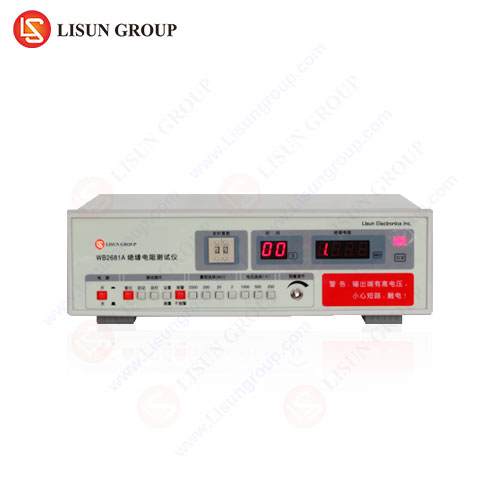
Electrical safety remains a non-negotiable cornerstone across virtually every sector that depends on energized equipment. Withstand voltage testing—often termed dielectric strength testing or high-potential (hipot) testing—serves as the definitive method for verifying that insulation systems can endure transient overvoltages without breakdown. This procedure is not merely a formality; it constitutes a quantitative validation of insulation coordination, creepage distances, and material quality under electrical stress exceeding normal operating conditions. Industries ranging from household appliances to aerospace components must demonstrate compliance with international standards such as IEC 60950, IEC 60335, IEC 60601, and UL 60947. The consequences of inadequate insulation include catastrophic arc flash events, equipment destruction, fire hazards, and potential harm to operators or patients in medical environments. This guide examines the theoretical foundations, practical methodologies, and compliance imperatives of withstand voltage testing, with particular focus on how the LISUN WB2671A Withstand Voltage Test system facilitates rigorous evaluation across diverse application domains.
Breakdown Mechanisms and Electrical Stress Phenomena
Dielectric breakdown does not occur instantaneously; rather, it follows predictable physical mechanisms dependent on voltage magnitude, duration, waveform, and environmental conditions. In solid insulation materials (polymeric films, epoxy resins, ceramic substrates), breakdown typically initiates at microscopic voids or contaminants where localized electric field enhancement exceeds the material’s intrinsic breakdown strength. Partial discharge activity precedes complete breakdown, generating measurable current pulses that degrade insulation over time. Gaseous insulation (air gaps between live conductors and grounded enclosures) undergoes ionization at approximately 3 kV/mm under standard atmospheric pressure, though humidity and altitude significantly alter this threshold. For liquid dielectrics used in transformers or capacitors, breakdown mechanisms involve suspended particles aligning with the electric field, forming conductive bridges. Withstand voltage testing applies a specified voltage—typically 1,000 V plus twice the rated voltage for basic insulation, or higher for reinforced insulation—for a defined duration (commonly 60 seconds) while monitoring leakage current. The test distinguishes between acceptable capacitive charging currents (which decay exponentially) and unacceptable resistive leakage indicating insulation degradation. The LISUN WB2671A generates sinusoidal or DC test voltages up to 5 kV AC and 6 kV DC, with adjustable ramp rates to avoid transient overshoot that could artificially stress specimens.
Regulatory Frameworks Governing Withstand Voltage Test Protocols
International standards bodies have codified withstand voltage test parameters to ensure reproducibility and comparability across laboratories and production lines. IEC 60950-1, governing information technology equipment, mandates a dielectric strength test at 1,500 V AC (or 2,120 V DC) between primary circuits and secondary circuits for basic insulation. IEC 60335-1, applicable to household appliances, specifies test voltages ranging from 1,250 V for Class II equipment up to 3,000 V for reinforced insulation in Class I devices. Automotive electronics follow ISO 16750-2, which requires sinusoidal testing at 500 V to 1,500 V depending on the electrical system voltage (12 V, 24 V, or 48 V). Medical devices per IEC 60601-1 impose more stringent limits—typically 1,500 V for patient applied parts in Type BF equipment, with leakage current thresholds not exceeding 0.1 mA. The table below summarizes critical test parameters for representative industry segments:
| Industry Standard | Test Voltage (AC) | Test Duration (s) | Leakage Current Limit (mA) |
|---|---|---|---|
| IEC 60950-1 (IT) | 1,500 V | 60 | 5.0 |
| IEC 60335-1 (Appliances) | 1,250–3,000 V | 60 | 0.75–5.0 (class dependent) |
| IEC 60601-1 (Medical) | 1,500 V | 60 | 0.1 (BF type) |
| UL 60947 (Industrial) | 2,200 V | 60 | 10.0 |
| IEC 61558 (Transformers) | 4,000 V | 60 | 15.0 |
The LISUN WB2671A supports programmable test profiles that adhere to these standards, enabling pre-configured sequences for rapid compliance verification without manual parameter entry errors.
Instrumentation Architecture of the LISUN WB2671A Withstand Voltage Test System
The hardware design of a precision withstand voltage tester must balance output stability, measurement accuracy, and operator safety. The LISUN WB2671A employs a high-frequency switching power supply topology generating a sinusoidal waveform with total harmonic distortion below 3% across the entire voltage range. A microprocessor-controlled feedback loop maintains the output voltage within ±1% of the set point despite load variations caused by capacitive charging currents or incipient leakage. The current measurement circuit employs a four-terminal sensing configuration with a dynamic range spanning from 1 μA to 20 mA, resolving leakage currents with 0.1 μA granularity. This resolution is critical for detecting micro-cracks in ceramic substrates or moisture absorption in polymeric insulation, which may manifest as leakage increases from 2 μA to 15 μA during the test window. The device incorporates an arc detection algorithm that identifies transient current spikes exceeding 5 μA within 1 μs, signaling incipient breakdown before sustained failure occurs. Safety interlocks include a two-hand operation requirement, emergency stop, and automatic discharge of capacitive loads upon test termination via an internal bleed resistor network. The unit’s enclosure meets IP20 protection, and the high-voltage output connector follows the industry-standard HV-BNC format with a female recessed contact to prevent accidental contact.
Test Methodology for Diverse Product Categories
Implementing withstand voltage testing requires careful consideration of product geometry, material composition, and intended operating environment. For household appliances such as washing machines or microwave ovens, the test applies between live conductors and accessible metallic enclosures, with the appliance’s functional earth connected to the tester’s ground terminal. Lighting fixtures incorporating LED drivers must undergo testing between primary side AC inputs and secondary side low-voltage outputs; the LISUN WB2671A enables independent testing of primary-to-ground and primary-to-secondary insulation with separate parameter sets. Automotive electronic control units (ECUs) mounted in engine compartments require testing at elevated temperatures (typically 85°C) to simulate thermal aging effects on insulation—the instrument’s remote control interface integrates with environmental chambers for combined temperature-voltage stress screening. For cable and wiring systems, the test configuration involves submerging conductor ends in saline solution while applying voltage between conductors and the solution bath, assessing insulation resistance under wet conditions per IEC 60227. Aerospace components demand DC withstand testing due to the prevalence of 28 V and 270 V DC distribution systems; the LISUN WB2671A’s DC output mode provides polarization-free testing of capacitive assemblies like connectors with embedded filtering capacitors.
Data Interpretation and Failure Analysis Strategies
Interpreting withstand voltage test results extends beyond simple pass/fail classification based on leakage current thresholds. A gradually increasing leakage current over the 60-second test duration suggests moisture ingress into hygroscopic materials such as nylon or phenolic resins, indicating inadequate sealing or improper storage conditions. For example, a switch socket assembly tested at 2,000 V AC showing leakage rising from 0.8 mA to 2.4 mA over 30 seconds warrants investigation even if the final value remains below the 5 mA limit—this pattern often correlates with surface contamination tracking across creepage paths. Conversely, a sudden leakage spike at 40 seconds into the test, returning to baseline afterward, may indicate partial discharge activity within air voids in transformer potting compound. The LISUN WB2671A’s data logging capability records current versus time at 10 ms intervals, enabling post-test analysis with waveform viewers to differentiate breakdown precursors from benign capacitive transients. In production environments, statistical process control charts tracking leakage current distributions across thousands of units reveal process drifts—a shift from 15 μA average to 22 μA average over a month’s production may signal degradation in injection molding parameters or raw material batch variation.
Industry-Specific Application Case Studies
Medical device manufacturers face particularly demanding requirements, as insulation failure in patient-connected equipment can deliver currents exceeding the 10 μA fibrillation threshold directly to cardiac tissue. Consider a portable ultrasound transducer array requiring reinforced insulation between the patient-contacting surface and internal 48 V DC supply. Using the LISUN WB2671A with IEC 60601-1 test profile (1,500 V, 60 s, 0.1 mA limit), a production batch exhibited occasional failures exceeding 0.08 mA. Systematic investigation revealed that the two-part epoxy used for potting had curing temperature sensitivity: batches cured at 22°C ± 1°C passed, while those at 25°C showed micro-voids detectable only through withstand testing. Adjusting the curing oven temperature tolerance resolved the issue, demonstrating how routine hipot testing functions as a process control diagnostic. In the telecommunications sector, outdoor base station transceivers must withstand lightning-induced surges while maintaining signal integrity. AC withstand testing at 2,500 V for 60 seconds between antenna ports and ground identifies gas discharge tube failures or degraded varistor clamping voltages. The LISUN WB2671A’s programmable ramp function enables gradual voltage application to avoid triggering protective components prematurely—a critical distinction from instantaneous voltage application methods.
Comparative Advantages Over Alternative Test Methodologies
While insulation resistance testing using megohmmeters at 500 V or 1,000 V DC provides baseline information regarding material resistivity, it cannot replicate the electrical stress levels encountered during mains transients or lightning events. Withstand voltage testing applies voltages exceeding normal operation by factors of 3 to 10, directly challenging insulation coordination margins. Surge testing, while valuable for component-level qualification, employs impulses with microsecond rise times that may not detect gradual insulation degradation mechanisms. The LISUN WB2671A occupies a unique position by combining programmable AC/DC outputs, precision leakage measurement, and waveform capture in a single benchtop instrument. Compared to modular rack systems from competitors, the WB2671A offers equivalent accuracy at approximately 60% of the footprint and capital cost, making it viable for smaller laboratories or distributed production lines. Its 5 kV AC output capability exceeds the 4 kV maximum of many competing units, accommodating reinforced insulation tests for industrial control equipment per IEC 60947-2. The instrument’s USB and RS-232 interfaces enable integration with laboratory information management systems (LIMS) for automated data upload and real-time statistical analysis.
Calibration and Traceability for Metrological Confidence
Sustaining measurement accuracy requires periodic calibration against reference standards traceable to national metrology institutes. The LISUN WB2671A incorporates self-calibration routines using an internal precision voltage divider (ratio accuracy 0.01%) and a reference current shunt calibrated to 0.05% accuracy. Users can perform field verification using an external resistive load with known value—for instance, a 1 MΩ resistor at 1,000 V should produce exactly 1.0 mA leakage current, confirming both voltage and current measurement channels. Annual calibration by an ISO 17025 accredited laboratory is recommended, with calibration certificates documenting uncertainty budgets for each measurement range. The instrument’s firmware automatically adjusts gain coefficients based on internal reference measurements, compensating for drift in analog components due to temperature aging. For regulated industries such as medical device manufacturing (FDA 21 CFR Part 820) or aerospace (AS9100), the WB2671A’s audit trail feature records all test configuration changes, calibration dates, and operator identification, supporting regulatory inspection readiness.
Safety Considerations During High-Voltage Testing Operations
Operating withstand voltage testers inherently involves risks of electric shock and arc flash, necessitating comprehensive safety protocols. The LISUN WB2671A includes multiple protective features: a ground continuity check before enabling high voltage, a cover interlock that disconnects output when the enclosure is opened, and a visual/audible alarm active during test execution. Operators should wear Class 0 insulating gloves (rated for 1,000 V) when connecting test leads, and work areas must be demarcated with warning tape or barriers. For testing large assemblies like industrial motor controllers or power distribution panels, the device under test (DUT) should be placed in a dedicated test cell with interlocked doors. Importantly, the discharge function after test completion must be confirmed before handling—the WB2671A automatically bleeds capacitive charge within 2 seconds for loads up to 1 μF, but larger capacitors (e.g., DC link capacitors in drives) may require external discharge resistors. Personnel training should cover recognition of partial discharge sounds (a shifting buzz) and visual signs of corona (ultraviolet glow) as precursors to failure.
Long-Term Reliability Implications and Future Trends
Withstand voltage testing is not a predictive tool for insulation lifetime under normal operating conditions—it stresses insulation beyond design margins, potentially causing cumulative damage if repeated excessively. Standards typically recommend type testing during design qualification and routine sampling during production rather than 100% inspection. However, accelerated aging studies often incorporate periodic withstand tests to track degradation rates. Emerging trends include the integration of partial discharge measurement alongside traditional withstand testing, providing real-time indication of insulation defects without requiring breakdown. The LISUN WB2671A’s architecture supports future firmware updates to include partial discharge detection algorithms, extending its utility as insulation diagnostic platforms evolve. Additionally, the move toward higher DC voltages in renewable energy systems (solar inverters at 1,500 V DC) and electric vehicle charging infrastructure (up to 1,000 V DC) necessitates testers capable of DC withstand testing with polarity reversal options—the WB2671A’s DC mode handles these requirements without modification.
Frequently Asked Questions
Q1: What distinguishes the LISUN WB2671A from basic hipot testers?
The WB2671A provides programmable voltage ramping, arc detection with 1 μs response time, leakage current measurement to 0.1 μA resolution, and data logging at 10 ms intervals. Basic testers typically offer only fixed voltage settings with 0.1 mA resolution and no transient capture capability, making them unsuitable for diagnosing gradual insulation degradation.
Q2: Can the WB2671A be used for both AC and DC withstand testing?
Yes. The instrument generates sinusoidal AC output up to 5 kV and DC output up to 6 kV. DC testing is recommended for capacitive loads such as cables or connectors where charging currents could saturate AC test circuits, and for medical devices requiring polarization-free assessment.
Q3: How should leakage current thresholds be determined for a new product design?
Thresholds should be derived from the applicable product safety standard’s limit (e.g., 5 mA for IEC 60950) with additional margin for manufacturing variability. A typical approach sets the production limit at 50% of the standard’s maximum—for a 5 mA standard, fail at 2.5 mA—to account for measurement uncertainty and environmental factors during testing.
Q4: What causes false failures during production hipot testing?
Common causes include moisture condensation on test fixtures after thermal cycling, residual flux residues on solder joints, or electromagnetic interference from adjacent equipment affecting leakage current readings. The WB2671A’s adjustable threshold hysteresis and calibration routines mitigate these issues, but periodic fixture cleaning and environmental monitoring remain essential.
Q5: Is it necessary to disconnect protective components like varistors or transient voltage suppression (TVS) diodes before testing?
Yes. Overvoltage protective components conduct at voltages well below hipot test levels, causing false leakage current readings. They should be disconnected or replaced with test jigs that short-circuit these components during the test, then reconnect them post-test. The WB2671A’s connection diagram assistance feature suggests appropriate jig configurations.
