


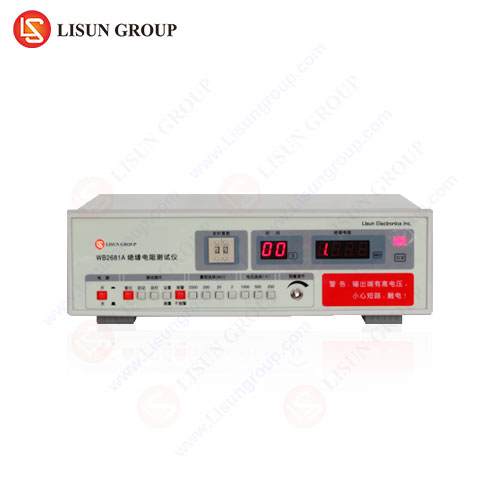






Achieving Optimal Ground Resistance: Standards, Methodologies, and Precision Measurement
The integrity of an electrical grounding system is a non-negotiable prerequisite for safety, operational continuity, and electromagnetic compatibility across virtually every sector of modern technology. A low-impedance path to earth serves the critical functions of fault current dissipation, voltage stabilization, and personnel protection. Consequently, the quantification of ground resistance—the opposition to current flow between a grounding electrode and the surrounding earth—is a fundamental diagnostic procedure. This article delineates the international standards governing acceptable ground resistance values, explores the underlying electrical principles of soil and electrode interaction, and examines advanced methodologies for precise measurement, with particular emphasis on the technical specifications and application of modern instrumentation such as the LISUN WB2678A Grounding Resistance Tester.
The Imperative of Low Ground Resistance in Modern Systems
Grounding efficacy transcends basic electrical safety. In contemporary applications, from microelectronics to megawatt power stations, the grounding electrode system (GES) performs multifaceted roles. Primarily, it ensures that during insulation failures or lightning strikes, fault currents are safely diverted into the earth, facilitating the rapid operation of overcurrent protection devices and preventing hazardous touch potentials. Secondly, it provides a stable reference point (zero potential) for electrical circuits, which is crucial for the accurate operation of sensitive instrumentation and control systems. Thirdly, it forms an essential component of electromagnetic interference (EMI) and radio-frequency interference (RFI) mitigation strategies, providing a controlled path for noise currents, thereby shielding equipment from disruptive signals.
The consequences of inadequate ground resistance are severe and varied. In Electrical and Electronic Equipment and Industrial Control Systems, elevated ground impedance can lead to reference plane instability, causing data corruption, measurement errors, and unpredictable logic states in programmable controllers. Within Telecommunications Equipment and Data Centers, poor grounding exacerbates signal integrity issues, increases bit-error rates, and can damage sensitive transceiver modules. For Household Appliances and Consumer Electronics, it represents a direct life safety hazard, increasing the risk of electric shock under fault conditions. In Aerospace and Aviation Components and Medical Devices, where reliability is paramount, a robust ground is integral to both functional performance and patient/operator safety, often mandated by stringent regulatory certifications.
Deciphering International Standards for Ground Resistance Thresholds
Ground resistance requirements are not universally fixed but are prescribed by a complex matrix of international, national, and industry-specific standards. These standards define maximum permissible values based on the application, system voltage, and the governing safety philosophy.
A cornerstone standard is IEC 60364 (Electrical Installations of Buildings), which, while not stipulating a single universal value, implies requirements through specifications for protective conductor impedance to ensure automatic disconnection of supply. This often results in practical target ground resistances below 10 Ω for many building installations. For electrical substations and utility applications, IEEE Standard 80 (Guide for Safety in AC Substation Grounding) provides detailed methodologies for designing safe grounding grids, where the resultant ground resistance is a key parameter in calculating step and touch potentials, with typical targets ranging from 0.5 Ω to 5 Ω depending on the fault current magnitude.
Industry-specific norms impose further constraints. Telecommunications Equipment installations, governed by standards such as ITU-T K.27 and ANSI/TIA-607, frequently require a ground resistance of 5 Ω or less for central office sites and tower bases to manage lightning and power surge protection. In Medical Devices, the IEC 60601-1 standard for medical electrical equipment mandates rigorous testing of the equipment’s protective earth continuity, indirectly enforcing high-quality, low-resistance facility grounding, often better than 1 Ω for critical care environments. Automotive Electronics testing, particularly for electric vehicles and charging infrastructure (governed by IEC 61851), requires precise measurement of the charging station’s grounding connection to ensure user safety during high-current transfer.
These standards collectively underscore that “best” ground resistance is context-dependent. A value of 25 Ω may be acceptable for a residential telephone pole ground rod but would be catastrophically inadequate for a hospital’s surgical suite or a semiconductor fabrication plant’s tool set.
Soil Resistivity: The Foundational Geophysical Variable
The performance of any grounding electrode is intrinsically governed by the resistivity of the surrounding soil, a variable property dependent on composition, moisture content, temperature, and electrolyte concentration. Rocky, sandy, or arid soils exhibit high resistivity (e.g., 10,000 Ω·cm), while moist clay or loam presents low resistivity (e.g., 1,000 Ω·cm). Accurate knowledge of soil resistivity with depth is therefore the first critical step in designing an effective GES, as it determines the type, number, and depth of electrodes required to achieve a target resistance.
The Wenner four-pin method, described in IEEE Standard 81, is the definitive technique for measuring soil resistivity. It involves driving four equally spaced electrodes in a straight line, injecting a known current between the outer two electrodes, and measuring the resulting voltage potential between the inner two. The apparent resistivity (ρ) is calculated using the formula:
ρ = 2πaR
Where a is the electrode spacing in meters and R is the measured resistance (V/I) in ohms. By progressively increasing the spacing a, a resistivity profile versus depth can be developed, informing the design of deep-driven rods, ground plates, or chemical treatment strategies.
Precision Measurement Methodologies: From Fall-of-Potential to Clamp-On Techniques
Once a GES is installed, its operational resistance must be verified and periodically monitored. Several established methodologies exist, each with distinct applications and limitations.
The Fall-of-Potential (Three-Point) Method is the classic and most reliable technique for testing individual grounding electrodes or small grids. It requires temporary placement of a current auxiliary electrode (C2) at a distance sufficient to be outside the effective resistance areas of both the electrode under test (E) and a potential auxiliary electrode (P1). A test current is passed between E and C2, while the voltage drop is measured between E and P1. P1 is moved between E and C2 to plot a resistance curve; the plateau region of this curve indicates the true ground resistance. This method, while accurate, requires significant space and the disconnection of the electrode from the system.
For complex, multi-electrode grids or situations where disconnection is impractical, the Selective Measurement Technique offers a solution. It uses a specialized tester with two clamps. One clamp injects a test current into the grounding conductor, while a second clamp measures the current flowing specifically through the electrode of interest. This allows for the in-situ measurement of a single electrode’s resistance within a parallel network without physical isolation.
The Clamp-On (Stakeless) Method provides the utmost operational convenience for periodic integrity checks on interconnected systems. A clamp-on tester induces a known voltage via a transformer onto a complete grounding loop and measures the resultant current. It provides a direct reading of the total loop resistance, which includes the resistance of the electrode under test and all parallel paths. Its primary limitation is that it requires a complete, low-resistance grounding loop to function and cannot measure an isolated rod. It is ideal for verifying the continuity and degradation of grounding systems in commercial buildings, cellular tower sites, and Lighting Fixture protection circuits.
Instrumentation for Assured Accuracy: The LISUN WB2678A Grounding Resistance Tester
Achieving measurement confidence necessitates instrumentation engineered for accuracy, safety, and adaptability to field conditions. The LISUN WB2678A Grounding Resistance Tester exemplifies a modern, integrated solution designed to execute the methodologies described with high precision.
The WB2678A operates on the principle of controlled current injection and synchronous voltage detection, filtering out stray earth currents and noise to ensure stable readings. It incorporates multiple testing modes within a single unit:
- 3-Pole/4-Pole Ground Resistance Measurement: For standard Fall-of-Potential tests, with automatic calculation of average values.
- 4-Pole Soil Resistivity Measurement: Directly implements the Wenner method, calculating and displaying resistivity (Ω·m) based on user-entered probe spacing.
- Selective Ground Resistance Measurement: Enables testing of single electrodes in parallel networks using optional current and voltage clamps.
- Ground Voltage Measurement: Monitors existing interference voltages on the grounding system prior to testing for operator safety.
Key Technical Specifications:
- Measurement Ranges: Ground Resistance: 0.00Ω to 30.00kΩ; Soil Resistivity: 0.00Ωm to 9000kΩm.
- Test Frequency: 128Hz / 111Hz / 105Hz / 94Hz (Automatic Frequency Conversion) to avoid power frequency interference.
- Test Current: Up to 20mA for resistance, ensuring reliable measurements in high-resistance soils.
- Noise Rejection: Common-mode rejection > 140dB, series-mode rejection > 60dB at 50/60Hz ± 1Hz.
- Safety Compliance: Conforms to IEC 61010-1 (CAT III 600V) for overvoltage category, ensuring protection in demanding electrical environments.
Industry Use Cases and Competitive Advantages:
In Aerospace and Aviation Components manufacturing, the WB2678A’s high accuracy and 4-pole resistivity mode are used to qualify the grounding beds for static discharge and lightning strike test facilities. For Cable and Wiring Systems certification, its selective measurement function allows contractors to verify the integrity of individual ground bonds within a large cable tray or conduit system without dismantling connections. Office Equipment and Consumer Electronics compliance laboratories utilize it to validate the protective earth bonding of product chassis as per IEC 60950-1 and IEC 62368-1, leveraging its precise low-resistance measurement capability.
The competitive advantage of the WB2678A lies in its synthesis of laboratory-grade accuracy with rugged field utility. Its automatic frequency control (AFC) actively seeks the optimal test frequency to nullify ambient electrical noise—a critical feature in industrial plants or near Telecommunications Equipment hubs. The dual-display interface presents both measured values and auxiliary parameters simultaneously, streamlining complex tests. Compared to simpler, single-function testers, its integrated approach eliminates the need for multiple devices, reducing capital expenditure and potential for operator error in mode selection.
Periodic Verification and Maintenance of Grounding Systems
A grounding system is subject to continuous degradation from corrosion, soil drying, freeze-thaw cycles, and physical damage. A compliance measurement performed at installation is merely a baseline. A robust maintenance program mandates periodic re-testing at intervals defined by the criticality of the installation and the observed environmental conditions. For a power substation, annual testing may be required, while a commercial building might adhere to a 3-5 year cycle. Trend analysis of resistance values over time is more informative than a single datum, indicating the rate of degradation and signaling the need for corrective action, such as adding supplemental rods or applying soil enhancement compounds.
Conclusion
The pursuit of the “best” ground resistance is a systematic engineering discipline, anchored in geophysical understanding, governed by a hierarchy of application-specific standards, and realized through precise measurement. It is not a static target but a performance parameter integral to safety, functionality, and regulatory compliance. As electrical and electronic systems grow in complexity and sensitivity, the demand for reliable, multi-functional, and accurate diagnostic tools becomes paramount. Advanced test equipment, embodying the principles of noise rejection, methodological flexibility, and user safety, is indispensable for engineers tasked with validating and maintaining this invisible yet critical infrastructure component across the spectrum of modern industry.
FAQ Section
Q1: Can the LISUN WB2678A measure ground resistance without disconnecting the electrode from the building’s grounding busbar?
A: Yes, through its selective measurement function when used with the optional current clamp (A1932) and voltage clamp (A1931). This technique allows you to measure the resistance of a specific ground rod or conductor within a live, interconnected system by selectively clamping onto the target conductor, eliminating the need for physical disconnection and system downtime.
Q2: What is the significance of the test frequency (128Hz, 111Hz, etc.) in ground resistance measurement, and why does the WB2678A offer multiple frequencies?
A: The test frequency is chosen to be distinct from the local power frequency (50Hz or 60Hz) and its harmonics to avoid interference from stray currents in the earth, which can cause unstable or inaccurate readings. The WB2678A’s Automatic Frequency Conversion feature actively cycles through its set of frequencies to identify and lock onto the one with the lowest ambient noise, ensuring optimal measurement accuracy and stability in electrically noisy environments typical of industrial sites or near utility corridors.
Q3: For testing the grounding of medical device production lines, which standard should we reference, and can the WB2678A perform the required tests?
A: The primary standard is IEC 60601-1, “Medical electrical equipment – Part 1: General requirements for basic safety and essential performance.” It mandates rigorous protective earth continuity testing. The WB2678A is ideally suited for this application. Its high-resolution measurement down to 0.01Ω allows for precise verification of the low-resistance bonds required in medical equipment. Furthermore, its compliance with IEC 61010-1 safety standard (CAT III 600V) ensures it can be safely used in the test environment.
