








Understanding Leakage Current in Electrical Safety Testing
Electrical safety testing constitutes a fundamental pillar in the design, certification, and ongoing verification of virtually all electrically powered devices. Among its critical parameters, leakage current measurement stands as a non-negotiable safeguard, directly correlated to the risk of electric shock, equipment malfunction, and potential fire hazards. This article provides a detailed examination of leakage current, its origins, measurement methodologies, governing standards, and the instrumental role of specialized test equipment in ensuring compliance across diverse industries.
Defining Leakage Current and Its Physiological Significance
Leakage current, in the context of electrical safety, refers to any unwanted conductive or capacitive current that flows from a live electrical part of a unit under test (UUT) to accessible conductive parts or to ground under normal operating conditions. It is distinct from a fault current, which occurs under breakdown conditions. Leakage current manifests through two primary pathways: touch current (current that could pass through a human body contacting accessible parts) and protective conductor current (current flowing in the protective earth conductor).
The physiological impact of electrical current on the human body is well-documented in standards such as IEC 60479. Currents as low as 0.5 milliamperes (mA) AC can be perceptible, while currents in the range of 10-50 mA can lead to involuntary muscular contraction, respiratory difficulty, and ventricular fibrillation—a potentially fatal cardiac condition. Consequently, stringent limits for permissible leakage current are established in product safety standards to mitigate these risks, with typical limits for Class I equipment (equipment with a protective earth connection) ranging from 0.75 mA to 3.5 mA depending on the application and standard.
Primary Mechanisms and Pathways of Leakage
The generation of leakage current is an inherent characteristic of any electrical system, arising from fundamental physical properties. The dominant mechanisms are capacitive coupling and resistive leakage.
Capacitive Coupling is ubiquitous, resulting from the inherent capacitance between live conductors (e.g., mains input lines) and earthed accessible metal parts or between primary and secondary circuits of transformers and optocouplers. This capacitance, often in the range of tens to hundreds of picofarads, provides an AC path for current flow. Its magnitude is directly proportional to the operating voltage, frequency, and the effective capacitance (I = V * 2πfC). In high-frequency switch-mode power supplies common in consumer electronics and telecommunications equipment, the presence of Y-capacitors (line-bypass capacitors) intentionally placed between line/neutral and earth to suppress electromagnetic interference (EMI) is a significant, designed source of leakage current.
Resistive Leakage occurs due to finite insulation resistance. No dielectric material is perfect; all exhibit some conductance through or across their surface. This resistance, typically measured in megohms or gigohms, allows a small current to flow. Environmental factors such as humidity, contamination (dust, flux residues in printed circuit boards), and long-term material degradation in industrial control systems or outdoor lighting fixtures can drastically reduce insulation resistance, thereby increasing resistive leakage.
Governing Standards and Test Configurations
Measurement of leakage current is not arbitrary; it is prescribed by a framework of international and national standards which define test circuits, conditions, and limits. Key standards include IEC 62353 (medical electrical equipment), IEC 60990 (touch current and protective conductor current measurement methods), IEC 60335-1 (household and similar electrical appliances), IEC 60601-1 (medical electrical equipment), and UL 60950-1/62368-1 (Information Technology and Audio/Video equipment).
These standards specify the use of a Measuring Device (MD), which simulates the impedance of the human body for touch current measurements. The classic network is defined in IEC 60990, comprising a combination of resistors and capacitors (e.g., 1.5 kΩ, 0.22 μF, 10 kΩ) to approximate the frequency-dependent body impedance. Tests are performed under various operational conditions: normal condition, after single-fault conditions (such as opening the neutral line or interrupting the protective earth connection), and with the supply polarity reversed. For medical devices, additional stringent tests, including measurements from applied parts to earth, are mandated by IEC 60601-1.
The Critical Role of Specialized Leakage Current Testers
Accurate, reliable, and standards-compliant measurement necessitates dedicated instrumentation. General-purpose multimeters are unsuitable due to their high input impedance, which does not replicate the human body model, and their inability to apply the required test voltages under load conditions or simulate fault scenarios. A professional leakage current tester integrates the standardized measurement network, provides a stable and isolated AC power source for the UUT, can sequence through necessary test conditions (normal, reverse, fault), and applies the measurement with appropriate weighting as per the relevant standard.
Introducing the LISUN WB2675D Leakage Current Tester
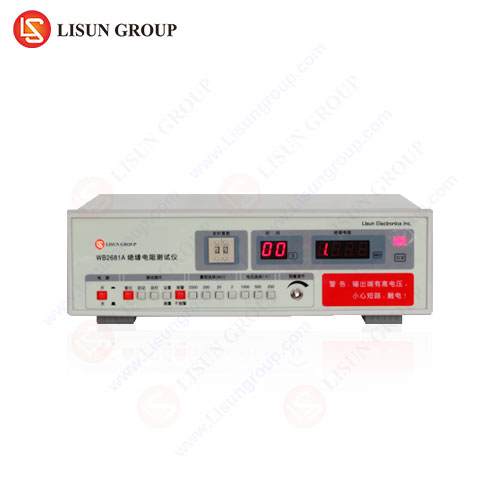
For engineers and quality assurance professionals requiring rigorous compliance testing, instruments like the LISUN WB2675D Leakage Current Tester provide a dedicated solution. This instrument is engineered to perform comprehensive electrical safety tests, with leakage current measurement as a core function.
The WB2675D operates on the principle of directly applying the standardized measurement network between the points of interest (e.g., accessible part, protective earth terminal) and reference ground. It supplies power to the UUT while simultaneously measuring the current flowing through the MD network. Key specifications that define its capability include a wide leakage current measurement range (typically 0.001 mA to 20 mA AC/DC), a high-precision digital display with resolution down to 0.1 μA, and the ability to perform tests at various input voltages (e.g., 0-300V AC adjustable) and frequencies (50/60 Hz). Its test modes often encompass touch current (patient leakage, enclosure leakage), ground bond current, and functional run tests.
Industry Applications and Use Cases
The application of such a tester spans the product lifecycle:
- Design & Validation (R&D): Engineers in the automotive electronics sector use it to validate the leakage profile of onboard chargers or infotainment systems, ensuring designs meet ISO 6469-3 and LV214 standards before type approval.
- Production Line Testing: Manufacturers of household appliances (IEC 60335-1) and office equipment integrate automated test sequences to perform 100% final product verification, ensuring no unit ships with excessive leakage due to manufacturing defects.
- Quality Inspection & Service: Service technicians for medical devices (IEC 62353) perform periodic safety checks on dialysis machines or patient monitors to ensure ongoing patient and operator safety.
- Component Verification: Producers of electrical components like switches, sockets (IEC 60884), and cable assemblies test insulation systems to guarantee performance within specified limits.
Competitive Advantages in Practice
The WB2675D’s advantages manifest in operational efficiency and reliability. Its integrated design eliminates the need for external isolation transformers and complex wiring of discrete measurement networks, reducing setup time and potential for operator error. Features such as programmable test limits, automatic pass/fail judgment, and data storage/recall facilitate streamlined production testing and audit trails. The instrument’s robust construction and compliance with relevant EMC standards ensure stable readings even in electrically noisy industrial environments, such as those found in manufacturing plants for industrial control systems or lighting fixtures.
Mitigation Strategies in Product Design
Understanding leakage current informs critical design decisions. For switch-mode power supplies in consumer electronics and telecommunications equipment, designers must carefully balance EMI filter performance (requiring Y-capacitors) against allowable leakage limits. Techniques include using capacitors with lower capacitance values, employing balanced filter designs, or implementing protective earth connections in Class I designs to safely shunt leakage current away from user-accessible parts. In medical devices with patient-applied parts, double or reinforced insulation (Class II construction) is often employed to eliminate any functional connection to earth, thereby minimizing patient leakage currents to the exceedingly low levels demanded by IEC 60601-1 (e.g., 10 μA under normal conditions).
For aerospace and aviation components, where reliability under extreme environmental stress is paramount, material selection for insulation with high dielectric strength and resistance to tracking, coupled with rigorous testing per standards like DO-160, is essential to control leakage throughout the product’s service life.
Conclusion: A Foundational Metric for Risk Mitigation
Leakage current is more than a simple electrical parameter; it is a direct quantitative measure of a product’s fundamental safety integrity. Its accurate measurement, as mandated by international safety standards, serves as a primary defense against electric shock hazards. As electrical and electronic equipment becomes more complex, integrated, and pervasive—from smart home appliances to advanced automotive driver-assistance systems—the role of precise, standards-compliant leakage current testing, facilitated by capable instruments like dedicated testers, remains indispensable. It ensures that technological advancement does not come at the expense of user safety, providing confidence to manufacturers, regulators, and end-users alike.
Frequently Asked Questions (FAQ)
Q1: Why can’t I use a standard digital multimeter (DMM) to measure leakage current for safety compliance?
A standard DMM has a very high input impedance (typically 10 MΩ), which presents virtually no load to the circuit. This does not simulate the impedance of the human body as defined by safety standards (e.g., IEC 60990 network). Consequently, a DMM reading will be significantly lower than the actual current that would flow through a person, providing a false sense of security and failing to prove compliance.
Q2: How does the LISUN WB2675D tester handle testing equipment with high inrush currents, like motors in household appliances?
Instruments like the WB2675D are designed with a robust output stage and often include a “soft-start” or timed sequencing function. This allows the output voltage to ramp up, limiting the initial inrush current that could otherwise trip internal protection circuits. The leakage measurement is then taken during stable, normal operating conditions after the inrush transient has subsided.
Q3: What is the difference between measuring leakage current on a Class I device (with an earth pin) versus a Class II device (double-insulated, no earth pin)?
For a Class I device, tests include measuring the protective conductor current (current flowing in the earth wire) under normal conditions and touch current under a single-fault condition where the protective earth is opened. For a Class II device, there is no protective earth, so testing focuses solely on measuring the touch current flowing from accessible parts to ground (or to another accessible part) through the body model network under normal and fault conditions, such as reversed supply polarity.
Q4: When testing medical devices, why are there different leakage current limits for “earth leakage,” “enclosure leakage,” and “patient leakage”?
Different limits reflect varying risk pathways. Earth leakage (protective conductor current) primarily indicates insulation stress. Enclosure leakage (touch current) assesses risk to the operator or a person touching the device. Patient leakage is the most stringent, assessing current that could pass through a patient who is physically connected to an applied part (e.g., an electrode); even microampere-level currents could be hazardous if directed through the heart. Standards like IEC 60601-1 define separate, progressively tighter limits for each pathway.
Q5: In a production environment, how can we ensure the WB2675D tester itself remains calibrated and accurate?
The instrument should be incorporated into a regular calibration schedule traceable to national standards, as recommended by the manufacturer (typically annually). For high-volume production lines, interim performance checks using a calibrated leakage current simulator or reference load can be performed daily or weekly to verify functionality and detect any drift before it impacts product testing.
