







Technical Specifications and Methodological Considerations for 10A Ground Resistance Testers in Modern Electrical Safety Verification
Introduction to High-Current Ground Testing Imperatives
The integrity of an electrical grounding system is a non-negotiable prerequisite for safety, equipment protection, and operational continuity across virtually every sector of industry and technology. A ground resistance tester serves as the primary diagnostic instrument for quantifying this integrity, measuring the opposition to current flow between a grounding electrode and the surrounding earth. While multiple testing methodologies exist, the 10A ground resistance tester, employing the Fall-of-Potential or similar high-current injection principles, represents a critical tool for applications where low-resistance grounding is paramount. This class of instrument is indispensable for verifying that grounding systems can safely dissipate fault currents, mitigate step and touch potentials, and provide a stable reference point for sensitive electronic equipment. The following technical exposition delineates the specifications, operational principles, and application contexts for these devices, with particular reference to the implementation exemplified by the LISUN WB2678A Grounding Resistance Tester.
Operational Principles: The Fall-of-Potential and Stakeless Methodologies
The foundational principle for most 10A testers is the Fall-of-Potential (FOP) method, a three-terminal test defined by standards such as IEEE 81. The instrument generates a known alternating current (I), typically at a non-power frequency to avoid interference, which is driven between the ground electrode under test (E) and a remote current probe (C). A separate potential probe (P) is inserted at varying distances along a line between E and C, measuring the voltage drop (V) caused by the injected current. Ground resistance (Rg) is derived using Ohm’s Law (Rg = V/I). The 10A current magnitude is significant as it helps overcome contact resistance, minimizes the influence of stray earth currents, and provides a more accurate representation of the electrode’s performance under realistic fault conditions, effectively “stressing” the ground connection.
An alternative, often integrated into modern devices like the LISUN WB2678A, is the stakeless or clamp-on method. This technique utilizes a transformer core to clamp around the grounding conductor, inducing a test voltage and measuring the resultant current without the need for auxiliary stakes. While exceptionally efficient for testing interconnected grounding grids in utility or telecommunications applications, its accuracy is contingent on the existence of a complete, low-resistance return path parallel to the measured one. The 10A capability in a clamp-on configuration allows for robust testing even in moderately resistive loops.
Core Performance Specifications and Their Implications
The efficacy of a ground resistance tester is quantified by a matrix of technical specifications. For a 10A-class instrument, key parameters extend beyond the basic resistance measurement range.
Measurement Ranges and Accuracy: A professional-grade instrument must offer broad, overlapping ranges. For resistance, this typically spans from milliohms (for bonding verification) to several kilohms (for soil resistivity surveys). The LISUN WB2678A, for instance, specifies a ground resistance range of 0.00Ω to 30.00kΩ with a basic accuracy of ±(2%+3 digits). The 10A current output is not constant across all ranges; it is often applied at the lower resistance settings (e.g., 0-600mΩ) to ensure precision, while higher ranges may use a lower test current. The accuracy specification is critical for compliance reporting; a measurement of 0.95Ω versus 1.05Ω can determine pass/fail status against a 1.0Ω specification in critical facilities.
Test Frequency and Noise Rejection: To avoid interference from power-line harmonics or other grounding systems, testers operate at frequencies distinct from 50/60 Hz and their multiples. Common test frequencies include 128 Hz, 105 Hz, or 111 Hz. Advanced instruments feature automatic frequency selection (AFS) or dual-frequency testing, which injects two distinct frequencies and analyzes the differential to cancel out extraneous noise. This is vital in electrically noisy environments like industrial plants or telecommunications hubs.
Additional Measurement Capabilities: Modern testers are multifunctional. Essential complementary measurements include:
- Ground Continuity/Bond Resistance: Verifying the low-resistance connection between equipment chassis and the grounding point, often at a higher DC or AC test current (e.g., 10A/25A AC) to comply with standards like IEC 60335-1 for household appliances or IEC 60601-1 for medical devices.
- Soil Resistivity: Using the Wenner four-pin method to characterize soil composition at a site, which is fundamental for designing new grounding systems.
- AC/DC Voltage Measurement: A safety feature to alert the user to live voltages on the ground system before testing commences.
Industry-Specific Application Contexts and Requirements
The 10A ground resistance tester is deployed across a diverse spectrum of industries, each with unique grounding challenges and regulatory frameworks.
Electrical & Electronic Equipment and Industrial Control Systems: Here, grounding ensures both safety and functional stability. Variable-frequency drives, PLC cabinets, and large control systems require a ground resistance typically below 5Ω to prevent electromagnetic interference (EMI) and provide a reliable fault path. The 10A test verifies that connections will not degrade under the inrush currents of industrial machinery.
Telecommunications Equipment and Data Centers: Tower sites and data centers mandate extremely low ground resistance (often <1Ω) to protect sensitive switching equipment from lightning-induced surges and to maintain signal integrity. The stakeless method is frequently employed here due to the extensive, meshed grounding networks.
Medical Devices and Aerospace/Aviation Components: Patient safety in medical facilities (per IEC 60601) and lightning-strike protection in aviation components demand exceptionally reliable grounding. Testing is performed not only on facility grounds but also on the grounding integrity within device enclosures and aircraft frame bonds, where milliohm-level accuracy is necessary.
Automotive Electronics and Lighting Fixtures: In automotive component testing (e.g., EV charging stations) and high-power outdoor lighting fixtures, grounding prevents shock hazards from insulation failures. Production-line testing often uses a simplified 10A bond test to ensure every unit’s chassis is properly connected before shipment.
Household Appliances, Consumer Electronics, and Office Equipment: While end-products may not be tested with 10A instruments, the manufacturing facilities, test laboratories, and certification bodies (like those applying UL or CE marks) use these testers to validate production jigs, test station safety grounds, and prototype safety compliance to standards such as IEC 62368-1.
The LISUN WB2678A: A Specification Benchmark
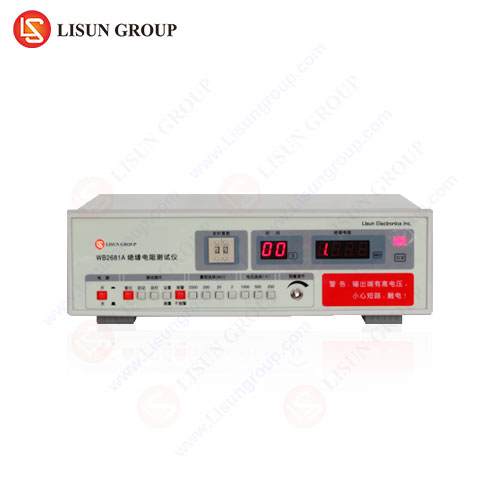
The LISUN WB2678A Grounding Resistance Tester embodies the technical requirements outlined above, serving as a pertinent case study for a modern, integrated 10A-class instrument.
Key Specifications Table:
| Parameter | Specification | Relevance |
|---|---|---|
| Ground Resistance Range | 0.00Ω ~ 30.00kΩ | Covers from precise bond tests to soil surveys. |
| Ground Resistance Accuracy | ±(2%+3 digits) | Meets lab and field calibration requirements. |
| Test Current (Ground R) | Up to 10A AC (max) | Ensures accurate, low-noise measurement for low-resistance grounds. |
| Continuity/Bond Range | 0.00Ω ~ 600.0mΩ | Dedicated low-range scale for bonding verification. |
| Continuity Test Current | 10A AC / 25A AC (selectable) | Applies realistic stress for compliance testing (e.g., 25A per many safety standards). |
| Soil Resistivity | 0.00Ωm ~ 9999kΩm | Enables professional grounding system design. |
| Noise Rejection | Automatic Frequency Selection (AFS) | Maintains accuracy in electromagnetically congested environments. |
| Safety Features | Live circuit warning, over-voltage protection | Protects both the instrument and the operator. |
Competitive Advantages in Application: The WB2678A’s integration of high-current Fall-of-Potential and stakeless methods provides operational flexibility. Its selectable 10A/25A continuity test current directly addresses the test conditions stipulated in numerous product safety standards for electrical components and finished goods. The instrument’s robust construction and clear interface facilitate use in harsh field environments—such as utility substations or telecommunications tower bases—as well as in controlled laboratory settings for certification testing of cables, switches, and sockets.
Standards Compliance and Calibration Traceability
Measurements are only as credible as their traceability to international standards. A 10A ground resistance tester’s design and usage are governed by a suite of standards, including:
- IEEE Std. 81: Guide for Measuring Earth Resistivity, Ground Impedance, and Earth Surface Potentials.
- IEC 61557-5: Electrical safety in low voltage distribution systems – Equipment for testing, measuring or monitoring of protective measures – Part 5: Resistance to earth.
- ANSI/NETA ATS: Standard for Acceptance Testing Specifications for Electrical Power Equipment and Systems.
Regular calibration against a known resistance standard, traceable to national metrology institutes (e.g., NIST, NPL), is mandatory to maintain measurement integrity. The 10A output current itself must be calibrated to ensure the applied test stress is accurate.
Procedural Best Practices and Measurement Pitfalls
Obtaining a valid measurement requires strict adherence to procedure. For the Fall-of-Potential method, correct probe placement is critical; the potential probe must be placed outside the sphere of influence of the ground electrode under test. In congested urban areas or sites with underground infrastructure, achieving a sufficient probe separation (often 5-10 times the diagonal length of the ground system) can be challenging, potentially necessitating the use of alternative methods or specialized analysis software.
Contact resistance at the auxiliary stakes can invalidate readings. The use of moistened soil, proper stake penetration, and—in dry or rocky terrain—the application of a conductive gel are essential mitigations. The 10A test current aids in piercing through high-contact-resistance layers. Furthermore, the presence of parallel grounding paths, such as metallic water pipes or cable sheaths, can shunt test current and yield deceptively low readings, a factor the technician must investigate and account for.
Frequently Asked Questions (FAQ)
Q1: When is a 10A test current necessary versus a lower current (e.g., 1A or 200mA)?
A1: A 10A test current is essential when testing low-resistance grounding systems (typically below 1Ω) as specified for telecommunications sites, electrical substations, or hospital power centers. The higher current minimizes errors from contact resistance and electromagnetic interference, providing a more accurate and repeatable measurement that simulates a substantial fault condition. Lower test currents are suitable for preliminary surveys or high-resistance measurements but lack the diagnostic authority for compliance verification on critical systems.
Q2: Can the LISUN WB2678A be used to test the grounding of an individual piece of equipment, like an industrial control cabinet, within an already-grounded building?
A2: Yes, this is a primary application. Using its continuity/bonding function with the 10A or 25A test current, the WB2678A can directly measure the resistance of the protective bonding conductor between the equipment chassis and the building’s grounding point. This verifies compliance with safety standards which require this connection to be of low resistance (often <0.1Ω) to ensure effective fault current passage.
Q3: What is the significance of the Automatic Frequency Selection (AFS) feature?
A3: In environments with high levels of electrical noise—common in industrial plants, near power lines, or in data centers—stray currents can superimpose on the test signal, causing unstable or inaccurate resistance readings. AFS automatically identifies and selects a test frequency with minimal ambient interference, thereby ensuring a stable measurement without requiring manual intervention or repeated tests.
Q4: How often should a 10A ground resistance tester like the WB2678A be calibrated?
A4: Calibration intervals depend on usage frequency, environmental conditions, and internal quality procedures. For instruments used in compliance or certification testing, an annual calibration cycle is typical. For critical applications or harsh environments, a six-month interval may be warranted. It is imperative to follow the manufacturer’s recommendations and any requirements dictated by the laboratory’s or company’s quality management system (e.g., ISO/IEC 17025).
