





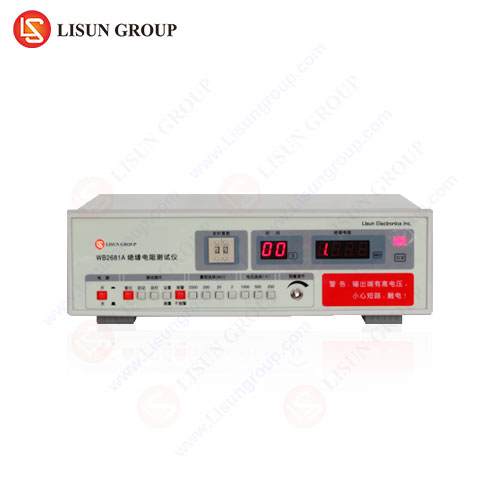



Comparative Analysis of Insulation Resistance and Earth Ground Testing Instrumentation
Introduction: The Imperative of Electrical Safety and Performance Verification
Within the domains of electrical safety, preventive maintenance, and quality assurance, the verification of dielectric integrity and grounding efficacy stands as a non-negotiable prerequisite. Two cornerstone instruments in this endeavor are the insulation resistance tester, colloquially known by the brand-derived term “Megger,” and the earth ground resistance tester. While both are fundamental to electrical testing regimes, their operational principles, measurement objectives, and fields of application are fundamentally distinct. A conflation of these devices can lead to inappropriate application, misinterpretation of data, and, consequently, significant safety hazards or operational failures. This technical treatise delineates the key differences between insulation resistance testers and earth ground testers, elucidates their respective applications across diverse industries, and examines the technical specifications and methodologies of a modern earth testing solution, exemplified by the LISUN WB2678A Grounding Resistance Tester.
Fundamental Operational Principles: Dielectric Stress Versus Soil Resistivity
The core distinction between these instruments resides in their underlying measurement physics. An insulation resistance tester, or Megger, functions by applying a high direct current (DC) voltage, typically ranging from 250V to 10kV or beyond, across the insulation barrier separating a conductor from earth or another conductor. The instrument then measures the minuscule leakage current that flows through or across the insulation material. The resultant resistance, calculated via Ohm’s Law (R = V/I), is expressed in megohms (MΩ) or gigohms (GΩ). This measurement assesses the quality of the dielectric—materials such as PVC, polyethylene, ceramic, or transformer oil—that prevents unintended current flow. A declining insulation resistance value indicates aging, moisture ingress, contamination, or physical degradation of the insulating material.
Conversely, an earth ground resistance tester evaluates the impedance of a grounding electrode system to the surrounding earth mass. Its objective is to ascertain that the grounding path offers sufficiently low resistance to safely conduct fault currents into the earth, thereby facilitating protective device operation and ensuring equipotential bonding. The predominant methodology, employed by instruments like the LISUN WB2678A, is the fall-of-potential method. This technique involves injecting a known alternating current (I) between the electrode under test (X) and a remote current probe (C). A second potential probe (P) is placed at a specific interval, and the voltage (V) between X and P is measured. Ground resistance (Rg = V/I) is thus derived. This AC method negates the effects of stray DC currents and soil electrolysis. Advanced testers may also utilize the clamp-on method for measuring ground resistance of installed systems without disconnection, though its applicability has constraints.
Primary Measurement Objectives and Interpreted Parameters
The parameters yielded by each test inform fundamentally different safety and performance criteria. Insulation resistance testing is a pass/fail or trending evaluation of material integrity. Standards such as IEC 60335-1 (household appliances), IEC 60601-1 (medical devices), and IEEE 43 for rotating machinery stipulate minimum acceptable insulation resistance values, often at a specified test voltage. A test result confirms that the insulation can withstand operational and transient overvoltages without breakdown. Time-resolved tests like the Dielectric Absorption Ratio (DAR) or Polarization Index (PI) provide further insight into insulation condition by analyzing the change in measured resistance over minutes, revealing moisture or contamination issues not apparent in a spot test.
Earth ground testing quantifies the efficacy of a safety-critical system. The target resistance is dictated by local electrical codes (e.g., NEC, IEC 60364), facility requirements, and the sensitivity of protective devices. For instance, telecommunications equipment shelters often require ground resistance below 5Ω to protect sensitive electronics from lightning-induced surges and ensure reference potential stability. In industrial control systems, a sub-1Ω ground may be mandated for noise suppression in analog signal circuits. The measurement is not of a material property but of a system’s interaction with a heterogeneous, variable medium—the earth.
Spectrum of Industrial Applications and Use Case Scenarios
The application landscapes for these testers are vast and industry-specific.
Insulation Resistance Tester (Megger) Applications:
- Electrical & Electronic Equipment: Production-line testing of printed circuit board assemblies (PCBAs), power supplies, and motor windings to detect solder flux contamination or pin-hole defects in conformal coating.
- Household Appliances & Consumer Electronics: Mandatory safety testing for products like refrigerators, washing machines, and laptop chargers to ensure user protection from electric shock.
- Automotive Electronics: Validating the insulation integrity of high-voltage cabling and components in electric and hybrid vehicle powertrains (e.g., battery packs, inverters, traction motors).
- Aerospace & Aviation Components: Testing wiring harnesses, avionics enclosures, and in-flight entertainment systems for insulation breakdown that could occur under low-pressure, high-humidity conditions.
- Cable & Wiring Systems: Field maintenance and installation verification of power, data, and coaxial cables, identifying insulation damage from abrasion, rodent activity, or water ingress.
Earth Ground Resistance Tester (e.g., LISUN WB2678A) Applications:
- Telecommunications Equipment: Ensuring tower guy-wire anchors, equipment shelter ground grids, and coaxial cable shields are properly earthed to dissipate lightning strike energy.
- Industrial Control Systems: Verifying the grounding integrity of programmable logic controller (PLC) cabinets, motor drive chassis, and sensor networks to prevent electromagnetic interference (EMI) and ground-loop-induced errors.
- Medical Devices: Certifying the protective earth continuity and ground bond resistance of surgical suites, imaging equipment (MRI, CT), and patient-connected devices as per IEC 60601-1.
- Lighting Fixtures: Testing the grounding of large outdoor luminaire installations, street lighting poles, and high-bay industrial fixtures to protect against fault conditions.
- Electrical Components: Validating the grounding terminal efficacy of industrial sockets, switches, and distribution boards before commissioning.
Technical Examination: The LISUN WB2678A Grounding Resistance Tester
The LISUN WB2678A embodies the functional requirements of a modern, precision earth ground tester. It is engineered to deliver reliable measurements in complex electrical environments, a necessity for the industries outlined above.
Specifications and Testing Principles:
The WB2678A operates on the classic 3-pole and selective 4-pole fall-of-potential method, providing a direct readout of ground resistance (R). Its measurement range typically spans from 0.00Ω to 30.00kΩ, with a resolution of 0.01Ω in the lower ranges critical for compliance verification. The instrument injects a test frequency that is distinct from mains power frequency (e.g., 128 Hz) to reject interference. Key specifications include a high test current capability, often up to 20mA, which improves signal-to-noise ratio in high-resistance soils. It simultaneously measures ground resistance and the resistance of the auxiliary test spikes, alerting the user if spike resistance is too high for a valid measurement—a critical feature often omitted in basic models.
Industry Use Cases and Competitive Advantages:
In practice, the WB2678A’s advantages become evident. For a telecommunications engineer surveying a remote cell site, the instrument’s robust construction and ability to compensate for high auxiliary spike resistance are vital. When testing the ground grid for a new medical imaging suite, its precision at sub-ohm levels ensures compliance with stringent hospital standards. A competitive advantage lies in its integrated functionality; beyond basic ground resistance (R), it can often measure soil resistivity (ρ) using the Wenner or Schlumberger methods—essential data for designing new grounding systems. Additional features like data logging, Bluetooth connectivity for report generation, and a clear graphical display of test setup and results reduce operator error and streamline documentation for audits against standards like IEEE 81 or IEC 61557-5.
Selection Criteria: Aligning Instrument Capability with Test Requirements
Choosing between an insulation resistance tester and an earth ground tester is unequivocal based on the test objective. However, selecting a specific model within each category requires careful analysis.
For insulation testing, key criteria are the required test voltage (DC or AC), measurement range, PI/DAR calculation capability, and guard terminal availability to eliminate surface leakage errors.
For earth testing, selection depends on the required measurement method (2-pole, 3-pole, 4-pole, clamp-on), necessary current injection level, resistance range, noise rejection capabilities, and ancillary functions like soil resistivity or stake resistance measurement. A device like the WB2678A is selected for its comprehensive adherence to standard methodologies, measurement accuracy under field conditions, and durability.
Synthesis and Concluding Implications
The insulation resistance tester and the earth ground resistance tester are complementary, not interchangeable, pillars of electrical safety and reliability engineering. The former is a diagnostician of material health within an assembly, while the latter is a surveyor of a system’s interface with the physical earth. Misapplication—such as attempting to assess a building’s ground rod with a Megger—will yield meaningless and dangerously misleading data. As technological systems grow more integrated and sensitive, particularly in sectors like automotive electronics, medical devices, and telecommunications, the precision and reliability of these test instruments become paramount. Employing dedicated, capable tools like the LISUN WB2678A for grounding verification ensures that the foundational safety principle of effective earthing is quantifiably met, thereby protecting both infrastructure and human life.
FAQ Section
Q1: Can the LISUN WB2678A be used to test the insulation resistance of a motor winding?
A1: No, the WB2678A is designed specifically for measuring low-resistance earth ground connections and soil resistivity. Testing motor winding insulation requires a high-voltage insulation resistance tester (Megger) capable of applying 500V, 1000V, or higher DC voltages to measure resistance in the megohm or gigohm range, which is outside the operational design of an earth ground tester.
Q2: What is the significance of the test current in earth ground measurement, and why does the WB2678A specify a current up to 20mA?
A2: A higher test current improves measurement stability and noise immunity by creating a stronger signal in the ground circuit. In soils with high resistivity or in electrically noisy environments (e.g., near substations, industrial plants), a weak test signal can be overwhelmed by interference, leading to erratic readings. The WB2678A’s ability to inject up to 20mA ensures reliable measurements under these challenging field conditions.
Q3: When measuring ground resistance at an existing facility, is it always necessary to disconnect the ground electrode from the system?
A3: For a definitive measurement using the fall-of-potential method with an instrument like the WB2678A, yes, the electrode should typically be isolated. This prevents parallel grounding paths through neutral bonds or other equipment from shunting the test current, which would result in an erroneously low resistance reading. The clamp-on method can provide an approximate in-situ measurement without disconnection but has limitations regarding the presence of multiple parallel paths.
Q4: How does the WB2678A account for the resistance of the auxiliary test spikes (P and C stakes)?
A4: The WB2678A incorporates a 4-pole (or 4-terminal) measurement capability. This method uses separate pairs of terminals for injecting current and sensing voltage. Because the voltage measurement circuit has a very high input impedance, it draws negligible current, thereby eliminating the voltage drop error caused by the resistance of the test leads and the contact resistance of the potential spike (P). The instrument may also measure and display spike resistance, warning the operator if it is excessive for a valid test.
Q5: What standards govern earth ground resistance testing, and is the WB2678A compliant?
A5: Key standards include IEEE Standard 81 (Guide for Measuring Earth Resistivity, Ground Impedance, and Earth Surface Potentials of a Grounding System) and IEC 61557-5 (Electrical safety in low voltage distribution systems up to 1 000 V a.c. and 1 500 V d.c. – Equipment for testing, measuring or monitoring of protective measures – Part 5: Resistance to earth). The LISUN WB2678A is engineered to perform tests in accordance with the methodologies prescribed by these and related international standards.
