








Foundations of Electrical Safety in Medical Device Design
The proliferation of medical technology has irrevocably transformed patient care, embedding sophisticated electrical systems into diagnostic, therapeutic, and monitoring devices. This integration, while beneficial, introduces a spectrum of risks, making electrical safety a non-negotiable pillar of medical device design and validation. The consequences of electrical failure—from microshock hazards precipitating cardiac fibrillation to macroshock events causing tissue damage or fire—demand a rigorous, standards-based approach. Regulatory frameworks worldwide mandate comprehensive testing to mitigate these risks, ensuring that devices operate safely under both normal and single-fault conditions. The objective is to create a failsafe environment for both the patient, who may be physiologically compromised and more vulnerable, and the clinical operator. This foundational principle governs every stage of the product lifecycle, from initial concept and component selection to final production line verification and post-market surveillance. Adherence to established standards is not merely a regulatory hurdle but a fundamental ethical and engineering obligation.
Deconstructing Leakage Current: Mechanisms and Hazard Profiles
Leakage current, the unintended flow of electrical current from a live part to an accessible conductive part or to earth, represents a primary vector for electrical hazard in medical equipment. It is a ubiquitous phenomenon, arising from parasitic capacitance, insulation imperfections, and electromagnetic coupling, even in properly functioning devices. The criticality of managing leakage current is amplified in medical applications where low-impedance pathways may exist directly to a patient’s heart, such as through catheters or ECG leads.
Leakage current is categorized based on its path and characteristics. Earth Leakage Current flows from the mains part through or across insulation into the protective earth conductor. Enclosure Touch Current (also known as chassis leakage) is the current that could flow through a person coming into contact with an accessible part of the appliance. Most critically for medical devices, Patient Leakage Current is that which flows from the applied part or patient connection through the patient to earth. A subset, Patient Auxiliary Current, flows between applied parts of the medical device through the patient.
Under normal conditions, these currents are maintained within safe limits by robust insulation and grounding. However, the core of electrical safety testing involves simulating single-fault conditions—such as a broken protective earth wire or reversal of line and neutral—to verify that leakage currents do not exceed the stringent thresholds defined by standards like IEC 60601-1. These thresholds are exceptionally low for patient-connected parts, often in the microamp range, reflecting the heightened risk of microshock.
Global Regulatory Frameworks and the Primacy of IEC 60601-1
The international benchmark for medical electrical equipment is the IEC 60601-1 series of standards, specifically the third edition and its amendments. This standard establishes general requirements for basic safety and essential performance. It adopts a risk management process, as outlined in ISO 14971, requiring manufacturers to identify potential hazards and implement protective measures. The standard’s requirements are comprehensive, covering not only electrical hazards but also mechanical, thermal, and radiation-related risks.
National and regional bodies adopt and often augment IEC 60601-1. In the European Union, compliance with the EN 60601-1 harmonized standard provides a presumption of conformity with the Medical Device Regulation (MDR). In the United States, the Food and Drug Administration (FDA) recognizes ANSI/AAMI ES60601-1, the US national adoption of the IEC standard. Other regions, including Canada (CMDR) and Japan (JMDA), have their own adoption pathways. The core tenets, however, remain consistent: a medical device must remain safe and perform its essential function even when one means of protection has failed. This principle of “single-fault safety” is the cornerstone of the standard and dictates the design of safety testing protocols.
The Critical Role of Automated Leakage Current Test Systems
Manual verification of electrical safety, particularly leakage current, is fraught with potential for human error, inconsistency, and inefficiency. The precise measurement of microamp-level currents under various network configurations and fault conditions requires instrumentation of high accuracy, stability, and repeatability. Automated leakage current testers, therefore, have become indispensable in both design validation laboratories and high-volume manufacturing environments.
These systems integrate a precision measurement circuit, a network of relays to simulate different fault conditions (S1-S16, as per IEC 60601-1), and a programmable controller. They automate the sequence of tests, apply the correct voltages, measure the resultant currents, and compare the readings against pre-set pass/fail limits. This automation ensures strict adherence to the standard’s test methodology, eliminates operator influence, and generates auditable test reports—a crucial requirement for regulatory submissions and quality management systems like ISO 13485. The efficiency gains are substantial, enabling 100% production line testing without becoming a manufacturing bottleneck.
WB2675D Leakage Current Tester: Technical Specifications and Operational Principles
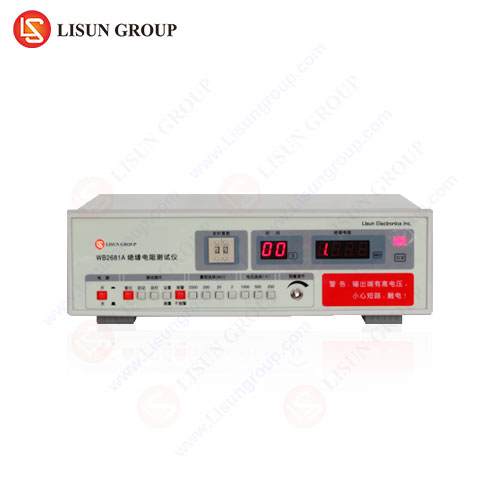
The LISUN WB2675D Leakage Current Tester exemplifies the technological sophistication required for modern medical device compliance. It is engineered to perform comprehensive electrical safety tests in accordance with IEC 60601-1, IEC 60990, and other derivative standards for a wide range of equipment, including medical devices, household appliances, and information technology equipment.
The instrument’s core operational principle is based on the standardized measurement network defined in safety standards, which simulates the frequency-dependent impedance of the human body. The WB2675D incorporates this network to provide accurate and biologically relevant leakage current readings. Its measurement capabilities are extensive, covering earth leakage current, touch current, and patient leakage/auxiliary currents.
Key technical specifications of the WB2675D include:
- Measurement Range: A high-resolution range from 0.001 mA to 20 mA, capable of capturing the critical microamp-level leakage specific to medical device patient applied parts.
- Test Voltage: Programmable AC power source from 0 to 264V, adjustable to match regional mains voltages (e.g., 120V, 230V) and for testing insulation strength at elevated voltages.
- Test Network Switching: Fully automated switching between various test networks (S1-S16) as mandated by IEC 60601-1, including normal condition, reversed polarity, open earth, and single-fault simulations.
- Comprehensive Testing Suite: Beyond leakage current, the WB2675D integrates testing for ground bond continuity (up to 30A), hipot (AC/DC dielectric strength), and power input, consolidating multiple safety tests into a single platform.
- Automation and Interface: Features a color TFT-LCD interface and supports programmable test sequences. With RS232, USB, and LAN interfaces, it seamlessly integrates into automated production lines and Laboratory Information Management Systems (LIMS).
Cross-Industry Application of Electrical Safety Testing Protocols
While the focus here is on medical devices, the principles and equipment for electrical safety testing are universally applicable across numerous technology sectors. The WB2675D’s versatility makes it a critical asset in these diverse fields.
- Household Appliances and Consumer Electronics: Products like refrigerators, washing machines, and smartphones must comply with standards like IEC 60335-1, which mandate strict limits on touch current to protect consumers during everyday use.
- Automotive Electronics: The transition to electric vehicles and the increasing complexity of in-vehicle infotainment systems require rigorous testing for components like battery management systems and charging ports against standards such as ISO 6469-3.
- Lighting Fixtures and LED Drivers: As LED technology permeates homes and industries, the safety of LED drivers and power supplies, often operating at high frequencies, must be validated for leakage and dielectric strength.
- Industrial Control Systems & Telecommunications Equipment: Programmable Logic Controllers (PLCs), servers, and routers form the backbone of modern infrastructure. Their continuous operation demands high reliability and safety, verified through earth bond and hipot testing.
- Aerospace and Aviation Components: The extreme environments and critical nature of avionics necessitate the highest levels of safety and reliability, with testing protocols often exceeding commercial standards.
- Electrical Components and Office Equipment: From switches and sockets to printers and photocopiers, any device connected to the mains supply requires validation to prevent fire and shock hazards.
In each of these sectors, the ability of the WB2675D to automate complex test sequences ensures consistent quality control, reduces testing time, and provides definitive, documented proof of compliance.
Methodology for Validating Medical Device Single-Fault Safety
A central tenet of IEC 60601-1 is the verification of safety under single-fault conditions. The testing methodology using an instrument like the WB2675D is systematic and exhaustive. The device under test (DUT) is subjected to a series of simulated faults while leakage currents are measured.
A typical test sequence for a medical device would involve:
- Normal Condition: Measuring all leakage currents with the DUT correctly wired and powered.
- Earth Open Fault: Disconnecting the protective earth conductor and measuring enclosure touch current.
- Mains Polarity Reversal: Swapping the line and neutral connections to test for asymmetrical design vulnerabilities.
- Applied Part Testing: For devices with patient connections, measuring patient leakage and auxiliary currents under both normal and fault conditions, often with the application of external voltages to the applied parts to simulate defibrillation events or other external potentials.
The WB2675D automates this entire workflow, applying the specified voltage, configuring the internal measurement network for the specific test (e.g., selecting the correct body impedance model), and recording the result. This automation is critical for achieving the repeatability and traceability required for regulatory audits.
Quantitative Analysis of Leakage Current Limits and Tester Accuracy
The permissible limits for leakage current are precisely defined and vary based on the device type and condition. The following table illustrates the stringent requirements for medical electrical equipment as per IEC 60601-1.
Table 1: Maximum Allowable Leakage Currents for Medical Electrical Equipment (IEC 60601-1)
| Current Type | Normal Condition (μA) | Single-Fault Condition (μA) |
|---|---|---|
| Earth Leakage Current (Class I equipment) | 5,000 | 10,000 |
| Enclosure Touch Current | 100 | 500 |
| Patient Leakage Current (DC) | 10 | 50 |
| Patient Leakage Current (AC) | 100 | 500 |
| Patient Auxiliary Current (DC) | 10 | 50 |
| Patient Auxiliary Current (AC) | 100 | 500 |
The accuracy of the measuring instrument is paramount. A tester with a tolerance of ±5% measuring a patient leakage current at 95 μA under normal conditions could have a true value anywhere from 90.25 μA to 99.75 μA. This margin of error is dangerously close to the 100 μA limit. High-precision instruments like the WB2675D, with superior accuracy specifications, provide a greater safety margin, ensuring that a “pass” result is unequivocal and that no non-compliant device escapes detection. This level of precision safeguards against both consumer risk and manufacturer liability.
Integrating Safety Testing into the Product Development Lifecycle
Electrical safety validation is not a final gate before production but an integral activity throughout the product development lifecycle. During the design and prototyping phase, engineers use testers like the WB2675D to verify design choices, identify insulation weaknesses, and refine circuit layouts to minimize intrinsic leakage. In the design verification and validation phase, comprehensive testing against the full suite of standard requirements is conducted to generate evidence for regulatory submission. Finally, in manufacturing, the same testers are deployed for 100% final product testing or statistical process control, ensuring that every unit shipped conforms to the validated design. This continuous feedback loop, enabled by reliable and automated test equipment, is essential for building quality and safety into the product from the outset, rather than attempting to inspect it in at the end.
Frequently Asked Questions (FAQ)
Q1: Why is measuring patient auxiliary current specifically important for devices with multiple patient connections?
Patient auxiliary current is the current that flows through the patient between different applied parts of the same device, such as between the individual leads of an ECG machine. Even if the device is perfectly insulated from earth, a fault could cause excessive current to flow directly across the patient’s skin or, in the worst case, through a low-impedance internal pathway. This poses a direct microshock risk, particularly if the current path includes the heart.
Q2: How does the WB2675D simulate the human body’s impedance for touch current measurements?
The tester incorporates a standardized weighting network, as defined in IEC 60990 and referenced in IEC 60601-1. This network is not a simple resistor; it is a complex RC circuit designed to present an impedance to the measuring instrument that mimics the frequency-dependent impedance of the human body for AC signals in the relevant frequency range (e.g., 15Hz to 1MHz). This ensures the measured current value is physiologically relevant to the hazard being assessed.
Q3: Can the WB2675D be used for pre-compliance testing during the R&D phase?
Absolutely. Utilizing a fully compliant automated tester like the WB2675D during research and development allows engineers to identify and rectify potential safety issues early in the design process. This “shift-left” approach prevents costly redesigns and delays later in the product lifecycle, as the device is being validated against the actual certification standards from its inception.
Q4: What is the significance of the ground bond test performing at a high current (e.g., 25A or 30A)?
The ground bond test verifies the integrity of the protective earth connection. Testing at a high current for a short duration (typically 1-60 seconds) serves two purposes. First, it ensures the connection has a sufficiently low resistance to allow a fault current to flow freely, which will quickly trip a fuse or circuit breaker. Second, it tests the mechanical and electrical robustness of the connection under a stress that simulates a severe fault condition, checking for weaknesses like cold solder joints or loose terminals that a low-current test might miss.
