





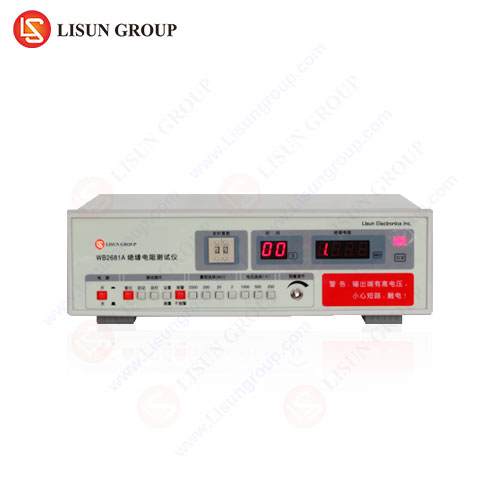



A Methodical Approach to Earth Ground Tester Selection for Electrical Safety and Compliance
The integrity of an earth grounding system is a non-negotiable prerequisite for electrical safety, equipment protection, and operational continuity across a vast spectrum of industries. A compromised ground can lead to catastrophic consequences, including electric shock hazards, electromagnetic interference (EMI) disrupting sensitive electronics, and costly equipment failure. Consequently, the accurate measurement of earth resistance is a critical maintenance and verification procedure. The selection of an appropriate earth ground tester, however, is not a one-size-fits-all endeavor. It demands a systematic evaluation of application-specific requirements, environmental constraints, and prevailing international standards. This technical treatise delineates a comprehensive methodology for selecting the optimal earth ground tester, with a detailed examination of the underlying principles and a focus on the operational characteristics of the LISUN WB2678A Grounding Resistance Tester as a representative advanced instrument.
Fundamentals of Earth Ground Resistance Measurement
Understanding the core methodologies for measuring ground resistance is paramount to selecting a tester with the requisite capabilities. The objective is to determine the electrical resistance between a grounding electrode and the surrounding earth mass. This resistance is not a simple property of the electrode itself but a complex function of the soil’s composition, moisture content, temperature, and stratification.
The three-terminal fall-of-potential method is the most recognized and standardized technique, detailed in standards such as IEEE Std. 81. This method employs a primary ground electrode (E) under test, a current injection probe (C) placed a significant distance away, and a potential probe (P) positioned between them. The tester generates a known alternating current (I) between E and C, while simultaneously measuring the voltage drop (V) between E and P. The ground resistance (R) is then calculated using Ohm’s Law (R=V/I). The accurate placement of the potential probe is critical to avoid areas of influence from the other electrodes, a process which may require iterative measurements at different P-probe positions to establish a resistance plateau.
For more complex scenarios, such as measuring large grounding grids or in areas with limited space, the four-terminal method is often employed. This configuration uses two current and two potential terminals, effectively eliminating the resistance of the test leads from the measurement, thereby enhancing accuracy, particularly for very low resistance values. The selective measurement function, a feature of advanced testers like the LISUN WB2678A, allows for the isolation and testing of a specific grounding point within a multi-grounded system without the need for disconnection, a vital capability in live electrical environments like telecommunications central offices or industrial control panels.
The two-pole method, or stakeless measurement, utilizes a pair of clamps and is suitable for rapid testing of interconnected grounding rods, such as those found in telecommunications tower networks or utility substations. This method measures the loop resistance of the grounding path, but its applicability is contingent upon the existence of a verified parallel grounding return path.
Critical Technical Specifications for Instrument Evaluation
When evaluating an earth ground tester, a meticulous review of its technical specifications is imperative. These parameters directly dictate the instrument’s suitability for a given task.
The measurement range must be compatible with the expected resistance values. For instance, the resistance of a single rod for a residential appliance may be in the tens of ohms, while a large substation grid must be in the sub-ohm range. The LISUN WB2678A offers a broad range from 0.00Ω to 30.00kΩ, providing versatility for applications from testing a single electrical socket’s ground to assessing the overall resistance of a remote telecommunications site.
Measurement accuracy is a defining characteristic of a professional-grade instrument. Accuracy is typically expressed as a percentage of the reading plus a number of counts. An instrument with an accuracy of ±(2%+3d) is suitable for most field applications, whereas laboratory or high-precision industrial validation may demand superior specifications. The resolution of the display, such as 0.01Ω, is equally important for discerning small changes in low-resistance systems.
The test frequency is a critical, yet often overlooked, parameter. To mitigate interference from stray currents and DC offsets present in the soil, testers inject an AC signal at a frequency different from the power line frequency (50/60 Hz) and its harmonics. The WB2678A, for example, operates at a test frequency of 820 Hz, which is sufficiently displaced from power frequencies to ensure stable readings in electrically noisy environments like industrial plants or near railway electrification systems.
Noise rejection capability quantifies the instrument’s ability to provide a stable reading in the presence of external voltage and current interference. A high noise rejection, often specified in volts for stray voltage and milliamps for stray current, is essential for reliable operation. Advanced testers incorporate automatic frequency control (AFC) or other signal processing techniques to filter out this noise.
Finally, safety certifications such as IEC 61010-1, which governs safety requirements for electrical equipment for measurement, control, and laboratory use, are non-negotiable. Compliance with this and other relevant standards ensures the instrument is designed to protect the operator from electrical hazards.
Application-Specific Requirements Across Industries
The operational context dictates the necessary features of an earth ground tester. A device suitable for a lighting fixture factory’s quality control line may be inadequate for an aerospace component testing facility.
In the Automotive Electronics and Aerospace and Aviation Components sectors, grounding is crucial for shielding sensitive avionics and engine control units from EMI. Testers must offer high-resolution, low-resistance measurement capabilities to verify the integrity of bonding straps and airframe grounds, where resistances are typically required to be below 0.1Ω.
For Medical Devices and Telecommunications Equipment, operational continuity and patient safety are paramount. Grounding systems in hospitals and data centers must have extremely low impedance to safely divert fault currents and prevent noise on signal lines. Testers used here must provide highly accurate four-terminal measurements and often need to perform selective testing without powering down critical systems.
Industrial Control Systems and Electrical Components manufacturing often involve testing in high-noise environments with significant stray currents from variable-frequency drives and heavy machinery. A tester with robust noise rejection, a high test frequency, and a ruggedized housing is essential. The ability to log data for compliance audits is also a key feature.
The Household Appliances and Consumer Electronics industries require testers for production line verification. Speed, ease of use, and pass/fail functionality are prioritized. A tester like the LISUN WB2678A, with its clear digital display, simple two/three/four-pole switching, and ability to store reference values, is well-suited for this high-throughput environment.
Operational Analysis of the LISUN WB2678A Grounding Resistance Tester
The LISUN WB2678A embodies the technical principles discussed, serving as a pertinent case study for a modern, multi-functional grounding resistance tester. Its design integrates the core measurement methodologies into a single, user-configurable instrument.
Table 1: Key Specifications of the LISUN WB2678A Grounding Resistance Tester
| Parameter | Specification |
| :— | :— |
| Measurement Range | 0.00Ω ~ 30.00kΩ (Auto-ranging) |
| Test Accuracy | ±(2%+3) |
| Open Circuit Voltage | < 40V AC |
| Test Current | > 20mA AC |
| Test Frequency | 820 Hz |
| Noise Rejection | Stray Voltage: 30V (50/60Hz); Stray Current: 2mA |
| Safety Standard | IEC 61010-1, CAT III 600V |
The WB2678A operates on the constant current inversion principle. It generates a stable 820 Hz, >20mA constant current signal. This signal is injected into the earth electrode system. The instrument’s microprocessor then measures the resulting voltage drop and, using a phase-sensitive detection circuit, calculates the pure resistive component of the impedance, effectively ignoring any reactive components caused by capacitive or inductive coupling in the test leads or soil. This principle ensures high accuracy even in challenging soil conditions.
Its competitive advantages are manifest in its application breadth. For a cable and wiring systems manufacturer, the four-terminal measurement mode allows for precise testing of the ground continuity of cable shields and armoring. In an office equipment or lighting fixtures production facility, the simple two-pole mode can rapidly verify the grounding pin of power cords against a pre-set limit. For field engineers servicing telecommunications equipment or electrical substations, the three-pole fall-of-potential mode provides the standardized data required for compliance with standards like IEEE 81 or Telecommunication Standardization Sector (ITU-T) recommendations.
Adherence to International Standards and Compliance Protocols
A grounding tester is not merely a measurement device but a tool for verification against a regulatory framework. Selection must be informed by the standards applicable to the target industry. Key international standards include:
- IEC 60364-6: Low-voltage electrical installations – Part 6: Verification.
- IEEE Std. 81: Guide for Measuring Earth Resistivity, Ground Impedance, and Earth Surface Potentials of a Grounding System.
- NFPA 70 (National Electrical Code): Article 250 outlines grounding and bonding requirements.
- IEC 60601-1: Medical electrical equipment – Part 1: General requirements for basic safety and essential performance (specifies grounding requirements).
An instrument’s design and calibration traceability must support the evidence required for audits and certification processes. The data logging functionality, a feature present in many advanced testers, is crucial for generating immutable test records for assets ranging from medical imaging devices to aviation ground power units.
Integrating Environmental and Usability Factors
Technical specifications alone are insufficient for selection. The instrument’s design must be suited to the physical environment in which it will be deployed. For field use in the telecommunications or power distribution sectors, a rugged, weather-resistant case (often meeting IP54 or higher) is necessary to withstand dust and moisture. The display must be legible in direct sunlight, and the interface must be operable while wearing gloves.
Ergonomics and data management are also critical. Intuitive menu navigation, clear terminal identification, and features like auto-discharge of induced voltage enhance both safety and efficiency. The ability to store hundreds of measurements, with timestamps and location tags, and to transfer this data via USB or Bluetooth to asset management software, transforms the tester from a simple meter into a node in a comprehensive compliance and maintenance ecosystem.
Frequently Asked Questions (FAQ)
Q1: Can the LISUN WB2678A be used to test the grounding of an energized electrical panel?
A1: The tester is designed to measure grounding resistance by injecting its own test signal. While it incorporates safety features for use in electrically active environments, such as over-voltage protection, the standard three- and four-pole methods require connection to the grounding electrode. For live systems, the selective measurement method (using a current clamp) is the preferred and safer technique, as it minimizes direct contact with live parts. Always adhere to local lock-out/tag-out and energized work permit procedures.
Q2: What is the significance of the test frequency being 820 Hz?
A2: The 820 Hz frequency is strategically chosen to be an integer multiple away from the common power line frequencies of 50 Hz and 60 Hz, as well as their primary harmonics. This allows the instrument’s filtering circuitry to effectively reject interference from these ubiquitous stray signals, resulting in more stable and accurate readings in industrial or urban settings where such electrical noise is prevalent.
Q3: When should the four-terminal method be used over the standard three-terminal method?
A3: The four-terminal method is primarily used when the resistance of the test leads is significant compared to the resistance being measured, or when that lead resistance is unstable. This is critical for measuring very low resistance values (e.g., below 1Ω), such as those found in large grounding grids for industrial control systems or telecommunications equipment rooms. It effectively eliminates the lead resistance from the final calculation, providing a more accurate measurement of the ground electrode resistance alone.
Q4: How often should an earth ground tester like the WB2678A be calibrated?
A4: Calibration intervals are determined by the criticality of the measurements, the instrument’s usage frequency, and the requirements of the quality management system (e.g., ISO 9001). For most commercial and industrial applications, an annual calibration cycle is recommended. For high-precision or safety-critical applications, such as in the aerospace or medical device fields, a semi-annual or even quarterly interval may be mandated. Always refer to the manufacturer’s recommendations and the compliance standards governing your specific operation.
