







A Comprehensive Analysis of Earth Leakage Current Detection Methodologies and Global Safety Compliance Frameworks
Introduction: The Imperative of Leakage Current Mitigation in Modern Electrical Systems
Earth leakage current, an unintended flow of electrical current from a live conductor to earth or to exposed conductive parts, represents a persistent and multifaceted hazard within electrical and electronic systems. Its implications span from minor equipment malfunction and electromagnetic interference to severe threats of electric shock, fire ignition, and system-wide failure. As technological complexity escalates across industries—from high-density semiconductor packaging in consumer electronics to high-voltage propulsion systems in electric vehicles—the mechanisms giving rise to leakage currents have become more varied and subtle. Consequently, the methodologies for its detection and the safety standards governing its limits have evolved into a sophisticated technical discipline. This article provides a rigorous examination of the primary detection techniques, the international regulatory landscape, and the critical role of precision instrumentation in ensuring compliance and safeguarding both end-users and infrastructure.
Fundamental Mechanisms and Sources of Earth Leakage Current
Understanding detection methods first requires an analysis of leakage current genesis. Leakage is not a singular phenomenon but a category encompassing several distinct current pathways.
Capacitive Leakage Current arises from the inherent capacitance between live parts and earthed metal enclosures or ground planes. This is particularly pronounced in equipment with switch-mode power supplies, long internal wiring, or EMI filtering circuits utilizing Y-capacitors. The current magnitude is frequency-dependent, increasing linearly with both the capacitance value and the operating frequency. This makes it a dominant concern in high-frequency applications like telecommunications equipment and variable-frequency motor drives.
Resistive Leakage Current is caused by insulation degradation or contamination. Over time, environmental factors such as humidity, dust, chemical exposure, or thermal cycling can reduce the resistivity of insulating materials, creating a conductive path. This is a primary failure mode in industrial control systems operating in harsh environments, aging household appliances, and cable insulation.
Protective Conductor Current flows intentionally through the earth conductor in a system but can present a hazard if the conductor impedance is too high or if it becomes interrupted. While not a fault condition per se, its management is crucial for safety.
The aggregate effect, termed Touch Current or Enclosure Leakage Current, is the current that could pass through a human body contacting the equipment’s accessible parts. Accurate measurement must account for the vector sum of all these components under both normal operating conditions and after a single fault, such as a broken neutral.
Core Methodologies for Leakage Current Measurement and Analysis
Detection methodologies are standardized around simulating the impedance of the human body to assess shock risk. The foundational technique involves the use of a measuring network defined by standards such as IEC 60990.
The Measurement Device (MD) network is a critical component, providing a weighted impedance that approximates the frequency-dependent characteristics of the human body for AC and DC currents. For AC measurements, the network typically presents an impedance of approximately 1.5 kΩ in parallel with a 0.22 µF capacitor, shunted by a 10 kΩ resistor for DC. This ensures that measurements reflect the physiological impact of the current, not merely its raw magnitude.
Two principal measurement topologies are employed:
Direct Measurement places the measuring device (MD) in series between the equipment under test (EUT) and earth. This method is straightforward but can be influenced by the impedance of the actual protective earth conductor. It is suitable for design verification and type testing in controlled laboratory environments.
Alternative Measurement via a Supply Source with Isolated Output is often preferred for compliance testing. Here, the EUT is powered from an isolated source, and the leakage current is measured as the current flowing in the earth connection of the supply. This method effectively evaluates the current that would flow through a person in contact with the enclosure while grounded, providing a more realistic risk assessment. Advanced testers implement both methodologies to cover all normative requirements.
For comprehensive safety evaluation, tests are performed under multiple conditions: normal operation, after reversal of supply polarity, and with simulated single faults (e.g., open circuit of neutral). Furthermore, measurements must differentiate between Earth Leakage Current (current flowing in the protective earth conductor) and Touch Current (current flowing through the MD network connected to accessible parts).
Global Safety Standards and Prescribed Leakage Current Limits
A complex matrix of international, regional, and product-specific standards defines permissible leakage current limits. These limits vary based on equipment class, intended application environment, and the type of current measured.
The IEC 60601-1 standard for medical electrical equipment imposes the most stringent limits due to the direct patient connection and reduced body impedance. For example, the allowable patient leakage current is typically below 100 µA under normal conditions and 500 µA under single-fault conditions.
IEC 60950-1 (superseded by IEC 62368-1 for IT/AV equipment) and its successor, the hazard-based safety engineering standard IEC 62368-1, categorize equipment and set limits accordingly. For Class I equipment (with a protective earth connection), the earth leakage current limit is generally 3.5 mA or 5% of input current, whichever is higher. Touch current limits are stricter, often in the range of 0.25 mA to 3.5 mA depending on the equipment type and accessibility.
The household appliance standard IEC 60335-1 specifies limits based on appliance classification, with typical touch current limits not exceeding 0.75 mA for portable Class I appliances. For industrial machinery governed by IEC 60204-1, the earth leakage current per piece of equipment should generally not exceed 3.5 mA to prevent nuisance tripping of residual current devices (RCDs) in an installation.
Regional deviations exist; for instance, UL standards in North America (e.g., UL 983, UL 507) may have slightly different test networks or limit values. Compliance, therefore, necessitates instrumentation capable of adapting to these nuanced requirements.
Precision Instrumentation for Compliance Verification: The WB2675D Leakage Current Tester
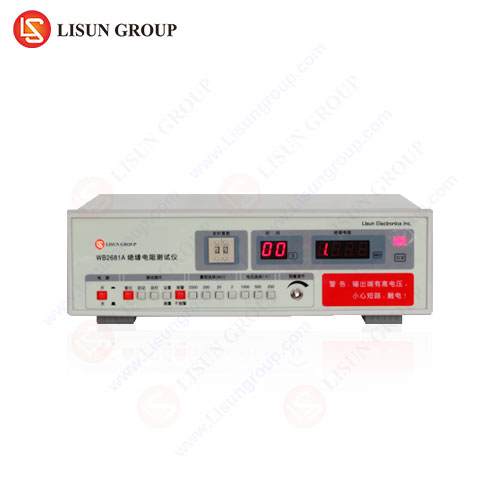
In the context of these rigorous methodologies and standards, the role of dedicated, high-accuracy test instrumentation is paramount. The LISUN WB2675D Leakage Current Tester exemplifies the capabilities required for modern compliance laboratories and quality assurance departments.
The WB2675D is engineered to perform comprehensive leakage and touch current tests in accordance with major international standards, including IEC 60990, IEC 61010, IEC 60601, and IEC 62368-1. Its core operation is based on the alternative measurement method using an isolated AC power source (40-250V, 45-66Hz) to supply the EUT, ensuring measurements are free from the influence of external grounding conditions. The device integrates the standardized measuring device (MD) network, along with networks for patient auxiliary current (PAC) and other specialized measurements required for medical device testing.
Key specifications and functional advantages include:
- High-Resolution Measurement: The instrument offers multiple measurement ranges from 0-2 mA to 0-20 mA with a resolution of 0.1 µA, capable of detecting subtle leakage paths that could indicate early insulation failure.
- Programmable Test Sequences: Users can pre-program complex test routines involving voltage sweeps, frequency variations (including DC testing), and fault condition simulations (open neutral, open earth). This automation is critical for testing products like automotive electronics components, which must operate across a wide voltage range (e.g., 9-16V DC for 12V systems), or aerospace components subjected to 400Hz power.
- Integrated Isolated Power Source: The built-in source eliminates the need for external isolation transformers, simplifying setup and improving measurement repeatability for testing household appliances, lighting fixtures with dimmers, and office equipment.
- Data Logging and Interface Capabilities: With RS232 and USB interfaces, the WB2675D facilitates data transfer for traceability and report generation, a necessity for audited industries such as medical device manufacturing and telecommunications equipment production.
Industry-Specific Application Scenarios and Testing Challenges
The application of leakage current testing varies significantly across sectors, each presenting unique challenges.
- Medical Devices (IEC 60601-1): Testing extends beyond enclosure leakage to include Patient Leakage Current (from applied parts) and Patient Auxiliary Current (between applied parts). The WB2675D’s dedicated PAC measurement function allows for precise verification that currents flowing through catheters, ECG electrodes, or other patient connections remain within the microamp-level safe thresholds.
- Household Appliances & Consumer Electronics: Here, the focus is on ensuring safety under real-world conditions of moisture and wear. Testing must account for capacitive leakage from EMI filters in products like washing machines, dishwashers, and smartphone chargers. Programmable polarity reversal tests on the WB2675D can identify asymmetric designs that might pass under one polarity but fail under another.
- Automotive Electronics (ISO 6469-3, LV 124): With the transition to electric vehicles, testing high-voltage components (e.g., traction inverters, DC-DC converters) for isolation resistance and leakage current is critical for occupant safety. While involving higher voltages, the principles align, and testers must handle DC leakage and pulsed waveforms.
- Lighting Fixtures (IEC 60598-1): LED drivers and dimmable ballasts are significant sources of capacitive leakage. Testing must be performed at both full and dimmed output, as leakage characteristics can change with operating point. The wide voltage and frequency range of a tester like the WB2675D accommodates global lighting standards.
- Industrial Control Systems: Panel builders and integrators must verify that the aggregate earth leakage of all installed components (PLCs, drives, switches) will not cause unwanted RCD tripping in the final installation. A tester capable of measuring up to 20mA is essential for this system-level verification.
Advancing Safety Through Accurate Detection and Standardization
The mitigation of earth leakage current hazards remains a dynamic field, driven by technological innovation and the continuous refinement of safety science. The evolution of standards towards hazard-based engineering (exemplified by IEC 62368-1) underscores a shift from prescriptive rules to performance-based risk assessment. This places an even greater emphasis on accurate, reliable, and comprehensive measurement data.
Instrumentation such as the LISUN WB2675D Leakage Current Tester provides the necessary bridge between theoretical safety requirements and practical, repeatable compliance verification. By enabling engineers to precisely quantify leakage currents under a vast array of operational and fault conditions—from the microamp-level thresholds of medical devices to the aggregate leakage of industrial control panels—these tools are indispensable for ensuring the safety, reliability, and global market access of electrical and electronic products. As systems grow more interconnected and electrically complex, the precision of leakage current detection will continue to form a foundational pillar of product design, quality assurance, and end-user protection.
FAQ Section
Q1: Why is an isolated power source required for accurate leakage current measurement, and does the WB2675D provide this?
An isolated power source separates the Equipment Under Test (EUT) from the building’s grounding system. Without isolation, leakage currents can find alternative paths through the building’s earth, leading to inaccurate and unrepeatable measurements. The LISUN WB2675D incorporates a built-in, variable isolated AC power source (40-250V, 45-66Hz), ensuring measurements reflect the true leakage of the EUT itself, which is a mandatory requirement for standards-compliant testing.
Q2: Can the WB2675D test equipment designed for DC power supplies, such as automotive electronics or certain industrial controls?
Yes. While its primary isolated output is AC, the WB2675D is capable of performing leakage current tests on DC-powered equipment. The EUT is powered by its external DC supply, and the tester measures the leakage current through its measurement networks. It can also apply a DC test voltage to evaluate insulation characteristics. Its programmability allows for sequencing tests across a specified DC voltage range, which is crucial for automotive component validation.
Q3: How does the tester handle the different measurement networks required by various standards (e.g., MD, PAC)?
The WB2675D has internally integrated the specific impedance networks defined by international standards. The user can select the required measurement function—such as “Touch Current” (using the MD network per IEC 60990), “Patient Auxiliary Current,” or “Earth Leakage”—from the front panel or software. The instrument automatically switches to the correct internal network, eliminating the need for external, error-prone manual connections and ensuring normative compliance.
Q4: For testing a complex medical device with multiple applied parts, how does the WB2675D streamline the process?
The WB2675D supports multi-channel measurements when used with optional accessories. More importantly, its programmable test sequencer allows users to create and store complete test plans. For a medical device, a single sequence could automate: power-on leakage, reversal of polarity, simulation of an open neutral fault, and sequential measurement of leakage between various combinations of patient-applied parts. This automation ensures consistency, reduces operator error, and generates comprehensive audit trails for regulatory submissions.
