







Digital Glossmeter Technology: Ensuring Surface Quality and Consistency in Manufacturing
Introduction to Surface Gloss as a Critical Quality Attribute
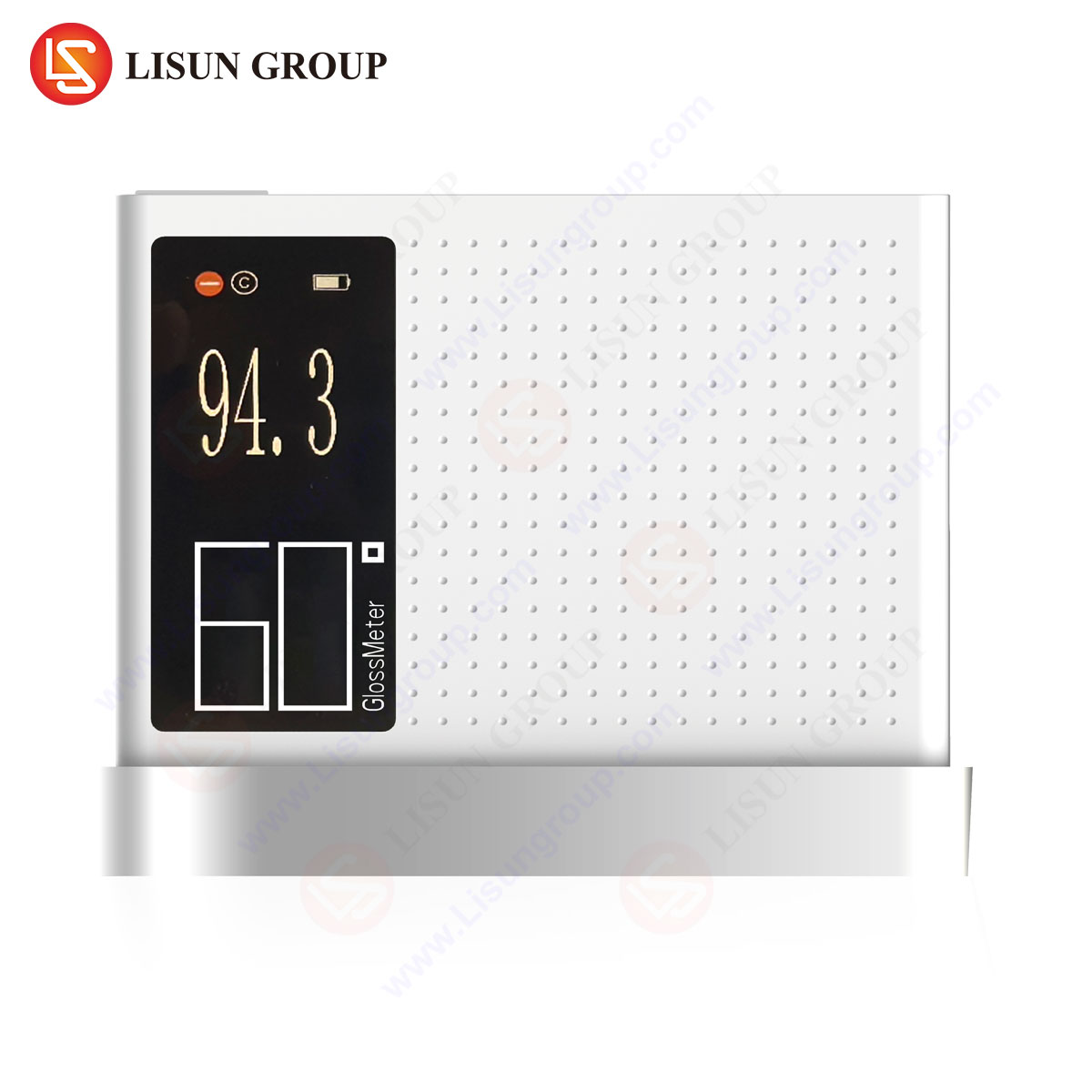
In the realm of modern manufacturing, the visual and tactile properties of a product’s surface are not merely aesthetic considerations; they are quantifiable indicators of process control, material integrity, and final product quality. Gloss, defined as the optical property of a surface that causes it to appear shiny or lustrous by reflecting light specularly, serves as a primary metric for evaluating these characteristics. Subjective visual assessment, while historically prevalent, is inherently unreliable due to human perceptual variance, environmental lighting inconsistencies, and fatigue. The transition to objective, quantifiable gloss measurement represents a fundamental shift towards data-driven quality assurance. Digital glossmeter technology has emerged as the cornerstone of this shift, providing manufacturers across precision-driven industries with the tools to ensure surface consistency, comply with international standards, and meet increasingly stringent customer expectations. The deployment of instruments such as the LISUN AGM-500 Gloss Meter enables the transformation of a subjective visual impression into a precise, repeatable numerical value, thereby closing a critical loop in production quality control.
Optical Principles and Measurement Geometry in Gloss Assessment
The scientific foundation of gloss measurement is rooted in the physics of light reflection. When light strikes a surface, it is reflected in two primary modes: specular reflection, where light is reflected at an angle equal to the angle of incidence, and diffuse reflection, where light is scattered in multiple directions. The ratio of specularly reflected light to the total incident light is the fundamental determinant of perceived gloss. A high-gloss surface acts similarly to a mirror, reflecting a concentrated beam of light, while a matte surface scatters the light broadly, resulting in a diffuse appearance.
Digital glossmeters operationalize this principle through defined geometric conditions. The angle of illumination and the angle of measurement relative to the surface normal are precisely controlled. Standard geometries, as prescribed by ISO 2813, ASTM D523, and other norms, include 20°, 60°, and 85°. The 20° geometry is utilized for high-gloss surfaces (typically >70 GU), providing high differentiation. The 60° geometry is the universal angle, suitable for most surfaces from semi-gloss to high-gloss. The 85° geometry, or grazing angle, is employed for low-gloss, matte finishes where differentiation at standard angles is poor. Advanced digital instruments are capable of single, dual (e.g., 20°/60°), or triple-angle measurements, automatically selecting the optimal geometry based on an initial reading to maximize accuracy across a wide gloss range.
The LISUN AGM-500: Architectural Overview and Technical Specifications
The LISUN AGM-500 Gloss Meter exemplifies the integration of robust optical engineering with modern digital processing to deliver laboratory-grade accuracy in a portable, production-floor-ready instrument. Designed to conform to ISO 2813, ASTM D523, and GB/T 9754 standards, it serves as a benchmark device for quantitative gloss analysis.
Core Specifications:
- Measurement Geometry: Configurable as single (20°, 60°, or 85°), dual (20°/60°), or triple (20°/60°/85°) angle units.
- Measurement Range: 0–2000 Gloss Units (GU), with a resolution of 0.1 GU.
- Accuracy: Conforms to international standards, with high repeatability (typically <0.2 GU) and reproducibility (<0.5 GU) on calibrated reference tiles.
- Light Source: A modulated, spectrally corrected LED source, ensuring stability and longevity while minimizing thermal drift.
- Detector: A high-sensitivity silicon photoelectric cell with spectral response corrected to the CIE standard photopic luminosity function (V(λ)).
- Calibration: Automatic or user-initiated calibration using a supplied high-precision ceramic reference tile. The system features built-in calibration expiry alerts.
- Data Management: Features a large internal memory capable of storing thousands of measurements with statistical analysis (average, max, min, standard deviation). Data can be transferred via USB to PC software for comprehensive reporting and traceability.
- Display & Interface: A high-contrast LCD with intuitive menu navigation. The housing is engineered for ergonomic use and durability in industrial environments.
Testing Principle: The AGM-500 emits a collimated beam of light from its LED source at the specified angle onto the target surface. The receptor, positioned at the mirror-reflection angle, collects the specularly reflected light. The intensity of this captured light, relative to the intensity reflected from a polished black glass standard (defined as 100 GU at each angle), is computed by the onboard microprocessor to produce the gloss value. This process, completed in milliseconds, ensures rapid, non-destructive testing.
Industry-Specific Applications and Quality Imperatives
The requirement for precise gloss control permeates numerous manufacturing sectors, each with unique drivers and consequences for non-conformance.
Automotive Electronics and Interior Components: The interior of a vehicle is a symphony of surfaces—from the high-gloss piano black of infotainment bezels and touch controls to the soft-touch matte finishes on dashboard panels and switchgear. Inconsistency in gloss between adjacent components or from batch to batch is immediately perceptible as a defect, degrading the perceived luxury and quality. The AGM-500’s dual-angle capability is essential here, accurately characterizing both high-gloss trim and low-gloss soft-touch materials to ensure a cohesive aesthetic.
Household Appliances and Consumer Electronics: A stainless-steel refrigerator door, a polymer washing machine control panel, or the anodized aluminum casing of a smartphone must exhibit uniform gloss across large surface areas and production runs. Variations can indicate problems with coating application, curing processes, or substrate preparation. For instance, orange peel or haze in a clear coat, detectable as gloss variance, can signal improper viscosity or flash-off time. Regular gloss checks with a digital meter provide immediate feedback to the coating line.
Medical Devices and Aerospace Components: Beyond aesthetics, surface finish is often functionally critical. For medical housings, a specific gloss level may be tied to cleanability and resistance to bacterial adhesion. In aerospace, the gloss of composite panels or painted fuselage sections can influence aerodynamic properties and radar signature. The traceability and documentation provided by the AGM-500’s data logging are as vital as the measurement itself for regulatory compliance (e.g., FDA, EASA, FAA) and audit trails.
Lighting Fixtures and Optical Components: For reflectors, diffusers, and lenses, gloss is directly correlated to optical efficiency. A reflector with precise, consistent gloss maximizes light output. A diffuser with controlled low gloss ensures even, glare-free illumination. Measuring these components requires an instrument with excellent low-gloss accuracy, often necessitating the 85° geometry available on the AGM-500.
Electrical Components, Cable Systems, and Industrial Controls: Switches, sockets, wiring duct, and control panel overlays often feature textured or molded surfaces where gloss is a proxy for material consistency and mold quality. A sudden change in gloss on an injection-molded part could indicate variations in mold temperature, polymer flow, or the presence of regrind material, potentially affecting mechanical properties.
Operational Integration and Statistical Process Control (SPC)
Integrating digital gloss measurement into a Quality Management System (QMS) transforms it from a pass/fail checkpoint to a proactive process management tool. The AGM-500 facilitates this through SPC integration.
Establishing Baselines: Initially, the instrument is used to establish acceptable gloss ranges (upper and lower control limits) for each material, finish, and product type. These baselines are derived from measurements of approved master samples.
In-Line and At-Line Monitoring: Operators can perform rapid checks at defined frequencies—after coating, post-curing, or during final assembly. The immediate numerical feedback allows for real-time process adjustments, such as modifying spray gun parameters, UV curing energy, or polishing time.
Data-Driven Decision Making: The stored data, when analyzed over time, reveals trends. A gradual downward trend in gloss might indicate wear on polishing heads, depletion of coating additives, or degradation of a mold surface. Early detection via trend analysis enables predictive maintenance and prevents non-conforming production runs.
Table 1: Example Gloss Specification Ranges for Common Applications
| Industry/Component | Typical Material/Finish | Target Gloss Range (GU @60°) | Primary Quality Concern |
| :— | :— | :— | :— |
| Automotive Piano Black Trim | High-gloss lacquer over ABS | 90 – 95 | Fingerprint visibility, micro-scratches |
| Medical Device Housing | Textured polycarbonate | 5 – 15 | Cleanability, professional appearance |
| Appliance Stainless Steel | Brushed stainless with clear coat | 20 – 40 | Uniform grain appearance, streak-free |
| PVC Wiring Duct | Molded gray PVC | 10 – 25 | Color and texture consistency between batches |
| LED Reflector | Polished/powder-coated aluminum | >85 @20° | Maximum luminous efficacy |
Competitive Advantages of Modern Digital Instrumentation
The evolution from analog to digital glossmeters, as embodied by devices like the AGM-500, confers several distinct advantages essential for modern manufacturing:
Elimination of Operator Influence: Digital readouts remove parallax error and subjective interpretation. The measurement cycle, from placement to value display, is automated.
Enhanced Precision and Stability: Solid-state light sources (LEDs) and digital signal processing offer superior long-term stability compared to older incandescent sources, which are prone to output decay and thermal fluctuation.
Ergonomics and Efficiency: Lightweight, ergonomic designs with features like automatic measurement upon firm contact and statistical calculation on-device significantly increase testing throughput and reduce operator fatigue.
Comprehensive Data Traceability: The ability to log thousands of measurements with timestamps and batch IDs creates an immutable record for quality audits, root-cause analysis, and customer certifications. This is indispensable for industries governed by ISO 9001, IATF 16949, or similar frameworks.
Multi-Standard Compliance: A single, well-designed instrument can be pre-configured to meet the specific procedural requirements of multiple international standards, simplifying operations for companies supplying global markets.
Conclusion: The Integral Role of Quantified Surface Analysis
In conclusion, the control of surface gloss has transcended its origins in subjective appraisal to become a rigorously quantified element of manufacturing science. Digital glossmeter technology provides the indispensable link between visual quality and process parameters. Instruments such as the LISUN AGM-500 Gloss Meter empower manufacturers across the electrical, electronic, automotive, and consumer goods sectors to enforce stringent specifications, optimize production processes, and ensure brand-defining consistency. By converting a perceptual attribute into objective, actionable data, this technology underpins a culture of continuous improvement and defect prevention, ultimately safeguarding product integrity, customer satisfaction, and competitive advantage in an increasingly quality-conscious marketplace.
Frequently Asked Questions (FAQ)
Q1: How often should a digital glossmeter like the AGM-500 be calibrated, and what does the process involve?
Calibration frequency depends on usage intensity and quality protocol requirements, but a monthly or quarterly schedule is common for critical applications. The process involves measuring a certified calibration tile provided with the instrument. The AGM-500 guides the user through this simple procedure, which adjusts the instrument’s internal baseline to the known value of the tile, ensuring traceability to national standards.
Q2: Can a single glossmeter accurately measure both a high-gloss automotive finish and a matte plastic housing?
Yes, but it requires a meter with multiple measurement angles. This is a key feature of instruments like the AGM-500. For high-gloss surfaces (e.g., >70 GU at 60°), the 20° angle provides greater sensitivity. For matte surfaces (e.g., <10 GU at 60°), the 85° angle is used. Many advanced meters can automatically take an initial 60° reading and recommend or automatically switch to the most appropriate angle.
Q3: How does surface curvature or small part size affect gloss measurement accuracy?
Curvature and small size are significant challenges. A convex surface will scatter the incident beam, typically yielding a lower gloss reading than a flat surface of the same material. Very small parts may be smaller than the instrument’s measurement aperture. For curved or small components, it is crucial to use a meter with a appropriately small measurement aperture and to follow a standardized procedure for positioning. Results should be compared against control samples of identical geometry.
Q4: Is gloss measurement applicable to metallic or pearlescent effect finishes?
Standard glossmeters measure specular reflection, which is a key component of the appearance of metallic and pearlescent paints. However, these effect finishes also exhibit distinct flake orientation and diffuse properties that contribute to their perceived “sparkle” or “flip.” While a glossmeter is necessary to control the clear coat’s specular gloss, a full appearance characterization often requires additional instrumentation, such as a multi-angle spectrophotometer, to measure goniochromatic attributes.
Q5: What is the primary cause of gloss variation in a production batch of coated components?
Gloss variation is typically a process-driven issue. Common root causes include: inconsistency in film thickness (due to spray pressure, gun distance, or line speed), fluctuations in curing parameters (oven temperature, UV lamp intensity, or dwell time), contamination of the substrate or coating material, and environmental factors like humidity affecting solvent evaporation rates. Systematic gloss measurement helps pinpoint the specific stage in the process where the variation is introduced.
