








A Comprehensive Guide to IEC High Voltage Withstand Standards: Principles, Applications, and Implementation
Foundational Principles of Dielectric Withstand Testing
High voltage withstand testing, often termed dielectric strength or hipot testing, constitutes a fundamental safety and quality verification procedure within the global electrical and electronic manufacturing ecosystem. Its primary objective is not to stress a component to its operational limits, but to verify the adequacy and integrity of its insulation system under a prescribed overvoltage condition. The core principle involves applying a significantly higher-than-normal voltage between conductive parts and between conductive parts and earth for a specified duration. A satisfactory outcome is the absence of dielectric breakdown, indicated by minimal leakage current below a predetermined threshold. This non-destructive test proactively identifies potential flaws such as insufficient creepage and clearance distances, insulation material impurities, manufacturing defects like pinched wires, or compromised insulation integrity from environmental stress. The International Electrotechnical Commission (IEC) provides the harmonized framework for these tests through standards such as IEC 61010-1 (Safety requirements for electrical equipment for measurement, control, and laboratory use), IEC 60335-1 (Household and similar electrical appliances), and IEC 60601-1 (Medical electrical equipment). These documents specify test voltages, application methods, duration, and pass/fail criteria, ensuring a consistent international benchmark for product safety.
Deciphering IEC Test Voltage Determination and Waveform Specifications
The selection of the appropriate test voltage is not arbitrary but is derived from a product’s rated operational voltage, its installation category (Overvoltage Category I-IV), and its pollution degree. IEC standards typically define the test voltage as a function of the working voltage, often ranging from 1,000 VAC to several kilovolts, with a common formula being (2 x Working Voltage + 1000 V) for basic insulation. For reinforced or double insulation, the multiplier is higher. The waveform is equally critical. While alternating current (AC) testing at power frequency (50/60 Hz) is most common, revealing weaknesses effectively due to voltage stress across the entire insulation system, direct current (DC) testing is specified for certain applications. DC testing is employed for capacitive loads, long cable runs, or where the test equipment’s current output is a limiting factor, as it subjects the insulation to a steady stress and minimizes capacitive charging current. The IEC 61180 series (High-voltage test techniques for low-voltage equipment) provides detailed guidance on test equipment characteristics, including voltage measurement accuracy, which must typically be within ±3%, and the short-circuit current capability of the test set, which must be sufficient to ensure the voltage dip during a flashover is negligible for clear fault indication.
Procedural Execution and Critical Pass/Fail Criteria Analysis
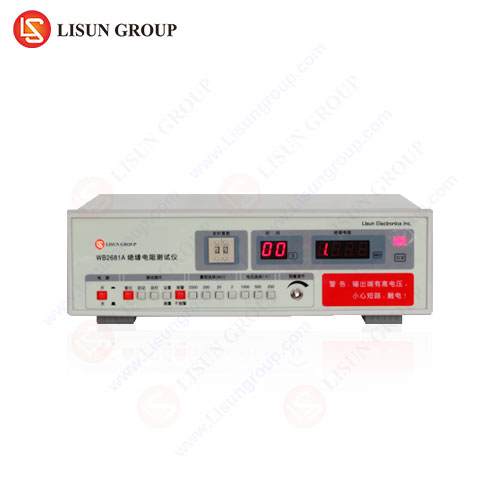
The execution of a withstand voltage test demands rigorous procedural adherence to ensure validity and repeatability. The test sample must be in a representative state, typically at room temperature and non-operational. All accessible conductive parts, including terminals, chassis, and connectors, are interconnected to form one test electrode. The high-voltage output of the tester is then applied to this point, while the return path is connected to the power supply’s neutral or earth terminal, or to another isolated circuit for tests between circuits. The voltage is raised smoothly from zero to the specified test value at a controlled rate, held for the stipulated duration (commonly 60 seconds for type tests, 1-3 seconds for production line testing), and then smoothly reduced. The pivotal criterion is the leakage current limit. During the test, the current flowing through the insulation is monitored. A pass is recorded if this current remains below a set threshold, often 5 mA for medical devices (per IEC 60601-1) or higher for industrial equipment, and no arcing or breakdown occurs. A sudden current surge or trip of the test instrument signifies a failure. Modern testers like the LISUN WB2671A automate this entire sequence, providing precise voltage ramping, dwell timing, and real-time current monitoring with high-resolution displays for both parameters.
The LISUN WB2671A: A Technical Exposition on Automated Withstand Voltage Verification
The LISUN WB2671A Automatic Withstand Voltage Tester embodies the practical application of IEC standards for high-volume, reliable production testing. It is engineered to deliver precise, repeatable, and safe dielectric strength tests across the voltage spectrum required for low-voltage equipment as defined by IEC 61180. The instrument’s core specifications include a wide AC test voltage range from 0 to 5 kV (or higher in specific models) and a DC range from 0 to 6 kV, with a voltage setting accuracy of ≤ 2%. Its current measurement capability spans from 0 to 100 mA, with an accuracy of ≤ 1.5%, ensuring sensitive detection of insulation leakage. The WB2671A operates on the principle of a continuously variable high-voltage transformer controlled via a microcontroller. It integrates advanced functions such programmable voltage rise time (1-100s), test dwell time (1-999s), and adjustable current trip thresholds. Its competitive advantage lies in its automation and safety architecture. The test sequence is fully programmable, eliminating operator variance. It features a zero-start interlock, ensuring output voltage is always ramped from zero, and includes hardware and software protections against over-current, over-voltage, and arc faults. The clear, simultaneous digital readout of set voltage, actual output voltage, and leakage current provides unambiguous pass/fail diagnostics, which is critical for production efficiency.
Cross-Industry Application Profiles for Dielectric Withstand Testing
The universality of insulation safety makes high voltage withstand testing a cornerstone in diverse industrial sectors, each with nuanced requirements dictated by their governing IEC standards.
- Electrical and Electronic Equipment & Industrial Control Systems: Governed by IEC 61010-1, testing here focuses on ensuring isolation between mains circuits, control circuits, and user-accessible parts in devices like programmable logic controllers (PLCs), power supplies, and measurement instrumentation. The WB2671A’s ability to test both AC and DC is vital for evaluating different isolation barriers within the same assembly.
- Household Appliances and Lighting Fixtures: Per IEC 60335-1 and IEC 60598-1, tests verify insulation between live parts and the earthed metal casing of washing machines, refrigerators, or between the LED driver output and the accessible luminaire body. Production-line testing with equipment like the WB2671A, using a short 1-3 second test, is standard for 100% unit verification.
- Automotive Electronics and Aerospace Components: While often adhering to ISO or SAE standards derived from IEC principles, testing is severe due to harsh environments. Tests check insulation in motor controllers, sensors, and avionics wiring harnesses, often requiring DC testing for capacitive components. The robust and reliable trip detection of the tester is paramount.
- Medical Devices and Telecommunications Equipment: IEC 60601-1 imposes stringent leakage current limits (often leading to lower hipot test current thresholds, e.g., 5 mA) for patient-connected equipment. Telecommunications equipment (IEC 60950-1, now superseded but principles embedded) requires tests for insulation between telecom network voltages (TNV) circuits and user-accessible parts. Precision current measurement, as offered by the WB2671A, is non-negotiable.
- Electrical Components and Cable Systems: Switches, sockets (IEC 60884), and wiring must withstand high-potential tests between contacts and earthing terminals, and across insulating bodies. For cables (IEC 60227, 60245), the test is applied between conductors and shield. High-throughput, reliable testing is essential for component manufacturers.
- Office Equipment and Consumer Electronics: Printers, power adapters, and audio equipment are tested to ensure safety in everyday use. The test validates the isolation provided by transformers, optocouplers, and functional insulation within switch-mode power supplies, a ubiquitous component in this sector.
Mitigating Operational Hazards and Ensuring Test Validity
High voltage testing inherently involves significant risk. Strict safety protocols are mandated. These include the use of test enclosures with safety interlocks that remove power when opened, clearly marked danger zones, and insulated test fixtures. The test equipment itself, such as the WB2671A, must incorporate redundant safety features: a hardware-based over-current protector independent of the software, a high-voltage relay that physically disconnects the output upon fault or completion, and a discharge circuit to safely drain capacitive loads after testing. Test validity is contingent on environmental factors; high humidity can lower insulation resistance, leading to false failures. Therefore, preconditioning samples in a controlled atmosphere may be necessary for type approval testing. Furthermore, the test setup must ensure all parts to be tested are properly connected, and all parts not under test are either grounded or isolated to prevent floating potentials that could lead to misleading results or equipment damage.
Interpreting Test Outcomes and Addressing Common Insulation Failure Modes
A test failure necessitates root cause analysis, not merely unit rejection. A sudden, dramatic current trip typically indicates a catastrophic breakdown—a direct short caused by a bridging conductive contaminant, a severe insulation crack, or a grossly insufficient clearance. A more subtle increase in leakage current, approaching but not exceeding the limit, may indicate marginal insulation, moisture ingress, surface contamination (tracking), or aging materials. In such cases, diagnostic tools like insulation resistance testing (megohmmeter) can provide supplementary data. It is crucial to distinguish between a genuine product fault and a testing artifact, such as corona discharge at sharp points or leakage across a dirty surface, which the WB2671A’s arc detection circuitry can help identify. Understanding these failure modes informs corrective actions in design (increasing creepage distances, specifying higher dielectric strength materials) or manufacturing (improving cleaning processes, controlling humidity).
The Integral Role of Withstand Testing in Product Certification and Quality Assurance
Dielectric withstand testing is not an isolated activity but a critical pillar within a product’s conformity assessment framework. It is a mandatory type test for certification bodies like UL, TÜV, or CSA, which base their evaluations on IEC standards. Successful compliance is a prerequisite for obtaining the CE mark, UL listing, or other national safety marks. Beyond initial certification, manufacturers implement the test within their quality management systems (QMS). Incoming quality inspection (IQC) uses it to vet critical components like transformers or insulated gate bipolar transistors (IGBTs). In-process testing (IPQC) may verify sub-assemblies, while final production testing (FQC) performs 100% verification on finished goods. The data logging capabilities of modern testers, a feature of the WB2671A, provide auditable records for quality traceability, essential for demonstrating due diligence and facilitating recalls if necessary. This end-to-end application transforms the high voltage withstand test from a simple safety check into a key metric for overall product integrity and brand protection.
Frequently Asked Questions (FAQ)
Q1: What is the key difference between AC and DC withstand voltage testing, and when should each be used?
AC testing at 50/60 Hz stresses insulation in a manner similar to operational stress and is sensitive to most defects. It is the standard method for final product testing. DC testing applies a steady stress, draws only leakage current (no capacitive current), and is suitable for highly capacitive loads like long cables or large filter capacitors, as it requires a lower-current-capacity tester. DC testing can also be more revealing for certain volumetric insulation defects. The choice is often dictated by the relevant product safety standard.
Q2: Why does the WB2671A tester have adjustable current trip thresholds, and how should they be set?
Different product standards specify different maximum allowable leakage currents. A medical device may require a trip threshold as low as 5 mA, while industrial equipment may permit 10 mA or 100 mA. The adjustable threshold allows a single tester to be used across multiple product lines. The threshold should be set strictly according to the applicable IEC standard for the product under test, typically at a value slightly above the expected functional leakage current but below the standard’s maximum limit.
Q3: Can a product that passes a high voltage withstand test still be unsafe?
Yes. The withstand test is a specific verification of dielectric strength under a single, time-limited overvoltage condition. It does not assess all safety hazards. A product must also comply with requirements for grounding, temperature rise, mechanical strength, component fault conditions, and long-term insulation resistance (which can degrade with heat and humidity). The hipot test is a necessary but not sufficient condition for overall safety.
Q4: What is the purpose of the voltage ramp-up and ramp-down time in automated testers?
A controlled ramp-up (e.g., 5 seconds) prevents the application of a voltage step, which can generate transient currents that might falsely trip the tester or impose undue stress on the insulation. A controlled ramp-down, particularly after a DC test, allows for the safe discharge of capacitive energy stored in the device under test, protecting both the operator and the test equipment.
Q5: How often should a withstand voltage tester like the WB2671A be calibrated, and what does calibration involve?
Calibration intervals are typically annual, but may be more frequent based on usage intensity or quality system requirements (e.g., ISO 9001). Calibration involves verifying and adjusting the accuracy of the output voltage (at multiple points across the range) and the leakage current measurement circuit against traceable master standards. This ensures the tester’s readings are legally and technically valid for compliance testing.
