








A Comprehensive Analysis of Common Causes of Insulation Failure and Leakage in Electrical and Electronic Systems
Introduction
Insulation integrity is the foundational safeguard in electrical and electronic systems, serving as the primary barrier against unintended current flow, electrical shock hazards, fire risks, and equipment malfunction. The gradual degradation or sudden failure of insulating materials represents a critical reliability and safety concern across a vast spectrum of industries. This article provides a detailed, formal examination of the principal mechanisms leading to insulation failure and leakage current, drawing upon established materials science and electrical engineering principles. It further explores the methodologies for predictive and compliance testing, with a specific focus on the role of advanced instrumentation such as the LISUN WB2675D Leakage Current Tester in quantifying these risks and ensuring product safety and longevity.
The Multifaceted Mechanisms of Insulation Degradation
Insulation failure is seldom the result of a single factor; rather, it is typically the culmination of synergistic stressors acting upon the material over time. Understanding these mechanisms is paramount for design engineers, quality assurance professionals, and maintenance technicians.
Electrochemical Treeing and Partial Discharge
Within solid insulating materials, particularly polymers like cross-linked polyethylene (XLPE) used in high-voltage cables and epoxy resins in aerospace components, localized electrical stresses can initiate a process known as electrochemical treeing. Microscopic voids or impurities within the dielectric act as focal points for intense electric fields. Over time, these fields can cause partial discharges (PD)—small, localized electrical sparks within the insulation. These discharges erode the material, creating dendritic, tree-like channels that progressively propagate through the insulation bulk. This process significantly reduces the dielectric strength and can culminate in a complete conductive path, leading to a ground fault or short circuit. In telecommunications equipment and high-voltage industrial control systems, monitoring for partial discharge activity is a key predictive maintenance strategy.
Thermal Aging and the Arrhenius Relationship
The operational lifespan of most insulating materials is intrinsically linked to temperature. Thermal aging follows the Arrhenius reaction rate model, where the rate of chemical degradation approximately doubles for every 10°C increase in operating temperature above the material’s rated limit. Prolonged exposure to elevated temperatures, whether from ambient conditions, internal I²R losses in electrical components, or poor thermal management in consumer electronics and automotive electronics, causes irreversible chemical changes. These include polymer chain scission, oxidation, and loss of plasticizers. The material becomes brittle, cracks, and loses its dielectric properties. For instance, the insulation on magnet wires within household appliance motors or transformers can embrittle and flake off, leading to turn-to-turn faults.
Environmental Ingress: Moisture, Contaminants, and Chemical Attack
The ingress of environmental agents is a pervasive cause of insulation breakdown. Hygroscopic materials can absorb moisture from the atmosphere, which dramatically lowers surface and volume resistivity. In lighting fixtures exposed to outdoor conditions or medical devices subjected to sterilization cycles, absorbed moisture creates conductive pathways. Furthermore, contaminants such as dust, metallic particles, and salt spray in aerospace and maritime applications can settle on surfaces, forming tracking paths. Chemical attack from oils, solvents, or aggressive atmospheres in industrial settings can swell, dissolve, or chemically alter insulating polymers. Cable and wiring systems in automotive under-hood environments are particularly susceptible to combined thermal, vibrational, and fluid immersion stresses.
Mechanical Stress and Its Cumulative Effects
Physical damage from abrasion, crushing, excessive bending during installation (violating the minimum bend radius), or constant vibration can compromise insulation integrity. In office equipment and industrial control panels, cable chafing against sharp edges can expose conductors. Vibration, especially resonant vibration in automotive electronics and aerospace components, can work-harden conductors and cause fretting wear on insulation. These mechanical insults create thin spots, cracks, or punctures that drastically reduce dielectric withstand capability. Even sub-critical mechanical stress can create micro-fractures that later facilitate moisture ingress or electrochemical treeing.
Surface Tracking and Carbonization Under Pollution
On the surface of insulating materials, the presence of a contaminant layer combined with moisture can lead to a phenomenon known as surface tracking. A small leakage current flows through the contaminant film, generating heat. This heat dries the film locally, interrupting the current. The process repeats, creating localized overheating that carbonizes the underlying polymer insulation. Once a carbonized track is established, it is permanently conductive, and the tracking can propagate across the surface, eventually causing a flashover. This is a critical failure mode for outdoor insulators in telecommunications equipment, high-voltage switches, and sockets in humid or polluted environments.
Overvoltage Transients and Dielectric Withstand Breakdown
While insulation is designed to withstand standard operating voltages with a significant safety margin, transient overvoltages—from lightning strikes, utility grid switching, or inductive load switching within the system—can impose stresses exceeding the material’s dielectric strength. This can cause instantaneous breakdown. Even if the transient does not cause immediate failure, it can inflict microscopic damage that weakens the insulation, making it more susceptible to failure under normal operating conditions later. Surge protection devices (SPDs) are essential in safeguarding sensitive electronics in medical devices and consumer electronics from such events.
Quantifying the Risk: The Imperative of Leakage Current Testing
Given the myriad pathways to failure, proactive testing is non-negotiable. Leakage current testing serves as a direct, quantitative measure of insulation health and product safety. It evaluates the current that flows through or across the surface of the insulation when a voltage is applied, simulating both normal operating conditions and fault conditions.
Principles and Standards Governing Leakage Current Measurement
Leakage current tests are rigorously defined by international safety standards to ensure human safety and equipment reliability. Key standards include IEC 60601-1 for medical electrical equipment, IEC 60950-1/IEC 62368-1 for information technology and audiovisual equipment, IEC 60335-1 for household appliances, and various automotive (ISO 6469, LV series) and aerospace (DO-160) standards. Tests typically measure:
- Touch Current: Current that could flow through a human body touching the equipment enclosure.
- Protective Conductor Current: Current flowing in the protective earth conductor under normal conditions.
- Applied Part Leakage (Medical): Current that could flow from a patient-connected part.
These tests are performed at rated voltage and frequency, and often at 110% of rated voltage, to verify safety margins.
The LISUN WB2675D Leakage Current Tester: A Technical Overview
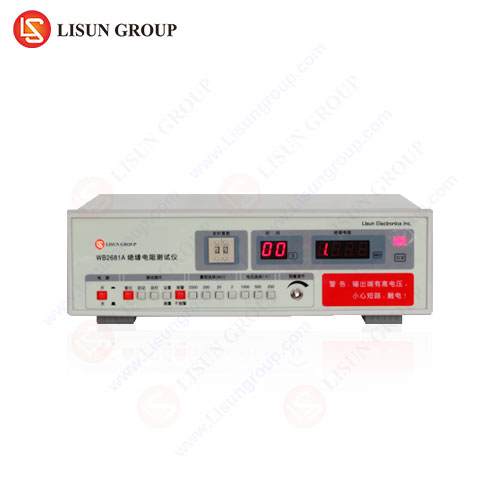
For precise, reliable, and standards-compliant leakage current evaluation, specialized instrumentation is required. The LISUN WB2675D Leakage Current Tester represents a sophisticated solution engineered for laboratory and production line applications.
Core Specifications and Functional Capabilities
The WB2675D is designed to deliver high accuracy and repeatability across a broad range of test parameters. Its key specifications include:
- Leakage Current Measurement Range: Typically from 0.001 mA to 20 mA AC/DC, with high resolution suitable for detecting early-stage insulation degradation.
- Test Voltage Output: A wide, programmable AC voltage range (e.g., 0-250V) to simulate various line conditions and perform dielectric strength testing in conjunction with leakage measurement.
- Measurement Network Compliance: Incorporates standardized measurement networks (e.g., as per IEC 60601-1) that accurately simulate the frequency-dependent impedance of the human body, ensuring realistic touch current readings.
- Integrated Testing Functions: Often combines leakage current testing with AC/DC dielectric withstand (hipot) testing in a single instrument, streamlining safety compliance workflows.
- Automation and Data Interface: Features program storage, automatic sequencing, and interfaces (RS232, USB, LAN) for integration into automated test systems and data logging, crucial for traceability in medical device and automotive electronics manufacturing.
Industry Applications and Competitive Advantages
The WB2675D’s design addresses the specific needs of multiple industries:
- Medical Device Manufacturing: Its precision and compliance with IEC 60601-1 measurement networks are critical for certifying patient-connected equipment like dialysis machines, MRI systems, and surgical tools, where ultra-low leakage limits are mandated.
- Household Appliance & Consumer Electronics Production: High-throughput testing on production lines for products like refrigerators, power tools, and laptop chargers is enabled by its fast, automated test sequences and robust pass/fail judgment capabilities.
- Automotive Electronics Validation: The tester can be used to validate the insulation integrity of high-voltage components in electric and hybrid vehicles (e.g., battery management systems, DC-DC converters) against LV214 and other stringent automotive standards.
- Aerospace Component Qualification: The instrument’s ability to perform rigorous dielectric withstand and leakage tests supports the qualification of avionics and flight control systems to DO-160 environmental test standards.
The competitive advantage of the WB2675D lies in its synthesis of measurement accuracy, standards compliance, operational robustness, and integration flexibility. It reduces test uncertainty, enhances production line efficiency, and provides defensible data for safety certification audits.
Proactive Mitigation Strategies and Conclusion
Mitigating insulation failure requires a holistic lifecycle approach. Design-phase strategies include selecting materials with appropriate thermal class, dielectric strength, and environmental resistance; implementing proper creepage and clearance distances; and designing for effective thermal management. During manufacturing, processes must control contamination, prevent mechanical damage during assembly, and enforce 100% electrical safety testing with instruments like the WB2675D. In the operational phase, preventive maintenance should include regular thermographic inspections to identify hotspots, periodic insulation resistance (IR) and polarization index (PI) testing, and environmental control.
In conclusion, insulation failure is a complex, multi-causal phenomenon rooted in electrochemical, thermal, environmental, and mechanical stress interactions. A scientific understanding of these failure modes informs robust design and manufacturing practices. Ultimately, comprehensive electrical safety testing, employing precise and reliable instrumentation, remains the final and essential verification step to ensure product safety, reliability, and compliance in an increasingly electrified world.
FAQ Section
Q1: What is the fundamental difference between a dielectric withstand (hipot) test and a leakage current test?
A dielectric withstand test applies a high voltage (significantly above operating voltage) to stress the insulation and verify it does not break down catastrophically. It is a pass/fail test for dielectric strength. A leakage current test applies the normal operating voltage (or slightly above) and precisely measures the minute current flowing through the insulation. It quantifies the quality and degradation state of the insulation, providing a more sensitive indicator of impending failure and ensuring safe operational currents under normal use.
Q2: Why are specialized measurement networks required in leakage current testers for medical equipment?
The human body’s impedance varies with frequency. Standards like IEC 60601-1 define precise measurement networks that replicate this impedance curve. Using a standard ammeter would yield inaccurate readings for high-frequency leakage currents, potentially underestimating the risk. The networks in testers like the WB2675D ensure the measured “touch current” accurately reflects what a person would experience, which is critical for patient safety.
Q3: Can the LISUN WB2675D be used for both design validation and production line testing?
Yes, its architecture supports both applications. For R&D and design validation, its programmability, wide parameter ranges, and high-resolution measurement allow engineers to characterize prototypes, perform margin testing, and troubleshoot designs. For production, its fast test cycles, automated sequences, handler interfaces, and robust data logging enable efficient 100% final product testing and compliance record-keeping.
Q4: How often should leakage current testing be performed on field-deployed equipment?
The frequency is dictated by the equipment’s criticality, operating environment, and relevant industry standards. Medical devices often require annual or semi-annual preventive maintenance checks. Industrial equipment in harsh environments may need quarterly testing. Manufacturers’ recommendations and risk assessments should establish the schedule. Periodic testing with a calibrated instrument provides trend data, where a gradual increase in leakage current can signal the need for proactive maintenance or component replacement.
