






Electrical Insulation Integrity: A Technical Examination of the 0-20mA Withstand Voltage Test
Introduction to Dielectric Strength Verification
In the design, manufacture, and certification of electrical and electronic equipment, ensuring the integrity of insulation systems is a non-negotiable prerequisite for safety, reliability, and regulatory compliance. The withstand voltage test, also known as the dielectric strength test or hipot test, serves as a fundamental and critical evaluation of an insulation system’s ability to endure transient overvoltages without breakdown. While the core principle of applying a high voltage between conductive parts is well-established, the specific methodology and failure criteria, particularly the leakage current threshold, define the test’s stringency and applicability. The 0-20mA withstand voltage test represents a precise and widely adopted configuration, where the permissible leakage current is capped within a 0 to 20 milliampere range. This article provides a comprehensive technical analysis of this test, its underlying principles, implementation standards, and its critical role across diverse industries, with a focus on the instrumentation required for its accurate execution.
Fundamental Principles of the Withstand Voltage Test
The withstand voltage test is a destructive test in nature, intended to verify that the insulation between components of differing potential is adequately robust. The test subjects the device under test (DUT) to a voltage significantly higher than its normal operating voltage for a specified duration. This elevated stress accelerates potential failure modes, identifying weaknesses such as insufficient creepage and clearance distances, material impurities, or manufacturing defects like pinholes or cracks.
The applied test voltage, typically an AC sine wave at power frequency (e.g., 50/60 Hz) or a DC voltage, is increased from zero to a specified test level, held for a dwell time (commonly 60 seconds), and then ramped down. Throughout this process, the test instrument continuously monitors the current flowing through the insulation, known as the leakage current. In a perfect insulator, this current would be negligible. In practice, a small capacitive and resistive leakage current is expected. The 0-20mA criterion establishes that the insulation is deemed to have failed if the leakage current exceeds 20 milliamperes at any point during the test, or if a disruptive discharge (arc) occurs. This current threshold is not arbitrary; it is calibrated to distinguish between acceptable capacitive charging currents and currents indicative of impending insulation failure, partial discharge, or carbon tracking.
The Critical Role of the 0-20mA Threshold in Failure Detection
Setting the failure threshold to 20mA provides a balanced and sensitive criterion for detecting insulation degradation. A lower threshold (e.g., 0-5mA) might be overly sensitive for products with larger inherent capacitive coupling, leading to false failures. A higher threshold risks missing early-stage insulation weaknesses that manifest as increased resistive leakage before a full catastrophic breakdown. The 0-20mA range is particularly effective for a broad spectrum of products, from compact consumer electronics to larger industrial systems. It allows for the accommodation of initial inrush currents associated with charging distributed capacitance in cables or large windings, while remaining acutely sensitive to the gradual increase in conductive current that signals insulation breakdown. The test instrument’s ability to precisely measure and respond to this current limit is therefore paramount.
Instrumentation for Precision Testing: The LISUN WB2671A Withstand Voltage Tester
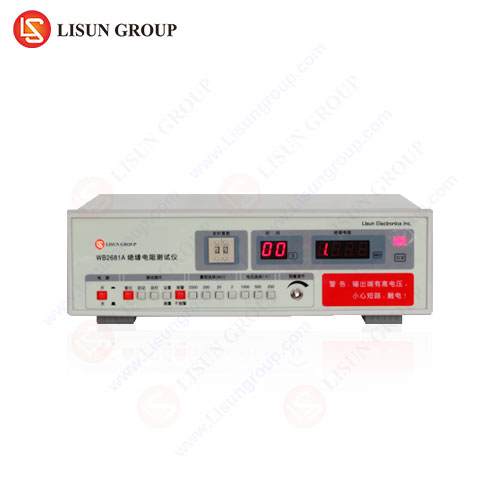
Accurate and reliable execution of the 0-20mA withstand voltage test demands instrumentation engineered for precision, safety, and compliance. The LISUN WB2671A Withstand Voltage Tester is a representative example of a dedicated apparatus designed to meet these rigorous demands. This instrument is engineered to generate stable, high-accuracy test voltages while providing real-time, high-resolution monitoring of leakage current.
The WB2671A operates on the principle of a controlled high-voltage source coupled with a precision current measurement circuit. Its core specifications are tailored for rigorous laboratory and production line testing:
- Test Voltage Range: Typically 0-5kV AC/DC (configurable models may offer higher ranges), with resolution as fine as 0.1V.
- Leakage Current Measurement: A critical parameter, with a range encompassing the 0-20mA standard, often with a resolution of 0.01mA or better.
- Output Waveform Distortion: Maintains a low total harmonic distortion (THD) for AC output, ensuring the applied stress is consistent and standards-compliant.
- Ramp and Dwell Control: Programmable voltage ramp-up and ramp-down rates, along with precise dwell timers, allow for customizable test sequences as per various standards.
- Safety Features: Includes zero-start protection (voltage cannot be applied unless starting from 0V), over-current trip, over-voltage protection, and secure grounding interlocks to protect both the operator and the DUT.
The instrument’s measurement circuit is calibrated to distinguish between the total current and the resistive component of the leakage current, a feature essential for correctly evaluating insulation condition in capacitive loads. Its digital display and control interface facilitate the exact setting of the 20mA trip threshold, test voltage, and time parameters, ensuring repeatable and auditable test results.
Relevant International Standards and Compliance Frameworks
The 0-20mA withstand voltage test is not a standalone procedure but is embedded within a matrix of international safety and performance standards. These standards prescribe the exact test voltages, durations, and leakage current limits based on product category and working voltage. Key standards include:
- IEC 60335 Series: For household and similar electrical appliances.
- IEC 60601 Series: For medical electrical equipment, where patient safety imposes exceptionally stringent requirements.
- IEC 60950-1 / IEC 62368-1: For information technology and audio/video equipment.
- IEC 60598 Series: For lighting fixtures.
- ISO 6469-3 & LV Standards: For automotive high-voltage components in electric vehicles.
- UL, CSA, and GB Standards: Regional standards in North America and China that often harmonize with or specify variations of IEC requirements.
These standards typically define the test voltage as a function of the equipment’s rated voltage (e.g., 2U + 1000V) and mandate the 60-second dwell time. The 20mA leakage current limit is a common default, though specific product standards may dictate a different value (e.g., 5mA for medical devices, 10mA for certain appliances). The WB2671A and similar testers are designed to be configured to meet these diverse regulatory requirements.
Industry-Specific Applications and Use Cases
The application of the 0-20mA withstand voltage test spans the entire ecosystem of electrical and electronic manufacturing.
- Household Appliances & Consumer Electronics: Testing insulation between live parts and accessible metal casings in products like refrigerators, washing machines, and power adapters to prevent electric shock hazards.
- Automotive Electronics: Verifying the isolation integrity of components in electric vehicle powertrains (e.g., battery management systems, DC-DC converters, motor controllers) where high-voltage systems coexist with low-voltage networks and the vehicle chassis.
- Lighting Fixtures: Ensuring safety in LED drivers, ballasts, and the insulation between high-voltage terminals and the metallic housing of luminaires.
- Industrial Control Systems: Testing programmable logic controllers (PLCs), motor drives, and sensors to guarantee reliable operation in electrically noisy industrial environments and to prevent ground faults.
- Medical Devices: Performing essential tests on patient-connected equipment like monitors, infusion pumps, and diagnostic imaging subsystems, where insulation failure could have dire consequences.
- Aerospace and Aviation Components: Qualifying wiring harnesses, connectors, and avionics boxes to withstand the unique environmental stresses (pressure, humidity) and ensure absolute system reliability.
- Electrical Components & Cable Systems: As a routine production-line test for switches, sockets, connectors, and finished cable reels to identify material or assembly flaws.
In each case, the test serves as a final gatekeeper of product safety. A product like the LISUN WB2671A is deployed in quality assurance labs and on production floors to perform 100% testing or statistical batch testing, providing a quantitative pass/fail record for each unit.
Advanced Considerations in Test Implementation
Beyond basic setup, several technical considerations are vital for a valid test. The choice between AC and DC testing has significant implications. AC testing stresses insulation in a manner similar to operational stress, revealing weaknesses at material interfaces and in capacitive distributions. DC testing charges the insulation capacitance, resulting in a lower steady-state current, which can be advantageous for testing components with high inherent capacitance, such as long cables or large capacitors, but may not reveal certain types of defects as effectively.
Environmental factors, particularly humidity, profoundly impact insulation resistance. Testing should be conducted under controlled conditions, or results must be interpreted in context. Furthermore, the test setup itself is critical: proper connection of high-voltage and return leads, secure grounding of the DUT’s earthed parts (if applicable), and the use of appropriate fixtures to prevent surface flashover are all essential to avoid erroneous failures.
Modern testers like the WB2671A often incorporate programmable test sequences (ramp, dwell, step), data logging capabilities, and interfaces for barcode scanners or network integration (LAN, RS-232), enabling traceability and integration into automated test stations and manufacturing execution systems (MES).
Comparative Analysis of Testing Methodologies
While the withstand voltage test is paramount, it is one element of a comprehensive insulation evaluation suite. It is often complemented by the insulation resistance test (IR test), which applies a lower DC voltage (typically 500V or 1000V) to measure the resistive leakage current, providing a quantitative metric of insulation quality in megaohms or gigaohms. The withstand voltage test is a go/no-go stress test, whereas the IR test is a quantitative performance measurement. Another related test is the ground bond test, which applies a high current at a low voltage to verify the integrity of protective earth connections, a different but equally critical safety pathway.
The 0-20mA withstand voltage test, especially when implemented with precise instrumentation, offers a superior balance of detection sensitivity and practical applicability compared to tests with fixed, very low current limits. It effectively screens for both gross defects and incipient failures without being prohibitively sensitive for most mainstream applications.
Interpreting Test Results and Failure Analysis
A “pass” result indicates that the DUT’s insulation system successfully withstood the applied high voltage without the leakage current exceeding the 20mA threshold or exhibiting arcing. A “fail” result necessitates a structured failure analysis. The nature of the failure—whether a sudden current surge indicating a hard breakdown (puncture) or a gradual rise to exceed 20mA—provides diagnostic clues. Post-failure, visual inspection of the DUT may reveal carbonization tracks, burn marks, or physical damage at the breakdown site. Electrical diagnostic tests, such as a post-failure insulation resistance measurement, can confirm the permanence of the damage. Understanding failure modes is essential for design improvement, material selection, and process correction.
FAQ Section
Q1: What is the primary difference between AC and DC withstand voltage testing, and when should each be used?
AC testing applies a stress that reverses polarity, closely simulating operational conditions and effectively testing insulation at interfaces and for capacitive effects. It is the standard for most final product safety tests. DC testing applies a unipolar stress, which is useful for testing components with high intrinsic capacitance (like long cables or large filters) as it avoids high capacitive charging currents. DC testing is also used for field testing of installed equipment. The choice is often dictated by the relevant product safety standard.
Q2: Why is the 20mA threshold so common, and can it be adjusted on testers like the LISUN WB2671A?
The 20mA threshold is a historically established and standards-recognized level that effectively discriminates between normal capacitive leakage and dangerous fault currents indicative of insulation failure. It is a practical compromise between sensitivity and avoiding false failures. Yes, advanced testers like the WB2671A allow the user to program the failure current threshold within a specified range (e.g., 0.1mA to 20mA), enabling compliance with standards that specify different limits, such as 5mA for medical equipment or 10mA for certain appliances.
Q3: How often should a withstand voltage tester be calibrated, and what does calibration involve?
Calibration frequency depends on usage intensity and quality system requirements (e.g., ISO 17025), but an annual calibration is a typical industry practice. Calibration involves verifying and adjusting the accuracy of the output voltage (at multiple points across its range) and the accuracy of the leakage current measurement circuit against traceable reference standards. This ensures the instrument’s readings are metrologically valid.
Q4: Can a product pass the withstand voltage test but fail an insulation resistance test, or vice versa?
Yes, these tests probe different characteristics. A product might pass a short-duration high-voltage hipot test (withstand) but exhibit a low insulation resistance value, indicating moisture ingress or contamination that hasn’t yet caused breakdown. Conversely, a product with good bulk insulation resistance might fail the withstand test due to a localized defect like a pinhole or insufficient creepage distance that only manifests under high electric field stress. The tests are complementary.
Q5: What are the critical safety precautions when operating a withstand voltage tester?
Safety is paramount. Operators must be trained. Key precautions include: ensuring the DUT is properly isolated and the test area is secure; using the instrument’s safety interlock features; verifying proper grounding of the instrument and the DUT’s earthed parts; never touching the DUT, test leads, or fixtures during testing; and following a strict procedure to discharge capacitive DUTs after the test is complete.
