







Introduction to Dielectric Withstand Testing and Its Engineering Imperatives
High-potential (hipot) testing, formally designated as dielectric withstand testing, constitutes a fundamental verification procedure within the quality assurance and safety compliance frameworks of virtually all electrically energized products. The operational principle is deceptively straightforward yet analytically profound: a voltage significantly exceeding the nominal operating voltage is applied between conductive current-carrying parts and accessible non-current-carrying metallic enclosures, or between isolated circuits, to ascertain the sufficiency of insulation systems. This stress test does not merely evaluate the dielectric strength of solid, liquid, or gaseous insulation mediums; it systematically reveals latent manufacturing defects such as insufficient creepage distances, compromised clearances, pinholes in enamel coatings, or the presence of conductive contaminants introduced during assembly. For engineers and compliance specialists across the Electrical and Electronic Equipment, Household Appliances, Automotive Electronics, and Lighting Fixtures industries, the hipot test is not optional—it is a regulatory necessity codified in standards bodies including IEC, UL, EN, and ISO. The severity of test parameters, including voltage magnitude, ramp rate, dwell time, and leakage current thresholds, must be carefully calibrated to the product category, its intended operational environment, and the specific harmonized standard being invoked. A failure during production-line hipot testing, while operationally inconvenient, serves as a critical early-warning mechanism that prevents catastrophic field failures, electrical shock hazards, fire ignition sources, and costly product recall campaigns. The LISUN WB2671A Withstand Voltage Test instrument exemplifies the modern iteration of this testing paradigm, combining programmable control architecture with precise measurement capabilities that meet the rigorous demands of contemporary manufacturing environments.
Dielectric Breakdown Mechanisms and the Physics of Insulation Stress
Understanding the fundamental physics underlying dielectric breakdown is essential for interpreting hipot test results and configuring appropriate test regimes. Insulation materials, whether polymeric, ceramic, gaseous (such as SF₆ or air), or liquid (such as transformer oil), exhibit a characteristic electric field strength beyond which molecular ionization and electron avalanche phenomena initiate irreversible conduction paths. In solid insulators commonly encountered in Household Appliances and Consumer Electronics, breakdown typically proceeds through one of three principal mechanisms: intrinsic breakdown, which occurs on a sub-microsecond timescale when the applied field exceeds the material’s cohesive electron binding forces; thermal breakdown, which develops over longer durations as Joule heating degrades the material’s resistivity and induces thermal runaway; and electrochemical breakdown, where ionic migration, partial discharge activity, or treeing phenomena progressively erode insulation integrity over extended operational lifetimes. The hipot test, by applying an elevated voltage for a controlled duration—typically 60 seconds for type tests and 1 to 5 seconds for routine production tests—primarily stresses the insulation in the regime where intrinsic and surface flashover mechanisms dominate. The leakage current measured during the test, typically in the microampere to milliampere range, comprises several components: capacitive charging current, which decays exponentially according to the RC time constant of the device under test; absorption current, associated with dipole orientation and interfacial polarization within heterogeneous insulation systems; and the conductive leakage current that indicates genuine insulation degradation. The LISUN WB2671A is engineered to discriminate between these current components through programmable dwell time settings and adjustable cut-off current thresholds, thereby minimizing false rejection rates while maintaining rigorous safety margins. For Automotive Electronics and Aerospace and Aviation Components, where operational voltages may be moderate but environmental stressors such as altitude, humidity, and thermal cycling are severe, the hipot test must be complemented by partial discharge measurements and impulse voltage testing to fully characterize insulation robustness.
Regulatory Standards Landscape Governing Hipot Test Parameters
The specification of hipot test voltages, duration, and acceptance criteria is not arbitrary but is derived from harmonized international standards that account for product category, insulation class, and risk assessment methodologies. For Electrical and Electronic Equipment, IEC 60950-1 (now superseded by IEC 62368-1) historically specified test voltages of 1000 V plus twice the working voltage for basic insulation, and 2000 V plus four times the working voltage for reinforced insulation, with a typical test duration of 60 seconds for type tests and 1 to 5 seconds for production-line tests. In the Medical Devices sector, IEC 60601-1 imposes more stringent requirements: for patient applied parts, the test voltage may reach 4000 V AC for Type B and BF applied parts under normal conditions, with leakage current limits as low as 100 microamperes for patient leakage current under single fault conditions. Industrial Control Systems governed by IEC 61010-1 and IEC 60204-1 specify test voltages based on the rated impulse withstand voltage category (overvoltage categories I through IV), which correlates directly with the equipment’s installation location relative to the mains supply. Lighting Fixtures, addressed by IEC 60598-1 and IEC 61347-1, require hipot testing between live parts and accessible metal parts at voltages ranging from 1500 V AC for class II luminaires to 4000 V AC for class I products with high working voltages. Cable and Wiring Systems, including power cords and interconnect harnesses, are tested according to UL 62 or IEC 60227 standards, with immersion testing in water followed by hipot application at 1000 to 3000 V AC depending on conductor size and insulation thickness. The LISUN WB2671A facilitates compliance across this disparate regulatory landscape through its wide voltage range (0.5 kV to 5 kV AC and 0.5 kV to 6 kV DC), programmable ramp-up rates, and a comprehensive library of pre-configured test sequences that can be tailored to specific standard requirements. The instrument’s measurement uncertainty of ±3% for voltage and ±5% for current, with a resolution of 1 microampere, ensures traceable compliance with ISO 17025 calibration requirements.
WB2671A Technical Architecture and Measurement Capabilities
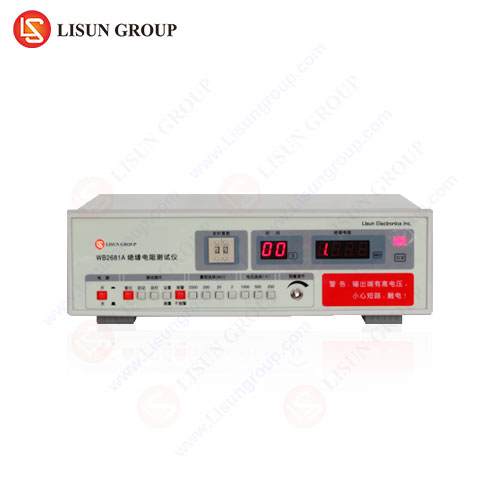
The LISUN WB2671A Withstand Voltage Test instrument represents a convergence of precision measurement science and industrial automation engineering. Its architecture is built around a high-voltage generation module employing a low-ripple linear amplifier topology, which produces a sinusoidal AC output at 50 Hz or 60 Hz with total harmonic distortion below 3%, or a DC output with ripple voltage less than 5% of the set value. This waveform purity is critical for obtaining reproducible leakage current measurements, as harmonic distortion can artificially elevate the measured current or cause premature breakdown in insulation systems with frequency-dependent dielectric properties. The instrument’s output voltage is adjustable in increments of 1 V, from 100 V up to 5000 V AC and 6000 V DC, with automatic regulation against load fluctuations. The measurement circuit employs a dual-path topology: a high-impedance voltage divider for voltage monitoring, and a precision current-sense resistor network coupled to a 24-bit sigma-delta analog-to-digital converter for leakage current measurement. This configuration achieves a dynamic range spanning from 0.001 mA to 20 mA AC/DC, with automatic ranging that maintains optimal signal-to-noise ratio across the entire measurement span. The instrument incorporates a real-time arc detection circuit that monitors for high-frequency transients indicative of partial discharge or incipient breakdown, allowing immediate shutdown within 1 millisecond of arc onset. From an operational perspective, the WB2671A supports five distinct test modes: constant voltage (CV), ramp-to-voltage (RV), step voltage, dwell time, and sequential multi-step tests. In the context of Household Appliances production lines, where throughput demands are high, the instrument’s 0.1-second minimum dwell time and 10-operations-per-minute cycle rate (for a 3-second test) enable efficient integration into automated test fixtures. The 4.3-inch TFT LCD display provides real-time graphical representation of voltage and current waveforms, which is particularly valuable for diagnosing intermittent failures in Telecommunications Equipment or Consumer Electronics where complex power management circuits may exhibit nonlinear leakage characteristics.
Industry-Specific Applications and Test Protocol Optimization
Electrical Components and Switchgear Validation
For switches, sockets, connectors, and terminal blocks governed by IEC 60884-1, IEC 60669-1, and UL 1054, hipot testing serves dual functions: verifying the dielectric strength between live parts of opposite polarity, and between live parts and accessible metallic surfaces. A typical protocol for a 250 V rated socket outlet, as tested with the LISUN WB2671A, involves applying 2000 V AC for 60 seconds between line and neutral terminals with the switch in the closed position, followed by 2400 V AC for 60 seconds between the combined live terminals and the earthing contact. The acceptable leakage current limit is typically set at 5 mA for type tests and 10 mA for production tests, though these thresholds may be lowered to 0.5 mA for medical-grade connectors. The WB2671A’s programmable limit comparator allows setting distinct limits for the static and dynamic phases of the test, thereby accommodating the capacitive inrush current characteristic of long wiring runs.
Automotive Electronics and High-Reliability Environments
In Automotive Electronics, where operating voltages are trending upward with the proliferation of 48 V architectures and electric vehicle (EV) powertrains, hipot testing must account for the unique challenges of high-voltage DC systems. According to ISO 6469-3 and LV 123, the hipot test for EV battery packs and power distribution units may require DC voltages up to 6000 V, with leakage current limits as stringent as 1 mA for the high-voltage interlock loop. The LISUN WB2671A’s DC mode is particularly advantageous here because DC testing eliminates the capacitive charging current that complicates AC testing of high-capacitance loads such as battery modules. For connectors and wiring harnesses exposed to salt spray, vibration, and thermal shock per LV 214 or USCAR-21, the hipot test is often performed after environmental conditioning to verify that insulation integrity has not been compromised. The instrument’s memory storage capability for up to 100 test profiles allows rapid changeover between different vehicle platform variants.
Medical Device Insulation Integrity Verification
Medical electrical equipment, as classified under IEC 60601-1, imposes the most stringent hipot testing requirements due to the direct patient contact involved. For patient applied parts (BF and CF types), the test voltage may be reduced from the standard 1500 V to 500 V for applied parts with limited working voltage, but the acceptable leakage current under normal conditions is limited to 10 microamperes for Type BF and 50 microamperes for Type CF applied parts. The WB2671A’s 1 microampere resolution and 0.5% accuracy enable reliable discrimination between acceptable and unacceptable leakage levels at these low thresholds. In practice, for a patient monitoring system, the hipot test is conducted between the patient circuit and ground at 1500 V AC for 60 seconds, with a limit of 100 microamperes. The instrument’s ramp function is critical here, as sudden voltage application to sensitive medical electronics could cause component stress; a ramp rate of 100 V/s to 500 V/s is typically programmed. Additionally, the WB2671A supports a “gradient” test mode that measures leakage current at multiple voltage points during the ramp, providing a diagnostic curve that can reveal nonlinearities associated with insulation defects.
Lighting Fixtures and Aerospace Components
For LED drivers, ballasts, and luminaires tested to IEC 61347-1 and IEC 60598-1, hipot testing must account for the high-frequency switching components that can generate common-mode noise affecting leakage current measurement. The WB2671A incorporates a noise rejection filter with selectable cutoff frequencies (100 Hz, 1 kHz, 10 kHz) to suppress switching artifacts without attenuating the genuine leakage signal. A typical test for a Class I LED driver rated at 277 V AC involves applying 1414 V DC (equivalent to 1000 V AC peak) between the AC input terminals and the output terminals for 60 seconds, with a limit of 0.75 mA. In the Aerospace and Aviation Components sector, where RTCA DO-160 and MIL-STD-810 govern environmental test procedures, hipot testing is performed at altitude-simulated conditions to evaluate corona onset and insulation breakdown under reduced atmospheric pressure. While the WB2671A itself does not include an altitude chamber, its data logging capability (up to 1000 test records) allows correlation of hipot test results with altitude parameters from associated environmental chambers.
Test Artifacts, Failure Analysis, and Diagnostic Interpretation
Interpreting hipot test failures requires systematic differential diagnosis to distinguish between genuine insulation breakdown, test setup artifacts, and current components that are intrinsic to the device under test’s design. One common artifact is the “soft failure” induced by excessive capacitive charging current in devices with large electromagnetic interference (EMI) filter capacitors connected between line and ground. In such cases, the measured current during the initial 1 to 2 seconds of the test may exceed the trip threshold even though the insulation is intact. The WB2671A addresses this through its configurable “delay time” parameter that postpones the leakage current measurement until the capacitive transient has decayed, as well as its “slow ramp” mode that limits the rate of voltage rise. Another diagnostic scenario involves intermittent failures reproducible at specific voltage levels but not at others, which may indicate the presence of partial discharge activity within voids or delamination in the insulation system. The instrument’s arc detection circuit, which responds to high-frequency spectral components in the current waveform, can trigger an immediate test termination upon detecting partial discharge activity above a user-set sensitivity level (1 to 10, corresponding to approximate discharge magnitudes of 10 pC to 100 pC). For persistent failures in power supply units, the failure mode may be traced to inadequate creepage distance across optocoupler isolation barriers, insufficient clearance between transformer windings, or moisture absorption in electrolytic capacitor seals. The WB2671A’s data logging feature, which records voltage, current, time, and failure type for each test, enables statistical process control (SPC) analysis to detect drift in production yield and correlate failures with specific assembly batches or process parameters.
Competitive Advantages of the WB2671A in Production and Laboratory Settings
When evaluating hipot test instruments for deployment in high-volume manufacturing or accredited testing laboratories, several performance differentiators emerge. The LISUN WB2671A distinguishes itself through its combination of wide voltage and current range, high measurement resolution, and advanced programmability at a price point that is competitive with instruments offering comparable specifications. The instrument’s 5 kV AC / 6 kV DC output capability covers the majority of industrial and commercial product categories without requiring an external step-up transformer. Its dual-channel measurement capability, allowing simultaneous monitoring of both output voltage and leakage current, provides real-time insight that single-display instruments cannot offer. The WB2671A’s built-in flashover detection, which responds to current transients exceeding 50 mA/μs, offers protection for both the device under test and the operator by initiating shutdown within 1 millisecond. From a usability standpoint, the instrument supports both front-panel operation through a resistive touchscreen and remote control via RS-232, USB, and GPIB interfaces, enabling integration into automated test systems using LabVIEW, Python, or proprietary test executive software. The unit’s firmware is field-upgradeable via USB, allowing compliance with evolving standards without hardware modification. In comparative benchmarking against instruments from other manufacturers, the WB2671A exhibits superior voltage regulation (0.1% of set value under load) and lower output ripple, which translates to more stable readings and fewer false failures. The instrument also includes a built-in discharge circuit that de-energizes the device under test within 1 second of test completion, a safety feature that is critical when testing capacitors or cable assemblies with significant self-capacitance.
Frequently Asked Questions
Q1: What is the difference between AC and DC hipot testing, and when should each be selected?
AC hipot testing is generally preferred for products where the insulation system is intended for AC mains operation, as it stresses the insulation with continuous alternating polarity and reveals the combined effects of dielectric loss, capacitive coupling, and partial discharge activity. DC hipot testing is advantageous for high-capacitance loads such as cable assemblies or battery packs, where the capacitive charging current in AC mode would mask the conductive leakage current. DC testing also enables detection of resistive leakage paths without the complicating influence of capacitive current, but it may not stress certain insulation defects as effectively as AC due to the absence of periodic voltage reversals.
Q2: How should the leakage current limit be determined for a specific product?
The leakage current limit is typically specified in the applicable product safety standard (e.g., IEC 62368-1, IEC 60601-1, IEC 60598-1). In the absence of a standard, a commonly used heuristic is to set the limit at 5 mA for Class I equipment and 0.5 mA for Class II equipment at the test voltage. For DC testing, the limit is often set at 1 mA. It is critical to account for the normal capacitive current of the device under test; if this exceeds the desired limit, either the dwell time must be increased to allow the capacitive transient to decay, or a lower limit with a delayed measurement window must be configured in the WB2671A.
Q3: Can the WB2671A be used for insulation resistance (IR) testing as well as hipot testing?
The WB2671A is primarily designed for dielectric withstand (hipot) testing, which applies a high voltage to verify insulation strength and measure leakage current. It does not include a dedicated insulation resistance measurement mode that returns values in megohms. However, the instrument can be used to approximate insulation resistance by dividing the applied voltage by the measured leakage current after the capacitive transient has stabilized. For formal IR testing, a megohmmeter or insulation resistance tester should be employed, though the WB2671A’s DC hipot mode at lower voltages can serve as a screening tool.
Q4: What maintenance and calibration are required for the WB2671A to ensure accurate hipot testing?
Annual recalibration against a traceable reference standard is recommended, with the instrument being returned to LISUN or an ISO 17025 accredited laboratory. Users should perform daily verification using a known resistive load (e.g., a 100 kΩ, 10 W resistor) to confirm that voltage output and current measurement are within 2% of expected values. The high-voltage output cable and test leads should be inspected weekly for signs of insulation degradation, corona damage, or broken shielding, and replaced if any defects are found. The instrument’s internal calibration parameters can be adjusted through the firmware menu using a password-protected calibration routine, but this should only be performed by qualified personnel.
Q5: How does the WB2671A handle surge currents or arcs during testing without damaging the instrument or the device under test?
The WB2671A incorporates a fast-acting, solid-state output switch that can interrupt the test circuit within 1 millisecond of detecting an overcurrent event or arc transient. The arc detection circuit monitors the high-frequency content of the output current; when the threshold (configurable from 1 to 10) is exceeded, the high-voltage output is immediately disconnected and the instrument displays a “ARC FAILURE” message. This protects both the device under test from sustained damage and the instrument’s output stage from thermal or voltage stress. The maximum energy let-through is limited to less than 10 mJ per event, which is below the ignition energy of most solid insulation materials.
