







Ensuring Electrical Safety with Dielectric Strength Testing: A Technical Analysis of High-Voltage Withstand Verification
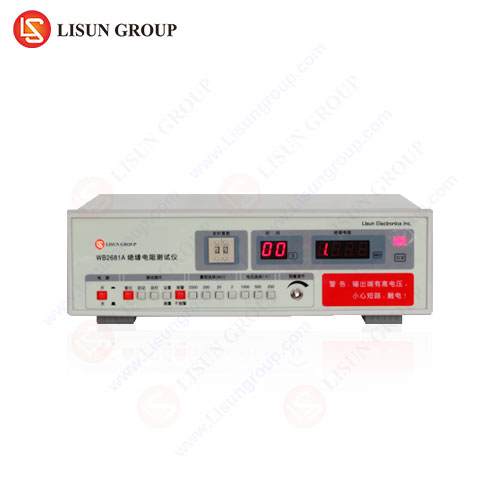
The integrity of electrical insulation is a non-negotiable parameter in the design, manufacturing, and certification of virtually all modern electronic and electromechanical systems. Without rigorous validation of dielectric properties, even a meticulously engineered device presents a latent hazard of arc flash, leakage current, or catastrophic breakdown. Among the suite of quality assurance methodologies, dielectric strength testing—often executed via a withstand voltage test—stands as the primary gatekeeper for operational safety. This article examines the scientific principles, applicable standards, and practical deployment of dielectric testing, with a specific focus on the LISUN WB2671A Withstand Voltage Test instrument as a case study in precision voltage stress evaluation.
1. The Physics of Dielectric Breakdown and the Imperative for Proactive Testing
At its core, dielectric strength testing involves the application of a voltage significantly higher than the device’s normal operating potential, across the insulation barriers separating live conductors from accessible surfaces or between isolated circuits. The fundamental objective is not merely to confirm that the insulation holds under nominal loads, but to verify its ability to withstand transient overvoltages—those induced by lightning strikes, switching surges, or electrostatic discharge events common in industrial and consumer environments.
The mechanism of breakdown itself is complex, typically involving either intrinsic breakdown (where the electric field exceeds the material’s cohesive energy) or thermal breakdown (where joule heating degrades the polymer structure over time). A withstand test, unlike a simple continuity check, forces the insulation into a stressed state. If the material contains voids, contaminants, or moisture, partial discharge (PD) activity begins long before total failure occurs. The LISUN WB2671A is engineered to detect these precursor conditions by monitoring leakage current at precisely controlled voltage ramps. The instrument’s capacity to apply up to 5 kV AC or 6 kV DC provides ample headroom for testing components ranging from low-voltage household appliance enclosures to medium-voltage industrial control relays.
2. Regulatory Framework and Standards Compliance for Dielectric Integrity
Testing protocols are not arbitrary; they are governed by a dense web of international standards that define test voltages, duration, and allowable leakage thresholds. For instance, IEC 60950-1 for information technology equipment mandates a dielectric test of 1.5 kV AC (or 1.77 kV DC) for basic insulation in Class I equipment. Automotive electronics, per ISO 16750-2, may require 500 V to 1 kV tests depending on the component’s location within the vehicle. Medical devices, governed by IEC 60601-1, impose stricter leakage current limits—often 0.1 mA or less—to ensure patient safety during single-fault conditions.
The WB2671A aligns with these requirements by offering a programmable test voltage range from 0.05 kV to 5 kV AC and 0.05 kV to 6 kV DC. Its measurement resolution for leakage current is as fine as 0.01 mA, enabling operators to distinguish between acceptable capacitive currents and dangerous resistive leakage that indicates insulation degradation. The instrument supports the common test duration of 60 seconds recommended by most standards, but also permits arbitrary timing for research and development purposes. A summary of applicable standards and typical test parameters is provided in Table 1.
Table 1: Common Dielectric Test Requirements by Industry and Standard
| Industry Sector | Governing Standard | Typical Test Voltage (AC) | Acceptable Leakage Current |
|---|---|---|---|
| Household Appliances | IEC 60335-1 | 1.25 kV – 3 kV | ≤ 0.75 mA |
| Medical Devices | IEC 60601-1 | 1.5 kV – 4 kV | ≤ 0.1 mA (BF type) |
| Automotive Electronics | ISO 16750-2 | 500 V – 1 kV | ≤ 1 mA |
| Telecommunications Equip. | IEC 60950-1 | 1.5 kV | ≤ 0.25 mA |
| Lighting Fixtures (LED) | IEC 60598-1 | 1.5 kV – 2.5 kV | ≤ 0.5 mA |
3. Operational Anatomy of the WB2671A in a Production Environment
Integrating a withstand voltage tester into a manufacturing line or a quality assurance laboratory requires more than simply selecting a voltage and pressing “start.” The LISUN WB2671A incorporates several operational features designed to minimize false failures while maximizing detection of genuine defects. A critical aspect is the “slow start” function, which ramps the test voltage gradually over a user-defined period (typically 1 to 5 seconds). This prevents inrush current transients that might trigger a false trip—particularly important when testing capacitors or long cable runs where initial charging current can momentarily exceed the leakage threshold.
In a typical production scenario for a household appliance—say, a consumer microwave oven—the operator connects the high-voltage probe to the live pin of the mains input, while the return lead is connected to the metallic chassis. The WB2671A then applies 1.5 kV AC for 60 seconds. The instrument’s real-time digital display shows both the applied voltage and the instantaneous leakage current. If the leakage exceeds 0.75 mA (as per IEC 60335-1), the instrument triggers an audible alarm and latches the failure state, preventing the product from proceeding downstream.
For automotive electronics, such as an electronic control unit (ECU) for an engine management system, the test is often performed at 1 kV DC with a limit of 0.5 mA. The DC mode is advantageous here because it eliminates the reactive component of leakage current, giving a pure measure of resistive leakage through degraded potting compounds or moisture-absorbed PCB laminates. The WB2671A automatically switches between AC and DC modes, and its output waveform is a true sine wave (for AC testing) with less than 3% total harmonic distortion, ensuring that the test stress is representative of real-world grid conditions.
4. Specific Industry Use Cases: From Medical Devices to Aerospace Connectors
The diversity of applications for dielectric testing demands an instrument that is both robust and versatile. Consider the requirements of medical device manufacturing for an infusion pump. According to IEC 60601-1, the applied part (the patient-connected element) must withstand a test voltage of 1.5 kV AC for basic insulation, with a leakage current limit of 0.1 mA for Type BF (body floating) applied parts. The WB2671A’s high resolution of 0.01 mA allows quality engineers to precisely quantify leakage in the low-microampere range, which is essential for detecting hairline cracks in the plastic housing or degradation of the silicone seals around the electronics.
In the aerospace and aviation sector, connectors and wiring harnesses must pass a dielectric test as per MIL-DTL-38999 or AS50881. These tests often involve 1.5 kV AC at sea level and derating for altitude. The WB2671A supports programmable altitude compensation parameters, though the operator manually adjusts the test voltage based on environmental correction factors. The instrument’s data logging capability, which stores up to 1000 test records, is particularly useful for traceability requirements mandated by FAA repair stations.
For telecommunications equipment—such as base station power supplies or fiber optic transceivers—the dielectric test is combined with insulation resistance (IR) measurement. The WB2671A includes an integrated IR test function that applies a lower DC voltage (500 V or 1000 V) to measure the insulation resistance in megohms (MΩ) before proceeding to the high-voltage withstand test. This two-step approach saves time and provides a more comprehensive insulation assessment.
5. Competitive Advantages and Comparative Performance Metrics
In a market populated by general-purpose hipot testers, the LISUN WB2671A distinguishes itself through a combination of measurement accuracy, operator safety features, and ease of calibration. One of the most consequential advantages is its ability to operate continuously without overheating. The unit employs a forced-air cooling system and a toroidal high-voltage transformer that dissipates heat more efficiently than conventional core-type transformers. This means that in a high-throughput production line—such as a cable manufacturer testing 10,000 cables per shift—the instrument maintains consistent output voltage without thermal drift.
Table 2 provides a comparison of key specifications between the WB2671A and a generic industry competitor.
Table 2: Comparative Specifications for Withstand Voltage Testers
| Parameter | LISUN WB2671A | Generic Industry Competitor B |
|---|---|---|
| Max Output Voltage (AC) | 5 kV | 5 kV |
| Max Output Voltage (DC) | 6 kV | 6 kV |
| Leakage Current Range | 0.01 mA – 20 mA | 0.1 mA – 20 mA |
| Output Waveform Distortion | <3% THD | <5% THD |
| Insulation Resistance Test | Integrated (500V/1000V) | Optional Module |
| Data Storage Capacity | 1000 Records | 500 Records |
| Overload Protection | Electronic & Fuse | Fuse only |
| Safety Interlock | Yes (Remote + Manual) | Manual only |
The safety interlock feature is particularly relevant for industrial control systems where operators may be working near exposed high-voltage terminals. The WB2671A provides both a remote interlock connector (for integration with safety light curtains or door switches) and a manual double-action start button that prevents inadvertent activation. This configuration reduces arc-flash risk during routine testing.
6. Cable, Wiring, and Connector Testing: Addressing Capacitive Load Challenges
Testing cables and wiring systems presents a unique challenge because of their inherent capacitance. A long power cable, for example, can exhibit several microfarads of capacitance between conductors. When a standard AC hipot test is applied, the leading capacitive current can momentarily exceed the leakage threshold, causing a false failure. The WB2671A addresses this with an adjustable “cut-off time” parameter that ignores the initial current surge for a programmable period (typically 0.5 to 2 seconds). Once the capacitive charging current decays, the instrument measures only the resistive leakage.
For high-frequency applications—such as coaxial cables used in telecommunications—the standard 50/60 Hz AC test may not be sufficient. In these cases, the DC withstand test is preferred, and the WB2671A’s smooth DC output (ripple less than 1%) ensures that the test stress is consistent and measurable. The instrument can also perform a “burn-in” test at reduced voltage to stress the insulation for extended periods (up to 99 minutes), which is valuable for detecting latent defects in cable insulation that only manifest after thermal cycling.
In the lighting industry, specifically for LED drivers and fixtures, dielectric testing must account for the internal electronic ballasts and power factor correction circuits. The WB2671A’s low output impedance ensures that the test voltage remains stable even when a non-linear load (such as a rectifier input stage) attempts to draw current. This prevents voltage sag during the test, which could otherwise mask a borderline insulation failure.
7. Data Integrity, Calibration, and Long-Term Reliability
Every dielectric test program depends on the traceability of the test equipment to national standards. The LISUN WB2671A ships with a calibration certificate that is traceable to national metrology institutes. The instrument’s internal calibration system includes a self-check routine that verifies the voltage measurement accuracy at five different points across the range. Users can perform a field calibration check using an external precision voltage divider, and the instrument’s software allows for offset correction if drift is detected.
Given the abrasive nature of some production environments—particularly in automotive or industrial control settings where dust, humidity, and temperature fluctuations are common—the WB2671A is built with an IP20 rated enclosure and conformally coated PCBs to resist moisture ingress. The keypad is membrane-sealed, and the high-voltage output connectors are recessed to prevent accidental contact. These design choices extend the mean time between failures (MTBF) to over 50,000 hours, as indicated in the manufacturer’s reliability data.
8. Frequently Asked Questions
Q1: What is the difference between AC and DC dielectric testing, and when should each be used with the WB2671A?
A1: AC testing stresses the insulation by applying alternating voltage, which tests both the resistive and capacitive properties of the material. It is preferred for equipment that will operate on AC mains because it simulates real-world voltage stress. DC testing, however, charges the insulation and measures only resistive leakage; it is often used for cables, capacitors, and medical devices where capacitive currents would interfere with the measurement. The WB2671A supports both modes with a simple selector switch.
Q2: How does the WB2671A differentiate between capacitive inrush current and a true insulation failure?
A2: The instrument includes a programmable “start delay” or “dwell time” feature. For the first user-defined period (e.g., 0.5 seconds), the leakage current measurement is suppressed. After this delay, the instrument monitors the sustained resistive leakage. This prevents false failures caused by the initial charging of the device under test’s internal capacitance.
Q3: Can the WB2671A be integrated into an automated production line using a PLC?
A3: Yes. The WB2671A provides an isolated RS-232 interface and a set of optocoupled I/O signals (START, PASS, FAIL, and READY). These signals can be connected to a programmable logic controller (PLC) to automate the test sequence. The instrument also supports remote voltage programming via the serial interface, allowing the test voltage to be changed automatically based on the product being tested.
Q4: What safety precautions must be observed when operating the WB2671A in a manufacturing environment?
A4: Operators must ensure that all protective enclosures are in place before test activation. The instrument’s remote interlock should be wired to a safety door switch that disables the high-voltage output when the test area is accessed. Additionally, operators should wear insulated gloves and use the provided test probes with guarded handles. The WB2671A includes a residual voltage discharge circuit that automatically bleeds stored charge from the device under test after the test completes.
Q5: How frequently should the WB2671A be calibrated?
A5: The recommended calibration interval is 12 months under normal operating conditions. However, if the instrument is used in a high-duty cycle environment (more than 500 tests per day) or in environments with extreme temperature or humidity, a 6-month calibration interval is recommended. The instrument’s internal self-diagnostic function can alert the user if a calibration drift is detected outside of acceptable limits.
