





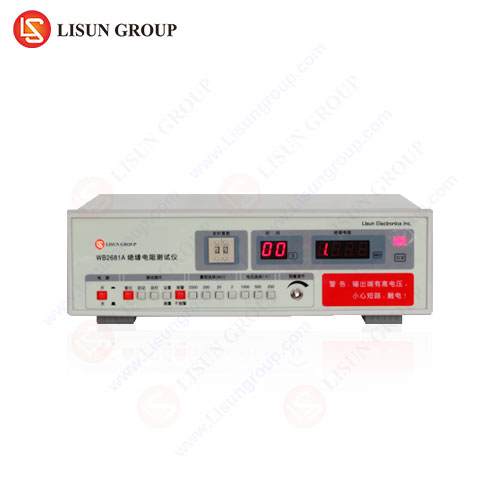



Quantifying Dielectric Stress Tolerance: Foundational Parameters for Equipment Selection
Selecting an appropriate high-potential (hipot) tester for laboratory environments necessitates a rigorous evaluation of test parameters against the electrical breakdown characteristics of the device under test (DUT). The fundamental principle underpinning hipot testing—application of elevated voltage between conductive parts and insulation barriers—demands instrumentation capable of precise voltage ramp generation, leakage current measurement, and fault detection across a broad impedance spectrum. Laboratories serving the Electrical and Electronic Equipment sector, Automotive Electronics manufacturing, and Medical Devices certification must acknowledge that hipot testers are not interchangeable commodities but precision instruments whose specifications directly influence test repeatability and compliance with international safety standards. The decision matrix begins with voltage range, current measurement resolution, and test duration capabilities, but extends into more subtle considerations such as output waveform quality, arc detection sensitivity, and data acquisition architecture.
Differentiating AC vs. DC Hipot Testing Modalities in Laboratory Contexts
The fundamental choice between alternating current (AC) and direct current (DC) hipot testing methodologies imposes distinct requirements on instrument design and calibration protocols. AC hipot testers, such as the WB2671A Withstand Voltage Test from LISUN, apply sinusoidal voltages at power-line frequencies (typically 50 Hz or 60 Hz), stressing insulation through both capacitive charging currents and dielectric absorption phenomena. This modality proves particularly relevant for Household Appliances, Office Equipment, and Lighting Fixtures, where insulation systems experience continuous AC stress during normal operation. Conversely, DC hipot testing eliminates reactive current components, allowing more accurate measurement of true leakage current through insulation resistance pathways—an advantage for Cable and Wiring Systems and Telecommunications Equipment where cable capacitance would otherwise produce prohibitive charging currents under AC excitation. Laboratories must recognize that AC testers generally require higher volt-ampere ratings to supply capacitive loads, while DC testers demand superior voltage regulation and discharge circuitry to ensure operator safety after test completion. The selection decision hinges on applicable standards: IEC 60950 for Information Technology Equipment specifies AC testing predominantly, whereas IEC 60601 for Medical Devices permits either modality with specific waveform requirements.
Evaluating Voltage Accuracy and Output Stability for Precision Measurements
Voltage output specifications constitute the primary technical differentiator among hipot tester product categories. Commercial laboratories certifying Aerospace and Aviation Components must maintain voltage accuracy within ±1% of programmed setpoint across the full operating range, with output ripple not exceeding 2% peak-to-peak for AC systems. The WB2671A Withstand Voltage Test exemplifies instruments engineered to meet these stringent criteria, delivering voltage from 0.5 kV to 5 kV AC with resolution of 10 V. This level of precision becomes critical when testing Industrial Control Systems where insulation coordination follows IEC 60664, specifying impulse withstand voltages that correlate directly with equipment category. Voltage stability under load—a parameter often overlooked in technical literature—requires examination of the instrument’s feedback control loop response to capacitive inrush currents. High-quality laboratory hipot testers employ digital signal processing to maintain voltage setpoint within ±0.5% when driving loads up to 500 nF, preventing premature flashover due to voltage sag during the ramp-up phase. For Consumer Electronics testing, where production volumes necessitate rapid sequencing, voltage rise time specifications (typically 50–500 ms depending on capacitance) directly impact throughput without compromising test integrity.
Current Measurement Architecture: Resolution, Filtering, and Threshold Discrimination
Leakage current measurement capabilities define the hipot tester’s diagnostic utility, particularly when evaluating partial discharge precursors or moisture-induced conduction paths. The WB2671A Withstand Voltage Test incorporates a high-impedance current sensing circuit capable of detecting leakage currents from 0.01 mA to 20 mA with resolution of 0.01 mA below 10 mA—specifications that satisfy Electrical Components (switches, sockets, relays) testing per IEC 60884 and IEC 60947. Laboratories handling Automotive Electronics, where leakage thresholds may be specified at 0.1 mA for sensitive semiconductor devices, require instruments with noise floor below 0.005 mA RMS to avoid false failures from environmental electromagnetic interference. Advanced hipot testers implement programmable current filters with time constants adjustable from 10 ms to 1000 ms, enabling discrimination between genuine insulation degradation and capacitive charging transients. The detection algorithm must distinguish between resistive leakage (indicative of insulation deterioration) and reactive currents (which reflect merely the DUT’s capacitance). For Telecommunications Equipment testing, where surge protection components (GDTs, MOVs) exhibit nonlinear current-voltage characteristics, selectable trip thresholds with hysteresis prevent nuisance tripping during normal component operation while maintaining sensitivity to incipient failure modes.
Arc Detection and Breakdown Recognition Systems: Temporal and Spectral Analysis
Rapid detection of dielectric breakdown events requires arc sensing circuitry that extends beyond simple peak current thresholding. Contemporary laboratory hipot testers employ both amplitude-based and derivative-based detection methods, analyzing the rate of current change (dI/dt) alongside absolute magnitude to discriminate partial arcs from normal capacitive charging currents. The WB2671A Withstand Voltage Test integrates a multi-criteria arc detection system that identifies breakdown events within 10 μs, a parameter essential for testing Medical Devices where insulation failure could compromise patient safety or device sterility. Spectral analysis of the leakage current waveform provides additional diagnostic information: harmonic distortion in the measured current indicates corona discharge or surface tracking, whereas broadband noise preceding breakdown suggests moisture ingress or contaminant ionization. Laboratories specializing in Aerospace and Aviation Components must verify that the hipot tester’s arc detection threshold can be programmed to match component sensitivity levels—from 0.1 mA for avionics modules to 10 mA for power distribution assemblies. The instrument should log the time-stamped occurrence of each arc event, including the instantaneous voltage and current magnitudes at detection, enabling post-test forensic analysis of insulation failure progression.
Programmable Test Sequences and Multi-Stage Withstand Profiles
Modern hipot testing protocols frequently require multi-stage test sequences incorporating voltage ramping, dwell periods, and gradual discharge phases, particularly for Industrial Control Systems and Automotive Electronics where insulation systems exhibit time-dependent breakdown characteristics. The WB2671A Withstand Voltage Test provides programming capability for up to 10 test steps per sequence, with independent voltage setpoints, ramp rates (10–500 V/s), and dwell times (1–999 seconds) for each phase. This capability supports compliance with test standards requiring pre-conditioning at reduced voltage, followed by application of the full test potential for specified duration, then monitored decay to zero voltage. For Cable and Wiring Systems testing per IEC 60227, a typical sequence begins with voltage ramp to 0.5 × test voltage over 5 seconds, maintains this level for 10 seconds to stabilize capacitive charging, then continues to full test voltage for the duration specified in the standard. Laboratories can program the instrument to automatically sequence through multiple DUT channels or test points, reducing operator intervention and minimizing variability in test application timing. The inclusion of programmable pass/fail criteria with statistical process control outputs enables seamless integration with laboratory information management systems (LIMS) for Consumer Electronics manufacturer quality assurance documentation.
Safety Interlocks and Operator Protection Mechanisms in Laboratory Instrumentation
The hazardous voltage levels inherent in hipot testing—ranging from 500 V to over 5 kV for standard laboratory instruments—mandate comprehensive safety features that exceed basic regulatory requirements. A properly configured hipot tester must incorporate redundant ground fault detection, fail-safe discharge circuitry, and both hardware and software-based interlock systems. The WB2671A Withstand Voltage Test implements two independent watchdog timers that terminate the high-voltage output if the microprocessor ceases normal operation, preventing uncontrolled voltage application during software lockups. Physical interlock terminals allow connection of external safety mat switches, light curtains, or enclosure door sensors, ensuring that high voltage cannot be applied unless all safety conditions are satisfied. For Medical Devices and Aerospace and Aviation Components testing, where operator concentration may extend over prolonged test sequences, the instrument should provide visual and audible alarms for each test phase transition, plus automatic discharge indication when the DUT voltage falls below 50 V. Laboratories must consider the discharge time constant: a hipot tester with internal discharge resistors should reduce DUT voltage from 5 kV to 50 V within 5 seconds for capacitances up to 10 μF, preventing injury during electrode removal. The inclusion of a remote start/stop capability with two-hand operation further reduces risk during high-throughput testing of Electrical Components in production verification laboratories.
Data Acquisition, Logging Capabilities, and Interface Compatibility
Regulatory compliance documentation for Medical Devices, Aerospace and Aviation Components, and Telecommunications Equipment requires traceable records of each hipot test, including applied voltage, measured leakage current, test duration, and operator identification. The WB2671A Withstand Voltage Test addresses this requirement through onboard non-volatile memory storing up to 1000 test records, with USB and RS232 interfaces enabling direct data transfer to laboratory databases. Test record fields should include time-date stamps synchronized to laboratory NTP servers, DUT serial number or identifier (entered via front-panel keypad or barcode scanner), and pass/fail status with peak current measurement. For laboratories integrating hipot testing into automated test equipment (ATE) systems, the instrument’s command set must support industry-standard SCPI programming over Ethernet or GPIB interfaces, with response times under 50 ms for query commands to maintain throughput. Data logging granularity matters significantly: instruments that record only the maximum leakage current during the test period may miss transient breakdown events occurring at the voltage peak. Advanced hipot testers provide configurable data logging intervals, capturing current measurements at 10 ms intervals throughout the test for subsequent analysis of insulation stability under prolonged voltage stress. This capability proves invaluable when testing Industrial Control Systems that incorporate power factor correction capacitors or surge suppression networks exhibiting time-dependent leakage characteristics.
Calibration Drift, Temperature Stability, and Long-Term Measurement Reliability
The metrological performance of hipot testers degrades over time due to component aging, thermal cycling, and contamination of high-voltage attenuators. Laboratories operating under ISO 17025 accreditation must verify that their hipot testers maintain specified accuracy over intervals between calibrations—typically 12 months for general laboratory use, reduced to 6 months for applications requiring measurement uncertainty below ±1%. The WB2671A Withstand Voltage Test employs precision voltage dividers with temperature coefficients of ±25 ppm/°C, ensuring voltage accuracy remains within ±1% across the 15–35°C operating temperature range typical of controlled laboratory environments. Current measurement accuracy, more susceptible to drift due to feedback resistor aging, benefits from autocalibration routines that reference an internal precision current source during power-on self-tests. Laboratories should request calibration certificates documenting both voltage and current measurement uncertainty at three to five points across the instrument’s operating range, traceable to national standards such as NIST or PTB. For Automotive Electronics testing, where hipot testers may be deployed in production environments with ambient temperatures reaching 40°C, instruments with active temperature compensation or forced-air cooling maintain specification compliance without derating. The long-term reliability of high-voltage relays and contactors—components subject to arc erosion during fault conditions—should be evaluated based on manufacturer specifications; typical rated lifetimes of 100,000 operations at rated load indicate industrial-grade construction suitable for Consumer Electronics production testing.
Standards Compliance Framework: Matching Instrument Capabilities to Industry Requirements
International product safety standards prescribe specific hipot test parameters that vary substantially across product categories and geographic markets. The WB2671A Withstand Voltage Test is designed to support testing per IEC 60950-1 (Information Technology Equipment), IEC 60065 (Audio/Video Equipment), UL 60950-1, and EN 60204-1 (Industrial Machinery), among others. Laboratories servicing Medical Devices must verify compliance with IEC 60601-1, which specifies test voltages ranging from 1500 V AC for basic insulation to 4000 V AC for reinforced insulation in patient care equipment. Lighting Fixtures per IEC 60598 require dielectric strength testing at 1000 V + 2 × U (nominal mains voltage) for Class I equipment, while Household Appliances per IEC 60335-1 specify test voltages of 1000 V for Class II double-insulated products and 1250 V for Class I products with functional insulation. The hipot tester’s voltage range must accommodate the maximum test voltage required across all intended product categories, with additional headroom for accelerated aging tests that may apply 1.2 × the standard test voltage. Standards compliance also extends to the instrument’s measurement uncertainty: IEC 61010-1 (Safety Requirements for Electrical Equipment for Measurement, Control, and Laboratory Use) requires that hipot tester accuracy be at least four times better than the test specification tolerance, a criterion that eliminates low-cost instruments with ±5% voltage accuracy from laboratory applications.
Comparative Analysis of Instrument Topologies: Transformer-Coupled vs. Switched-Mode Designs
The internal architecture of hipot testers significantly influences output waveform quality, voltage regulation, and physical dimensions—factors directly relevant to laboratory space allocation and test protocol development. Traditional transformer-coupled designs, employing ferroresonant or variac-controlled step-up transformers, provide sinusoidal AC output with total harmonic distortion (THD) below 2% at full load, essential for testing Telecommunications Equipment where harmonic content in the test voltage could cause resonance with line filters. The WB2671A Withstand Voltage Test utilizes a switched-mode power conversion topology that achieves comparable THD specifications (THD < 3%) while reducing instrument weight to 12 kg compared to typically 25–40 kg for transformer-coupled equivalents of similar voltage rating. Switched-mode designs offer superior voltage regulation under pulsed load conditions encountered when testing Cable and Wiring Systems with intermittent partial discharge events, responding to voltage deviations within 10 μs compared to 100 μs for transformer-coupled systems. However, laboratories must consider electromagnetic compatibility: switched-mode hipot testers generate broadband conducted and radiated emissions that may interfere with sensitive measurement equipment in adjacent test bays. The WB2671A incorporates input filtering and shielded enclosure construction to meet CISPR 11 Class A limits, making it suitable for industrial laboratory environments but potentially problematic for shielded rooms used in Aerospace and Aviation Components electromagnetic compatibility testing.
Economic Justification: Total Cost of Ownership and Lifecycle Performance Metrics
Selection of a hipot tester for laboratory applications requires analysis extending beyond initial acquisition cost to encompass calibration expenses, maintenance requirements, and expected service life. The WB2671A Withstand Voltage Test, priced competitively within the mid-range laboratory instrument category, offers a five-year warranty on high-voltage components and three-year coverage for electronic assemblies, reflecting manufacturer confidence in long-term reliability. Laboratories should calculate total cost of ownership (TCO) over a seven-year horizon, including:
- Initial instrument purchase price
- Annual calibration costs (typically 3–5% of purchase price for accredited calibration)
- Consumable replacement (test leads, high-voltage connectors)
- Training requirements for laboratory personnel
- Downtime costs attributable to instrument failure
For Medical Devices and Automotive Electronics laboratories operating at high utilization rates (greater than 2000 test cycles per year), instruments with modular construction enabling field replacement of power supplies or control boards minimize downtime compared to units requiring factory service. The economic analysis must also consider the cost of non-compliance: hipot testers that drift out of specification between calibrations risk producing false pass results that could lead to product recalls or certification revocation. Instruments incorporating continuous self-verification features, such as reference voltage measurement during each test cycle, provide early warning of calibration drift and reduce the probability of undetected accuracy degradation.
Frequently Asked Questions
Q1: How does the WB2671A Withstand Voltage Test ensure operator safety during high-voltage testing of medical devices?
The instrument incorporates dual watchdog timers, external safety interlock terminals, and automatic discharge circuitry that reduces DUT voltage below 50 V within 3 seconds at 5 kV output. A two-hand remote control option prevents inadvertent voltage application, meeting IEC 61010-1 safety requirements for laboratory test equipment.
Q2: Can the WB2671A perform both AC and DC hipot testing, and what is the maximum capacitance it can drive at rated voltage?
The unit provides AC output only, with voltage adjustable from 0.5 kV to 5 kV AC. It is capable of driving capacitive loads up to 500 nF at full output voltage without degradation in voltage accuracy, making it suitable for testing long cable runs and capacitive power supplies in telecommunications equipment.
Q3: What protocols are available for transferring test data to laboratory information management systems (LIMS)?
Data transfer occurs through USB Virtual COM port, RS232, or optional Ethernet interface using SCPI commands. The unit stores up to 1000 test records internally, including voltage, current, duration, pass/fail status, and time-date stamps for batch export.
Q4: How frequently should the WB2671A undergo calibration to maintain ISO 17025 compliance?
The manufacturer recommends annual calibration for standard laboratory use, with six-month intervals recommended for applications demanding measurement uncertainty below ±1% such as aerospace component qualification testing. The instrument includes a calibration due date reminder that can be programmed during certificate installation.
Q5: Does the WB2671A support ramp-rate programming for testing automotive electronics with sensitive insulation systems?
Yes, the instrument provides programmable ramp rates from 10 V/s to 500 V/s, enabling gradual voltage application to avoid stress cracking of ceramic capacitors or dielectric absorption in polymer insulation systems. Ramp rates can be independently configured for each of the 10 available test steps.
