






Advanced Xenon Arc Technology for Accelerated Weathering and Material Performance Validation
The long-term durability and aesthetic stability of materials and components are critical determinants of product lifecycle, safety, and consumer satisfaction across a vast spectrum of industries. Exposure to solar radiation, particularly the ultraviolet (UV) spectrum, coupled with thermal and moisture stresses, induces photochemical degradation, leading to fading, chalking, cracking, loss of mechanical integrity, and electrical performance degradation. Predicting this degradation through natural outdoor weathering is impractical for product development cycles, necessitating highly accelerated, reproducible laboratory testing. Among the available methodologies, xenon arc technology has emerged as the preeminent solution for simulating the full spectrum of sunlight and its synergistic effects with environmental conditions. This article delineates the principles of advanced xenon arc technology, its application in validating material durability and fade resistance, and its implementation in modern, precision instrumentation such as the LISUN XD-150LS Xenon Lamp Test Chamber.
Fundamental Principles of Spectral Fidelity and Photodegradation
At its core, xenon arc testing operates on the principle of spectral matching. A xenon arc lamp, when properly filtered, produces a spectral power distribution (SPD) that closely approximates terrestrial sunlight, including ultraviolet, visible, and infrared radiation. This is a critical advancement over simpler UV fluorescent lamps, which emit narrow-band radiation and fail to replicate the broad-spectrum effects of natural sunlight, including thermal loading from IR and photochemical reactions driven by specific UV wavelengths.
Material degradation is a photon-driven process. The energy of a photon is inversely proportional to its wavelength; thus, UV photons (290–400 nm) possess sufficient energy to break covalent bonds in polymers, pigments, and dyes. This initiates a cascade of chemical reactions, including chain scission, cross-linking, and oxidation. The rate of degradation is governed by the Arrhenius equation, where temperature accelerates reaction kinetics, and by the reciprocity principle, which posits that photochemical damage is a function of total radiant exposure (dose), allowing for acceleration by increasing irradiance. However, this acceleration must be controlled to avoid unrealistic failure mechanisms. Advanced xenon arc systems meticulously control three primary stress factors: irradiance level and spectrum, chamber temperature (black panel and air), and relative humidity. Cyclic programs that alternate between light-only, light with spray, and dark condensation phases can accurately replicate diurnal and seasonal weather patterns, inducing stresses akin to thermal shock and hydrolytic degradation.
System Architecture and Precision Control in Modern Test Chambers
The efficacy of xenon arc testing is wholly dependent on the precision and stability of the test chamber’s control systems. A state-of-the-art chamber is an integrated environmental system, not merely a light source in a box. The LISUN XD-150LS Xenon Lamp Test Chamber exemplifies this integrated approach. Its architecture is designed for maximal control fidelity and operational longevity.
The system is centered on a 1500W water-cooled xenon arc lamp, a power rating that provides intense, stable irradiance across a useful test area. Water-cooling is essential for maintaining lamp envelope temperature, ensuring consistent spectral output and extending lamp life. The optical system incorporates a selection of filter types—most commonly Daylight-Q (Borosilicate/Borosilicate) for general outdoor simulation or Window Glass filters for indoor light fastness testing—which tailor the lamp’s output to the desired spectrum, notably cutting off short-wave UV below 290 nm not present at the Earth’s surface.
Irradiance control is managed via a closed-loop feedback system. A calibrated UV or full-spectrum light sensor monitors the irradiance at the sample plane in real-time. This data is fed to a programmable logic controller (PLC) that automatically adjusts the lamp’s power supply to maintain the user-set irradiance level, typically expressed in W/m² at a specific wavelength (e.g., 340 nm or 420 nm). This compensates for lamp aging and ensures every test, whether started today or in six months, receives the identical radiant dose per unit time. The XD-150LS typically offers irradiance control range from 0.35 to 1.50 W/m² @ 340nm.
Environmental control is equally sophisticated. The chamber employs a resistive heated air system and a refrigeration circuit for precise temperature management. Separate sensors monitor Black Panel Temperature (BPT), which represents the temperature of a dark, heat-absorbing surface under the light, and Chamber Air Temperature. Humidity is generated via a steam humidification system and controlled via a dew point sensor, allowing for precise relative humidity (RH) settings from 10% to 98%. Sample spray is delivered via a bank of nozzles using high-purity deionized water to simulate rain or dew, controlled via solenoid valves with timing integrated into the test program.
Table 1: Representative Key Specifications of a Modern Xenon Arc Chamber (e.g., LISUN XD-150LS)
| Parameter | Specification Range / Detail |
| :— | :— |
| Lamp Type & Power | 1500W Water-cooled Long-life Xenon Arc Lamp |
| Irradiance Control | 0.35 – 1.50 W/m² @ 340nm (adjustable), automatic calibration |
| Spectral Filters | Daylight-Q, Window Glass, UV Extended (user-selectable) |
| Temperature Range | BPT: Ambient+10°C to 110°C; Chamber: Ambient+10°C to 80°C |
| Humidity Range | 10% to 98% Relative Humidity |
| Test Area | Customizable via sample racks, designed for uniform exposure |
| Control System | Touch-screen PLC, programmable for complex light/dark/spray cycles |
| Standards Compliance | ASTM G155, ISO 4892-2, IEC 60068-2-5, SAE J2527, JIS D0205, etc. |
Industry-Specific Applications for Performance Assurance
The application of xenon arc testing transverses industries where material failure carries functional, safety, or financial consequences.
- Automotive Electronics & Exterior Components: Connectors, wire insulation, infotainment displays, and sensor housings must resist UV-induced embrittlement and color shift. Testing per SAE J2527 (exterior) and SAE J2412 (interior) accelerates years of sun exposure in Arizona or Florida into weeks, predicting failures in seal integrity, connector retraction, and display legibility.
- Telecommunications Equipment & Cable Systems: Outdoor fiber optic cables, junction boxes, and antenna radomes are subjected to intense UV and thermal cycling. Degradation can lead to signal attenuation, water ingress, and mechanical failure. Xenon testing validates the stability of polyethylene jackets, color-coding for fibers, and the transparency of radome materials.
- Medical Devices and Aerospace Components: For devices exposed to clinical lighting or aircraft windows, polymer clarity, flexibility, and sterility barrier properties must not degrade. Testing ensures housing materials for portable diagnostics or interior panels do not off-gas, craze, or become brittle, which could compromise safety in critical environments.
- Consumer Electronics & Household Appliances: The plastic casings of routers, kitchen appliances, and office equipment must maintain color and surface texture. Fading or stickiness (a result of plasticizer migration) is unacceptable. Xenon arc testing provides a quantifiable measure of colorfastness (using ΔE measurements) and surface gloss retention.
- Lighting Fixtures and Electrical Components: The diffusers, reflectors, and sockets in LED fixtures must maintain optical properties and dimensional stability over decades of operation. UV exposure can yellow polycarbonate diffusers, reducing light output efficiency. Switches and sockets must not crack or degrade, preventing electrical hazard.
Methodological Rigor: Adherence to International Standards
The value of accelerated testing lies in its correlation to real-world performance and its reproducibility across laboratories. This is governed by international standards which prescribe the parameters for credible testing. Key standards include:
- ASTM G155: Standard Practice for Operating Xenon Arc Light Apparatus for Exposure of Non-Metallic Materials.
- ISO 4892-2: Plastics — Methods of exposure to laboratory light sources — Part 2: Xenon-arc lamps.
- IEC 60068-2-5: Environmental testing — Part 2-5: Tests — Test S: Simulated solar radiation at ground level and guidance for solar radiation testing.
- AATCC TM16 & ISO 105-B02: For textile colorfastness to light.
These standards define filter combinations, irradiance setpoints, temperature, humidity, and cycle durations. The LISUN XD-150LS is engineered to comply with these protocols, ensuring test data is recognized and respected in supply chain qualifications and regulatory submissions.
Quantitative Assessment of Degradation and Failure Analysis
The endpoint of a xenon arc test is not merely a visual inspection but a suite of quantitative analyses. Pre- and post-exposure measurements provide objective data:
- Colorimetry: Using a spectrophotometer to measure CIELAB (Lab*) values and calculate the color difference (ΔE). A ΔE > 2 is often perceptible to the human eye.
- Spectrophotometry: For transparent materials like coatings or glazing, measuring the change in transmission spectrum, particularly in the UV/Vis range.
- Mechanical Testing: Measuring the percentage loss in tensile strength, elongation at break, or impact resistance.
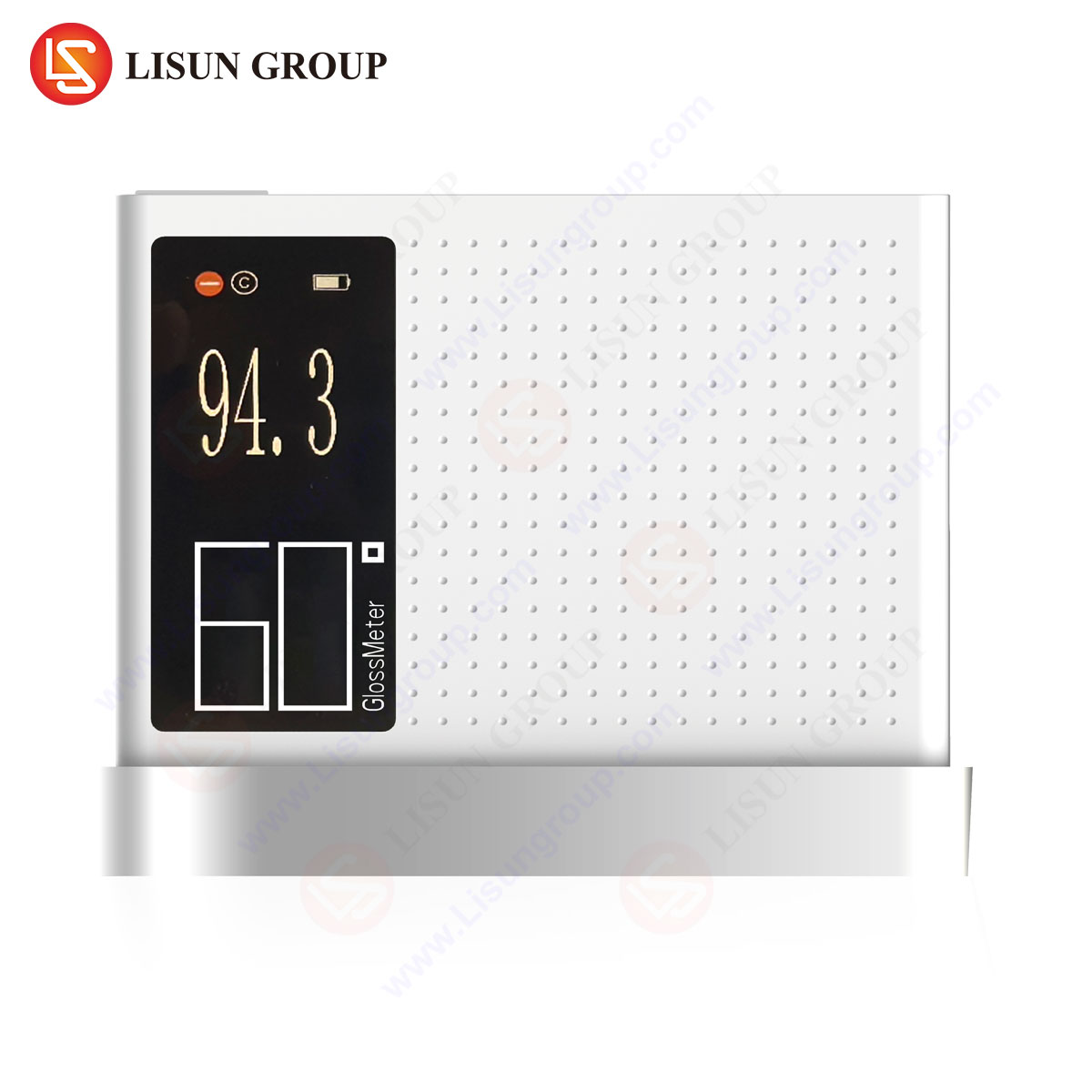
- Surface Analysis: Gloss meter readings at 60° or 20° angles to quantify surface texture change. Microscopic examination for cracking, chalking, or blistering.
- Electrical Performance: For components, monitoring insulation resistance, dielectric strength, or contact resistance after exposure.
Correlating the hours of accelerated exposure to equivalent outdoor exposure is complex and material-dependent. A common, though simplified, metric is that one hour in a xenon arc chamber at 0.55 W/m² @ 340nm approximates one day of average summer sun in a temperate climate. However, true correlation requires parallel testing with real-world samples and is best expressed as a material-specific correlation factor.
Operational Considerations and Best Practices for Reliable Data
To ensure the generation of reliable, repeatable data, several operational disciplines are paramount. Sample preparation must be consistent, and samples should be mounted in a manner that avoids shadowing and ensures uniform exposure. The chamber’s test area must be mapped periodically for irradiance uniformity, a critical step often facilitated by the manufacturer’s service. Lamp hours must be logged, as the spectral output decays over time; modern systems like the XD-150LS compensate via irradiance control, but lamps eventually require replacement after their rated lifetime (typically 1500-2000 hours). The use of high-purity deionized water for humidity and spray is non-negotiable to prevent mineral deposits on samples and chamber optics. Finally, the inclusion of calibrated reference materials (blue wool standards or physical dosimeters) in each test run provides an independent check of the total radiant dose delivered.
Conclusion
Advanced xenon arc technology represents a sophisticated synthesis of optics, environmental engineering, and materials science. It provides an indispensable, accelerated pathway for evaluating the durability and fade resistance of materials and components. By faithfully replicating the full spectrum of solar radiation and its environmental co-factors—temperature and moisture—within a precisely controlled chamber, it enables engineers and scientists to make informed material selections, validate product designs, and predict service life with a high degree of confidence. The implementation of this technology in robust, standards-compliant instruments, such as the LISUN XD-150LS Xenon Lamp Test Chamber, underpins quality assurance and innovation across the demanding fields of automotive, aerospace, telecommunications, medical technology, and consumer goods, ultimately contributing to the production of safer, more reliable, and longer-lasting products.
Frequently Asked Questions (FAQ)
Q1: How does xenon arc testing differ from simple UV chamber testing, and which is more appropriate for my product?
Xenon arc lamps replicate the full spectrum of sunlight (UV, visible, IR), while typical UV fluorescent chambers emit only narrow-band ultraviolet light. Xenon testing is superior for applications where total solar energy, thermal effects from IR, and broad-spectrum photochemistry are relevant (e.g., outdoor materials, automotive interiors, plastics). UV chambers may be suitable for screening specific UV-driven failures in controlled, less complex environments but often lack correlation to real-world weathering.
Q2: What is the significance of irradiance control at a specific wavelength (e.g., 340 nm vs. 420 nm)?
The controlled wavelength defines which part of the spectrum is being monitored and stabilized. 340 nm is in the UV-A region, which causes most polymer degradation. Controlling at 340 nm is standard for durability testing of materials like plastics and coatings. 420 nm is in the violet/blue visible region; controlling here is critical for colorfastness and fade testing of dyes and pigments, which are often sensitive to visible light. Advanced chambers allow control at multiple wavelengths.
Q3: Can the XD-150LS chamber simulate different geographic climates (e.g., desert vs. tropical)?
Yes, within the limits of accelerated testing. While the fundamental light spectrum is constant, the chamber’s programmable controllers allow you to define specific test cycles that emphasize certain conditions. A desert simulation might use high Black Panel Temperature (e.g., 70-90°C), high irradiance, and low humidity cycles. A tropical simulation would incorporate high humidity (85-95% RH) and dark condensation phases alongside high-temperature light phases. The specific parameters are defined by test standards or user-developed correlation profiles.
Q4: How often does the xenon lamp need to be replaced, and what are the signs of a lamp nearing end-of-life?
A water-cooled xenon lamp in a well-maintained system typically has a useful life of 1,500 to 2,000 hours. The primary sign of aging is that the power supply must operate near its maximum output to maintain the set irradiance, indicating decreased lamp efficiency. The system’s irradiance control will compensate, but once the power required consistently exceeds safe or efficient limits, or if the lamp exhibits flickering or difficulty igniting, replacement is necessary. Regular calibration checks will highlight this trend.
Q5: For testing small electronic components (e.g., chips, connectors), how is sample mounting handled to ensure even exposure?
Specialized sample racks or trays are used. Components can be mounted on fixture plates that hold them in a uniform plane. It is crucial to avoid stacking or shadowing. For very small parts, they may be arranged in a single layer on a tray, and the tray’s position in the chamber should be within the validated uniform irradiance area as per the chamber’s mapping report. Electrical feed-through ports may be used if in-situ electrical monitoring during the test is required.
