








A Comprehensive Guide to Leakage Current Testing: Procedures, Standards, and Instrumentation
Introduction to Leakage Current and Its Critical Role in Product Safety
Leakage current, defined as the unintended flow of electrical current from a live part of an electrical appliance or component to an accessible conductive part or to earth, represents a fundamental safety parameter in the design, certification, and production verification of virtually all electrical and electronic equipment. This phenomenon, while often measured in milliamperes (mA), poses significant risks of electric shock, fire hazard, and equipment malfunction. Its origins are multifaceted, stemming from capacitive coupling across insulation, resistive paths through contaminants or degraded materials, and the inherent characteristics of electromagnetic interference (EMI) filters. Consequently, rigorous leakage current testing is not merely a compliance exercise but a core engineering discipline mandated by international safety standards to protect end-users and ensure operational reliability across diverse sectors, from household appliances to critical medical and aerospace systems.
The physiological impact of leakage current on the human body is well-documented, with thresholds for perception, involuntary muscle reaction (let-go current), and ventricular fibrillation established in standards such as IEC 60479-1. Testing, therefore, simulates realistic fault conditions and operational modes to verify that accessible currents remain below these critical limits under both normal and single-fault conditions. This guide delineates the methodologies, applicable standards, and instrumental requirements for conducting precise and reliable leakage current evaluations, with a specific examination of advanced testing solutions that meet modern industry demands.
Fundamental Testing Principles and Measurement Methodologies
The accurate quantification of leakage current necessitates an understanding of its pathways and the standardized measurement networks defined to replicate human body impedance. The primary measurement categories are Touch Current and Protective Conductor Current, each assessed under specific circuit configurations.
Touch Current, the current that could flow through a human body touching an accessible part, is measured using a standardized network known as the Measuring Device for Touch Current (MDTC), as specified in IEC 60990. This network, often implemented within a leakage current tester, simulates the frequency-dependent impedance of the human body for frequencies up to 1 MHz. Testing is performed by placing the Equipment Under Test (EUT) in various operational states and applying the MDTC between any user-accessible conductive part and earth, or between any two accessible parts.
Protective Conductor Current is the current flowing in the protective earth conductor under normal operating conditions. This measurement is critical for ensuring the integrity of the grounding system and verifying that the current does not exceed the capacity of the protective earth conductor or cause nuisance tripping of residual-current devices (RCDs).
Testing methodologies prescribe multiple test conditions: normal condition, with all circuits functional; and single-fault conditions, such as interrupting the neutral supply or opening the protective earth conductor. The EUT must be placed on an insulating surface and connected via an isolation transformer to allow for the reversal of supply polarity, as leakage current values can differ between line and neutral polarities. All measurements must account for the highest current reading observed during the test sequence.
Global Regulatory Frameworks and Key Safety Standards
Compliance with leakage current limits is enforced through a complex matrix of international, regional, and product-specific standards. These documents prescribe not only the permissible current limits but also the exact test procedures, environmental conditions, and equipment configurations.
The cornerstone standard for general safety requirements is IEC 62368-1 (Audio/video, information and communication technology equipment), which supersedes the older IEC 60950-1 and IEC 60065. It classifies energy sources and defines touch current limits for different body parts (e.g., hand-to-hand, hand-to-foot). For household and similar electrical appliances, IEC 60335-1 is the principal standard, with detailed clauses on leakage current after durability tests, moisture tests, and under fault conditions. The medical electrical equipment sector is governed by the stringent IEC 60601-1 standard, which defines patient leakage current and earth leakage current limits for both normal and single-fault conditions, with Type BF and CF applied parts requiring exceptionally low thresholds.
Other critical standards include:
- IEC 61010-1 for laboratory, measurement, and industrial control equipment.
- IEC 60598-1 for lighting fixtures.
- ISO 26262 and various automotive OEM specifications for automotive electronics, where leakage current can affect 12V/24V systems and onboard control units.
- DO-160 for environmental conditions and test procedures for airborne equipment in aerospace.
Adherence to these standards, and their national adoptions (e.g., UL, CSA, EN standards), is non-negotiable for market access. A robust testing protocol must be explicitly mapped to the relevant standard for the product category.
Instrumentation for Precision Measurement: The WB2675D Leakage Current Tester
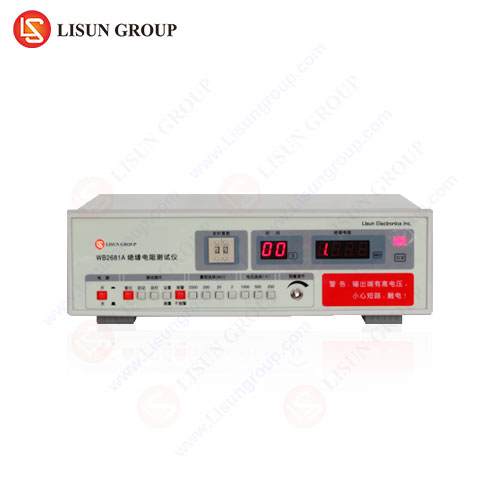
The fidelity of leakage current data is intrinsically linked to the performance and capabilities of the test instrument. An ideal tester must incorporate the standardized measurement networks, provide high accuracy across a broad frequency range, automate complex test sequences, and ensure operator safety. The LISUN WB2675D Leakage Current Tester exemplifies a modern instrument engineered to meet these rigorous demands across the industries previously enumerated.
The WB2675D integrates the precise MDTC network per IEC 60990, along with networks for appliance (IEC 60335-1) and medical equipment (IEC 60601-1) testing, making it a versatile platform for diverse laboratories and production lines. Its measurement principle involves applying the appropriate network between the test points and employing high-precision sampling and true RMS calculation to provide an accurate reading of the leakage current, regardless of waveform distortion.
Key Specifications and Functional Advantages:
- Wide Measurement Range: Capable of measuring leakage current from 0.001 mA to 20 mA, covering the full spectrum from ultra-sensitive medical device requirements to high-power industrial equipment.
- High-Voltage Output: Provides a stable 0~250V AC adjustable output, essential for testing under different supply voltages and for performing dielectric strength tests in conjunction with leakage measurements.
- Integrated Test Networks: Pre-configured for Touch Current (MDTC), Appliance Leakage, and Medical Leakage measurements, eliminating the need for external, error-prone network boxes.
- Automated Test Sequencing: Allows for programmable test steps including voltage ramp-up, dwell time, and limit verification, enabling fully automated production-line testing for items like electrical components (switches, sockets), cable assemblies, and consumer electronics.
- Comprehensive Data Management: Features data storage, recall, and interface capabilities (RS232, USB) for traceability and integration into factory quality management systems.
Industry Use Cases:
- Medical Devices: Validating that patient leakage current for a dialysis machine or diagnostic ultrasound device remains within the strict Class I, Type BF limits of IEC 60601-1.
- Household Appliances: Testing a washing machine or dishwasher after a humidity treatment to ensure leakage current does not exceed the permissible limit per IEC 60335-1.
- Automotive Electronics: Verifying the isolation and leakage specifications of a battery management system (BMS) or onboard charger for an electric vehicle.
- Telecommunications Equipment: Ensuring a network router or base station power supply meets the touch current requirements of IEC 62368-1.
- Aerospace Components: Performing leakage current checks on avionics control units as part of environmental stress screening per DO-160.
The competitive advantage of the WB2675D lies in its synthesis of compliance, automation, and reliability. It reduces setup complexity, minimizes human error in network selection, and accelerates the testing cycle—critical factors in high-volume manufacturing environments for office equipment, lighting fixtures, and consumer electronics.
Procedural Implementation: A Step-by-Step Testing Protocol
A standardized testing procedure ensures repeatable and auditable results. The following protocol outlines the core steps, adaptable to specific product standards.
1. Pre-Test Preparation and Configuration:
- Identify the applicable safety standard and the relevant leakage current limits (touch, earth, patient).
- Calibrate the leakage current tester (e.g., WB2675D) and all associated equipment according to the manufacturer’s schedule and ISO 17025 requirements, if applicable.
- Configure the EUT in its worst-case normal operating condition. For equipment with multiple functions or settings, each combination that could maximize leakage current must be tested.
- Place the EUT on an insulating bench (typically >10mm thickness) to eliminate parallel earth paths.
- Connect the EUT to the tester’s output terminals. Ensure the tester’s measurement network is selected correctly (e.g., MDTC for touch current).
- Connect the test probe of the tester to the applicable accessible part(s). For protective conductor current, the measurement is made in series with the earth conductor.
2. Execution of Measurement Sequences:
- Normal Condition Test: Apply 110% of the rated voltage to the EUT. Measure the leakage current between all accessible parts and earth, and between accessible parts if they are of opposite polarity. Reverse the supply polarity and repeat measurements.
- Single-Fault Condition Tests: Systematically introduce faults. Common tests include:
- Open circuit of the neutral supply.
- Open circuit of the protective earth conductor (for Class I equipment).
- Short-circuiting of functional insulation where applicable.
- After each applied fault, repeat the leakage current measurement.
- Record the highest stable reading observed during any test condition.
3. Post-Test Analysis and Compliance Judgment:
- Compare the maximum recorded leakage current value against the permissible limit stated in the governing standard.
- Document all test parameters: instrument used, calibration status, test voltage, applied network, EUT configuration, fault conditions, and measured values.
- Generate a formal test report. A non-compliant result necessitates design review, focusing on insulation coordination, grounding design, and component spacing.
Mitigation Strategies for Excessive Leakage Current
When a product fails to meet leakage current limits, engineers must investigate and implement corrective actions. Common root causes and their mitigations include:
- Insufficient Creepage and Clearance: Reduce pollution degree or redesign PCB layout to increase distances between conductive traces of different potentials, as defined in IEC 60664-1.
- Inadequate Insulation Material: Specify insulating materials with higher Comparative Tracking Index (CTI) or better dielectric strength for barriers and enclosures.
- EMI Filter Design: The Y-capacitors in EMI filters are a primary source of leakage current. Optimize the value and placement of these capacitors, or employ a balanced filter design. In medical devices, consider using low-leakage or specially certified “medical-grade” filters.
- Grounding and Shielding: Ensure robust, low-impedance protective earth connections for Class I equipment. Review shielding strategies to prevent capacitive coupling to accessible parts.
- Contamination Control: Implement conformal coatings on PCBs for equipment used in high-humidity environments (e.g., industrial control systems, outdoor lighting fixtures) to prevent surface leakage paths.
FAQ Section
Q1: What is the key difference between touch current and protective conductor current, and why must both be measured?
A1: Touch current is a simulation of the current that could pass through a human body, measured using a standardized human body impedance network. Protective conductor current is the actual current flowing in the safety ground wire. Both must be measured because they address different hazards: touch current directly assesses shock risk, while protective conductor current assesses grounding integrity, potential heating of the ground wire, and compatibility with circuit protection devices.
Q2: Can the LISUN WB2675D tester be used for both design validation and high-speed production line testing?
A2: Yes, its design accommodates both use cases. For R&D and design validation, its manual mode, wide range, and precise measurement allow for detailed investigation. For production, its programmable automatic test function (e.g., setting test voltage, dwell time, pass/fail limits) enables rapid, operator-independent testing of units on a manufacturing line, with results logging for quality traceability.
Q3: How does the WB2675D ensure accuracy when testing non-sinusoidal leakage currents, which are common in switch-mode power supplies?
A3: The instrument employs true RMS (Root Mean Square) measurement technology. Unlike average-responding meters which are calibrated for pure sine waves and can give significant errors with distorted waveforms, a true RMS meter accurately calculates the equivalent heating value of any waveform shape, ensuring correct readings for the complex currents typical of modern electronic power supplies.
Q4: For testing a Class II (double-insulated) appliance, which test configuration is most critical?
A4: For Class II equipment, which lacks a protective earth connection, the measurement of touch current is paramount. The test must be conducted between any accessible conductive part (or metal foil placed on accessible insulating surfaces) and earth, under both normal and single-fault conditions (such as interrupting the neutral). The protective conductor current test is not applicable as there is no protective earth.
Q5: Why is it necessary to test at 110% of the rated voltage?
A5: Testing at 110% of rated voltage is a stress condition specified by safety standards (e.g., IEC 62368-1, IEC 60335-1) to account for potential overvoltage conditions in mains supplies and to provide a safety margin. It ensures that the insulation system and leakage performance remain adequate even when the supply voltage is at the upper limit of its normal tolerance range.
