




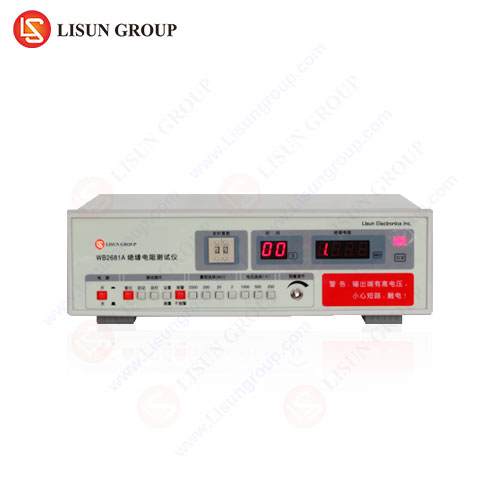




Grounding System Safety Verification: Methodologies, Standards, and Instrumentation for High-Reliability Applications
The integrity of an electrical grounding system is a non-negotiable prerequisite for safety, operational continuity, and electromagnetic compatibility across the entire spectrum of powered technologies. Grounding System Safety Verification constitutes a rigorous, evidence-based process to confirm that an installation’s earth termination network performs within specified parameters under both normal and fault conditions. This verification is not a mere compliance checkbox but a fundamental engineering analysis that mitigates risks of electric shock, equipment damage, fire ignition, and data corruption. As systems grow in complexity—integrating microprocessors in household appliances, high-voltage batteries in automotive electronics, and sensitive analog front-ends in medical devices—the demands on grounding efficacy escalate proportionally. This article delineates the technical principles, standardized testing methodologies, and critical instrumentation required for conclusive safety verification, with a specific examination of advanced testing solutions such as the LISUN WB2678A Grounding Resistance Tester.
Fundamental Principles of Earth Electrode Performance
The primary metric in grounding verification is the earth electrode resistance, measured in ohms (Ω). This value represents the impedance between the electrode system and the remote, theoretical “true earth.” A lower resistance ensures that fault currents are diverted safely and efficiently, facilitating the rapid operation of overcurrent protection devices and maintaining touch voltages below hazardous levels. The performance is governed by a confluence of factors: soil resistivity (itself a function of moisture content, temperature, and chemical composition), electrode geometry, depth of burial, and the interconnection of multiple electrodes.
The measurement principle is based on the fall-of-potential method, a classical technique defined by standards such as IEEE Std. 81. A test current (I) is injected between the electrode under test (E) and a remote current probe (C). The resulting voltage potential (V) is measured between the electrode and a potential probe (P) placed at an appropriate distance. The ground resistance is derived from Ohm’s Law (R = V/I). Accurate execution requires precise probe placement to avoid overlapping resistance areas, a challenge in congested urban or industrial sites. Alternative methods, including the selective and clamp-on techniques, are employed for specific scenarios, such as testing individual electrodes within multi-electrode grids without disconnection.
Interdisciplinary Standards Governing Verification Protocols
Grounding verification is prescribed by a robust framework of international and industry-specific standards, which define not only acceptable resistance thresholds but also detailed test procedures. Compliance is legally and contractually mandatory.
- IEC 60364-6: Low-voltage electrical installations – Part 6: Verification.
- IEEE Std. 81: Guide for Measuring Earth Resistivity, Ground Impotence, and Earth Surface Potentials of a Grounding System.
- NFPA 70 (NEC), Article 250: Provides installation requirements and, by reference to NFPA 70B, recommends periodic testing.
- ISO 6469-3: Electrically propelled road vehicles – Safety specifications – Part 3: Electrical safety. This standard imposes stringent grounding requirements for electric vehicle chassis and high-voltage component enclosures.
- IEC 60601-1: Medical electrical equipment – Part 1: General requirements for basic safety and essential performance. It mandates protective earth resistance testing for all Class I medical devices.
- RTCA DO-160: Environmental Conditions and Test Procedures for Airborne Equipment. Contains specific grounding and bonding resistance tests for aerospace components.
These standards collectively mandate initial verification upon installation and periodic re-verification to account for seasonal changes, corrosion, and construction activity that may degrade grounding performance over time.
Advanced Instrumentation for Precision Measurement: The LISUN WB2678A
Modern grounding verification demands instruments that deliver metrological precision, operational safety, and adaptability to diverse field conditions. The LISUN WB2678A Grounding Resistance Tester exemplifies this class of instrument, engineered to provide reliable data for safety-critical decisions.
The WB2678A operates on the classic 3-pole and 2-pole fall-of-potential method, while also incorporating a 3-pole stakeless clamp-on measurement capability for specific applications. It generates a test signal, typically at a frequency designed to minimize interference from stray earth currents (e.g., 128 Hz), and employs advanced digital signal processing to filter out noise and provide stable readings. Its high test current capability (up to 20mA) is crucial for overcoming contact resistance and obtaining accurate measurements in high-resistance soils.
Key Specifications of the LISUN WB2678A:
- Measurement Range: 0.00Ω to 30.00kΩ (Ground Resistance); 0.0Ω to 3.00kΩ (Earth Voltage).
- Test Frequency: 128 Hz.
- Test Current: Up to 20mA.
- Accuracy: Typically ±(2%+3dgt) for grounding resistance.
- Safety Rating: Compliant with IEC 61010-1, CAT III 600V, ensuring operator protection when used in demanding electrical environments.
- Data Management: Features data storage and recall functions, enabling the creation of longitudinal performance records for trend analysis.
Industry-Specific Application Contexts and Use Cases
The application of grounding verification varies significantly across sectors, each with unique risk profiles and performance requirements.
Medical Devices and Healthcare Facilities: For a Class I patient monitor or MRI machine, a compromised protective earth conductor presents a direct risk of micro-shock or macro-shock to patients who are often electrically vulnerable. The WB2678A is used during production line testing and facility maintenance to verify that the protective earth resistance from the device’s chassis to the plug is consistently below 0.1Ω, as per IEC 60601-1, ensuring no hazardous potential can arise.
Automotive Electronics (Electric Vehicles): In an EV, the vehicle chassis forms the ground reference for the entire 400V or 800V traction battery system. Verification of the bonding resistance between the battery pack enclosure, motor housing, and chassis is critical. A resistance measurement using a device like the WB2678A confirms that any fault current from the high-voltage bus will have an unimpeded path, triggering isolation monitors and contactors within milliseconds.
Telecommunications Equipment and Data Centers: Tower grounding grids and data center grounding rings must dissipate lightning strike energy and equalize potential to protect sensitive switching equipment. Here, the tester is used to validate the resistance of the entire ring (often requiring a <1Ω target) and to periodically check individual vertical electrodes. Its ability to measure earth voltage is also critical to detect the presence of dangerous stray AC or DC currents in the ground plane.
Aerospace and Aviation Components: Grounding and bonding of aircraft skin, avionics racks, and fuel tank caps are tested per RTCA DO-160. The WB2678A’s precise low-resistance measurement capability verifies that bonding jumpers and structural paths provide the low-impedance paths necessary for lightning current dissipation and static charge equalization, which are vital for flight safety and communication clarity.
Industrial Control Systems & Electrical Components: Within a PLC cabinet, the integrity of the ground bus bar connection to the building’s earth electrode is paramount. High resistance can lead to electromagnetic interference (EMI), causing erratic sensor readings or communication faults. Verification testing during commissioning ensures the control system’s reference ground is stable and quiet.
Comparative Advantages in Technical Verification Workflows
The selection of a grounding tester impacts the efficiency, safety, and defensibility of the verification process. Instruments like the LISUN WB2678A offer distinct advantages in professional workflows.
Metrological Robustness in Noisy Environments: The instrument’s selective frequency and digital filtering allow it to reject interference from power-line harmonics and stray ground currents, which are prevalent in industrial plants and utility substations. This yields stable, repeatable readings where simpler meters may fail.
Enhanced Operator Safety and Compliance: The CAT III 600V safety rating is essential for testing installations where accidental contact with live parts is a possibility. This design protects the technician from transients and potential differences that can arise during testing on or near energized systems.
Data Integrity and Audit Trail: The integrated data logging function transforms the tester from a simple measurement tool into a diagnostic asset. Stored readings, tagged with date and time, provide an immutable record for compliance audits, preventive maintenance schedules, and forensic analysis following an equipment failure.
Operational Versatility: The inclusion of both traditional stake-based and stakeless clamp-on methods in one instrument provides adaptability. The clamp-on function is particularly valuable for testing interconnected grids—such as those in telecommunications hubs or office building risers—where isolating a single electrode is impractical or impossible.
Integrating Verification into a Comprehensive Safety Management System
Grounding System Safety Verification must be embedded within a broader Safety Management System (SMS). It is a key performance indicator within technical safety assurance. Data from periodic tests, especially when trended over time, enables predictive maintenance. A gradual increase in electrode resistance may indicate corrosion or soil drying, allowing for planned remediation before a safety threshold is breached. This proactive approach is far superior to a reactive response following a shock incident or equipment malfunction. For industries such as aerospace and medical devices, this data forms a critical part of the product’s lifetime safety case and regulatory submission.
FAQ Section
Q1: What is the primary difference between the 3-pole fall-of-potential method and the clamp-on method, and when should each be used?
A1: The 3-pole fall-of-potential method is the foundational and most accurate technique for measuring the resistance of a single, isolated earth electrode or a complete grounding system. It requires driving two auxiliary test spikes. The clamp-on method measures resistance without spikes by clamping around the electrode conductor, but it requires a complete, parallel grounding path to form a loop. It is best used for periodic testing of interconnected electrodes in multi-grounded systems (like utility poles or telecommunications towers) where isolation is not feasible. The WB2678A supports both methods.
Q2: Why is a specific test frequency (like 128 Hz) used instead of 50/60 Hz?
A2: Using a frequency different from the mains power frequency (50/60 Hz) allows the tester’s internal filters to reject interference from stray currents in the ground. Measuring at 50/60 Hz would result in unstable, inaccurate readings in any electrically noisy environment. The chosen frequency is a compromise that minimizes both external interference and the inductive reactance of long electrode conductors.
Q3: How often should grounding systems be tested and verified?
A3: The frequency is dictated by relevant standards and a risk assessment. Initial verification is mandatory after installation. Periodic testing intervals are typically recommended annually for critical facilities (hospitals, data centers, chemical plants), every 3-5 years for commercial and industrial sites, and after any major seismic event, nearby excavation, or observed lightning strike. More frequent testing is advised in areas with highly variable soil conditions.
Q4: Can the WB2678A be used to test the grounding of printed circuit boards (PCBs) inside consumer electronics?
A4: No. The WB2678A is designed for building installation, facility, and industrial component grounding at higher current levels. Testing the ground plane continuity on a PCB requires a specialized low-resistance ohmmeter or a 4-wire Kelvin (micro-ohm) tester capable of accurately measuring resistances in the milliohm range with very low test currents to avoid damaging delicate traces.
Q5: What is the significance of the Earth Voltage measurement function prior to a resistance test?
A5: Measuring earth voltage (AC or DC) between the electrode under test and the potential probe is a critical safety and preparatory step. A voltage presence above a few volts (typically >10V) indicates strong stray currents or faulty wiring in the vicinity. Performing a resistance test under such conditions can damage the instrument and give highly inaccurate results. The WB2678A automatically warns the operator or inhibits the test if a high earth voltage is detected.
