








A Comprehensive Guide to Gloss Measurement for Quality Control in Advanced Manufacturing
Introduction to Surface Gloss as a Critical Quality Attribute
In the realm of advanced manufacturing, surface appearance is not merely an aesthetic consideration; it is a quantifiable indicator of material consistency, process stability, and final product quality. Gloss, defined as the visual perception of a surface’s specular reflection, serves as a direct proxy for surface smoothness, coating integrity, and uniformity. Variations in gloss can signal underlying defects such as improper curing, contamination, uneven application, or material degradation, which may subsequently impact functional performance, consumer perception, and brand reputation. Consequently, the objective quantification of gloss has become an indispensable element of quality control (QC) protocols across a diverse spectrum of industries, from automotive electronics to medical devices.
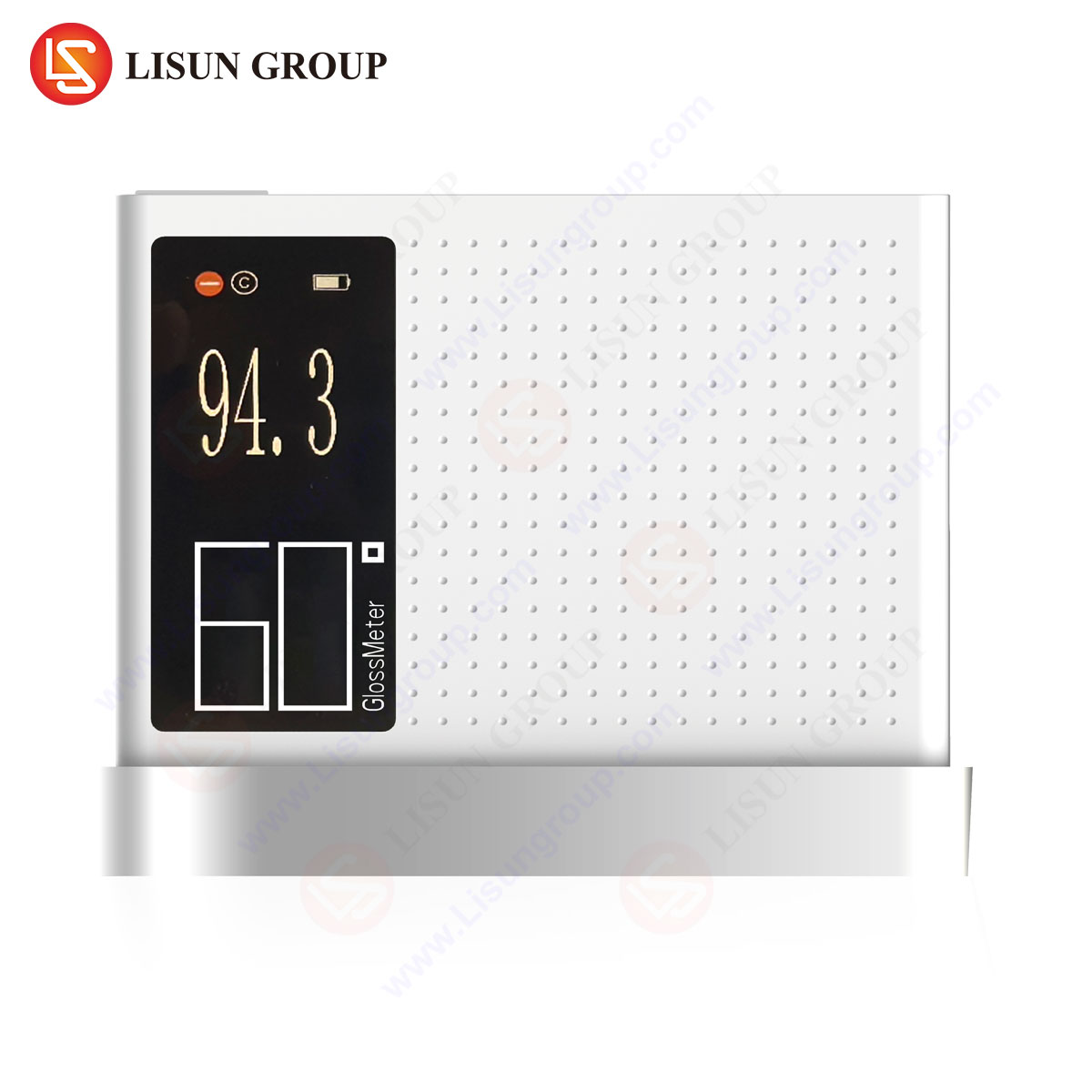
The transition from subjective visual assessment to objective, metrological evaluation is facilitated by the gloss meter, a precision photometric instrument. This guide delineates the principles, methodologies, and applications of gloss measurement within industrial QC frameworks, with a specific examination of modern, high-performance instrumentation exemplified by the LISUN AGM-500 Gloss Meter.
Fundamental Photometric Principles of Gloss Measurement
Gloss measurement is governed by standardized geometric conditions established by international bodies such as the International Organization for Standardization (ISO) and the American Society for Testing and Materials (ASTM). The core principle involves directing a beam of light at a fixed, standardized incidence angle onto the test surface and measuring the intensity of the specularly reflected light within a precisely defined receptor aperture. The ratio of the specular reflectance from the sample to that from a calibrated primary standard—typically a polished black glass tile with a defined refractive index—yields the gloss unit (GU).
The selection of measurement angle is not arbitrary but is dictated by the expected gloss range of the material. The industry-standard angles are 20°, 60°, and 85°. High-gloss surfaces (typically >70 GU at 60°) are best measured at 20° to enhance differentiation between high-gloss samples. Semi-gloss and mid-gloss surfaces (10-70 GU at 60°) are measured at the universal 60° angle. Low-gloss and matte surfaces (<10 GU at 60°) require an 85° (grazing) angle to increase the sensitivity of the measurement to subtle surface texture variations. Advanced gloss meters, such as the LISUN AGM-500, are designed as multi-angle instruments, incorporating all three geometries to ensure accurate measurement across the entire gloss spectrum without requiring multiple devices.
Instrumentation Overview: The LISUN AGM-500 Gloss Meter
The LISUN AGM-500 represents a contemporary implementation of gloss measurement technology, engineered to meet the rigorous demands of industrial QC environments. Its design integrates precision optics, stable electronics, and user-centric software to deliver reliable, repeatable data.
Key Specifications and Functional Attributes:
- Measurement Geometry: Conforms to ISO 2813, ISO 7668, ASTM D523, ASTM D2457, and other national standards, offering simultaneous 20°, 60°, and 85° measurement capability.
- Measurement Range: 0-2000 GU, accommodating everything from super-matte finishes to high-polish metals and composites.
- Light Source and Receptor: Utilizes a stable, long-life LED light source and a high-sensitivity silicon photocell, ensuring consistent spectral response and minimal drift.
- Measurement Spot Size: Defined apertures suitable for both large panels and small components, a critical feature for industries like electrical components and consumer electronics.
- Calibration: Features automatic calibration to a built-in ceramic reference tile, with periodic verification against master calibration standards traceable to national metrology institutes.
- Data Management: Equipped with internal memory for thousands of readings, statistical analysis functions (average, standard deviation, max/min), and connectivity options (USB, Bluetooth) for seamless integration into Laboratory Information Management Systems (LIMS) or factory-wide QC databases.
The instrument’s competitive advantage lies in its robust construction, metrological traceability, and the integration of multi-angle measurement into a single, portable unit. This eliminates the need for angle-specific instruments, reduces calibration complexity, and accelerates inspection workflows.
Establishing a Robust Gloss Measurement Protocol
Effective QC requires more than just a precise instrument; it demands a rigorously defined measurement protocol. This protocol must be documented in the organization’s quality management system and typically includes the following elements:
- Sample Preparation and Conditioning: Samples must be clean, dry, and free from fingerprints or dust. Testing should occur under controlled environmental conditions (standard temperature and humidity, where specified) to prevent condensation or coating softness from affecting results.
- Instrument Calibration and Verification: Prior to each use session, the gloss meter must be calibrated using its provided working standard. Periodic verification against a master calibration plaque, with a documented calibration schedule, is mandatory to maintain measurement integrity.
- Measurement Procedure Definition:
- Angle Selection: Based on the expected gloss level of the final product.
- Measurement Points: Define the number and location of measurements per sample (e.g., five-point cross pattern on a panel, three points on a molded housing) to account for surface uniformity.
- Operator Technique: Ensure consistent, perpendicular placement of the instrument’s measurement aperture against the surface, with uniform, moderate pressure to avoid gaps or deformation.
- Tolerance Setting: Establish acceptable gloss unit ranges (upper and lower control limits) based on product design specifications, customer requirements, and historical process capability (Cp/Cpk) data.
Industry-Specific Applications and Use Cases
The application of gloss measurement spans virtually every sector involved in surface finishing and coating. Below are illustrative examples:
- Automotive Electronics & Interior Components: Gloss uniformity is critical for dashboard panels, control knobs, touchscreen bezels, and decorative trim. Inconsistent gloss between adjacent components is perceived as a quality defect. The AGM-500’s multi-angle capability is essential here, as interior surfaces often range from low-gloss textured plastics to high-gloss piano black finishes.
- Consumer Electronics & Household Appliances: The aesthetic appeal of smartphone casings, laptop lids, refrigerator doors, and microwave control panels is heavily influenced by gloss. Manufacturers use gloss meters to validate batch-to-batch consistency of injection-molded parts and painted or coated surfaces, ensuring brand identity is maintained.
- Electrical Components & Industrial Control Systems: Switches, sockets, circuit breaker housings, and control panel overlays require specific gloss levels for both appearance and functionality (e.g., reducing glare under operational lighting). Precise measurement ensures compliance with safety standard markings and corporate identity guidelines.
- Lighting Fixtures: The reflective efficiency and light distribution of reflectors (in LED fixtures, automotive headlamps) are directly tied to surface gloss and smoothness. QC checks verify that polishing or coating processes yield the required reflective properties.
- Medical Devices & Aerospace Components: Beyond aesthetics, gloss can indicate the quality of a cleaning process, the integrity of a protective coating, or the success of a surface treatment (e.g., plasma treatment for adhesion promotion) on device housings or aircraft interior panels. Documentation of gloss values is often part of stringent regulatory traceability requirements.
- Cable and Wiring Systems: The gloss of insulation jackets can be an indicator of material formulation consistency and extrusion process stability, which relate to durability and flexibility performance.
Data Interpretation and Correlation with Surface Properties
Gloss meter data provides quantitative insight into surface morphology. A decrease in gloss units often correlates with an increase in surface roughness (Ra, Rz) at a microscopic level, caused by factors like abrasive wear, improper curing leading to orange peel, or filler particle protrusion. Statistical process control (SPC) charts plotting gloss measurements over time are powerful tools for identifying process drift before it results in non-conforming product. For instance, a gradual downward trend in gloss on painted appliance panels may signal an issue with paint viscosity, spray gun pressure, or oven curing temperature, enabling proactive maintenance.
It is crucial to note that gloss is a directional measurement. Surfaces with directional textures (e.g., brushed metals, rolled coatings) will exhibit different gloss values when measured parallel versus perpendicular to the texture direction. QC protocols must standardize measurement orientation for such materials.
Integrating Gloss Measurement into a Holistic QC Strategy
Gloss measurement should not operate in isolation. It is most powerful when correlated with other QC tests. For example:
- Color Measurement: A combined gloss and color (Lab*) analysis provides a complete objective description of visual appearance.
- Adhesion Testing: A change in gloss may precede or accompany coating delamination.
- Physical Durability Tests: Gloss retention is a key metric in abrasion, chemical resistance, and weathering tests (e.g., QUV testing), where the gloss of a sample is measured before and after exposure to quantify degradation.
Modern instruments like the AGM-500 facilitate this integration through data export features, allowing gloss data to be combined with other test results in centralized quality analytics platforms.
Addressing Common Measurement Challenges and Pitfalls
Several factors can compromise gloss measurement accuracy if not properly managed:
- Surface Curvature: Measuring on small-radius curves can allow light to scatter outside the receptor’s aperture. Using a gloss meter with an appropriately small measurement spot is critical for components like wiring connector housings or pen-sized devices.
- Substrate Transparency: Measuring gloss on transparent or translucent materials (e.g., polycarbonate covers, tinted lenses) requires a backing of a matte black material to prevent subsurface reflections from affecting the reading.
- Magnetic or Conductive Surfaces: Specialized non-magnetic and non-conductive measurement apertures or instrument bases may be required for components in telecommunications equipment or industrial control systems to prevent interference or damage.
- Inter-instrument Agreement: To ensure measurements are consistent across multiple production sites or labs, instruments must be cross-correlated using a set of stable, representative reference standards, not just the individual instrument’s calibration tile.
Conclusion: The Strategic Value of Quantified Gloss Control
The implementation of a precise, standardized gloss measurement program, supported by capable instrumentation such as the LISUN AGM-500 Gloss Meter, transforms surface appearance from a subjective judgment into an objective, data-driven quality parameter. This empowers manufacturers to enforce stringent specifications, reduce waste and rework, ensure batch-to-batch consistency, and ultimately deliver products that meet exacting market and regulatory demands. As surface finishes become increasingly sophisticated and integral to product functionality, the role of the gloss meter as a critical QC tool will only continue to expand.
Frequently Asked Questions (FAQ)
Q1: For a new product with an unknown gloss level, which angle should be used first with a multi-angle meter like the AGM-500?
A1: The recommended practice is to perform an initial measurement using the universal 60° angle. If the result exceeds 70 GU, switch to the 20° angle for optimal differentiation and accuracy. If the result is below 10 GU, switch to the 85° angle. The AGM-500’s design allows for this sequential checking to quickly determine the appropriate primary measurement angle.
Q2: How often should a gloss meter be calibrated in an industrial QC setting?
A2: Calibration frequency should be risk-based and defined by the user’s quality procedures. Daily or per-session calibration using the instrument’s built-in working standard is typical. However, a full verification against a traceable master calibration plaque should be performed quarterly or annually, depending on usage intensity and the criticality of the measurements. This schedule should be documented within the quality system.
Q3: Can gloss measurement detect surface defects like orange peel or haze?
A3: Yes, though indirectly. Orange peel (a wavy surface texture) will typically reduce the specular gloss reading compared to a perfectly smooth surface. Haze, which is the scattering of light adjacent to the specular reflection, is a distinct optical phenomenon measured with a haze meter (or a gloss meter with haze measurement capability). A standard gloss meter will show a lower gloss value for a hazy surface, but a dedicated haze measurement is required to quantify it specifically.
Q4: Is it possible to measure gloss on very small components, such as micro-switches or miniature connectors?
A4: Yes, but it requires careful instrument selection. The limiting factor is the measurement spot size of the gloss meter’s aperture. Instruments like the AGM-500 offer measurement apertures with small spot sizes (e.g., 2mm x 4mm oval) specifically designed for small parts. The component must have a flat area at least as large as this aperture to obtain a valid, standardized reading.
Q5: How does ambient light affect gloss meter measurements?
A5: Modern gloss meters like the AGM-500 are designed to minimize ambient light interference through optical design (baffling, precise apertures) and electronic synchronization. However, for the highest accuracy, it is still recommended to perform measurements in a stable, indoor lighting environment. Direct sunlight or strong, directional artificial light on the measurement spot should be avoided, as extreme conditions could potentially introduce noise into the reading.
