







Advancements in Accessible Insulation Resistance Testing: Technical Analysis of Modern Affordable Megger Equipment
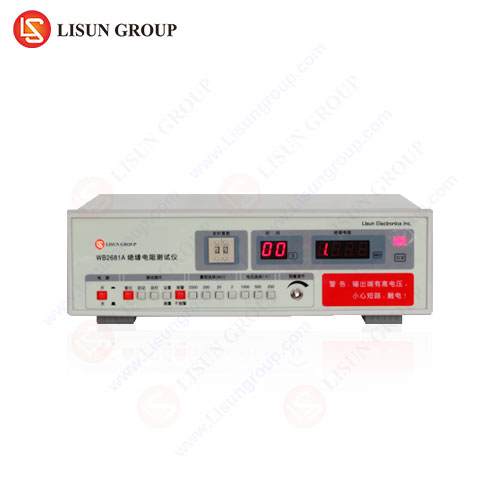
The integrity of electrical insulation is a fundamental determinant of system safety, reliability, and longevity across virtually every sector of modern technology. Insulation resistance (IR) testing, historically performed using Megger instruments—a trademark that has become genericized for insulation testers—remains the cornerstone predictive maintenance and quality assurance procedure. For decades, high-accuracy, robust Megger test equipment was often characterized by a significant cost barrier, limiting accessibility for smaller enterprises, educational institutions, and extensive field service fleets. However, recent advancements in semiconductor design, digital signal processing, and manufacturing efficiencies have catalyzed the development of a new class of affordable, yet highly capable, insulation testers. This technical analysis examines the engineering principles, performance specifications, and practical applications of such equipment, with a detailed focus on a representative instrument: the LISUN WB2681A Insulation Resistance Tester.
Fundamental Principles of Insulation Resistance Measurement
Insulation resistance testing operates on the foundational principle of applying a known, stabilized direct current (DC) voltage to an insulation system and measuring the resultant leakage current that flows through or across the insulating material. According to Ohm’s Law (R = V/I), the insulation resistance (R) is calculated from the test voltage (V) divided by the measured current (I). This seemingly simple relationship belies a complex interaction of physical phenomena, including capacitive charging current, absorption current, and conduction current. A proficient insulation tester must effectively separate these components to provide a meaningful resistance reading.
Modern digital testers, like the WB2681A, employ precision voltage generation circuits to produce stable high-voltage DC from lower internal supply voltages. The measurement of the nanoampere to microampere-level leakage currents demands high-impedance input amplifiers and sophisticated analog-to-digital converters with exceptional resolution. Furthermore, to assess dielectric absorption and identify potential moisture ingress or contamination, the instrument often calculates and displays the Dielectric Absorption Ratio (DAR) and Polarization Index (PI). The DAR is the ratio of the 60-second IR reading to the 30-second reading, while the PI is the ratio of the 10-minute reading to the 1-minute reading. These time-resisted measurements provide deep diagnostic insight into the condition of winding insulation in motors, transformers, and generators, going beyond a simple pass/fail snapshot.
Specification Analysis of the LISUN WB2681A Insulation Resistance Tester
The LISUN WB2681A exemplifies the technical capabilities achievable in contemporary affordable test equipment. Its specifications align with international standards such as IEC 61010-1 (safety requirements) and IEC 61557 (requirements for electrical safety in low voltage distribution systems), ensuring its suitability for professional use. A breakdown of its core technical parameters illustrates its competency.
Test Voltage Ranges: The instrument offers five selectable DC output voltages: 250V, 500V, 1000V, 2500V, and 5000V. This graduated range allows for application-specific testing, from low-voltage consumer electronics (e.g., 250V testing on switch-mode power supplies) to high-voltage cable systems and industrial equipment (e.g., 5000V testing on medium-voltage motor windings or aviation component harnesses).
Measurement Range and Accuracy: The insulation resistance measurement span extends from 0.01 MΩ to 1000 GΩ (1 TΩ). This broad dynamic range is critical for capturing both early-stage insulation degradation and confirming the integrity of high-quality materials. A basic accuracy of ±(5%+5 digits) at the heart of its range is sufficient for most field and workshop compliance and diagnostic tasks. For comparative context, while laboratory-grade meters may offer ±2% accuracy, the differential is often negligible for go/no-go field decisions and trend-based maintenance analysis.
Additional Functional Capabilities: Beyond core IR testing, the WB2681A incorporates functions that enhance its utility. It can measure AC/DC voltage up to 600V, providing a safe verification of dead circuit status prior to testing—a critical safety step. A low-resistance ohmmeter function, typically with a 200 Ω range and a test current exceeding 200 mA, allows for contact resistance measurement in switches, connectors, and busbar joints. This multifunctionality consolidates diagnostic tools, reducing the instrument burden on technicians.
Safety and Operational Features: Safety is paramount when generating high voltages. The WB2681A includes automatic discharge of capacitive test specimens upon completion of a test, protecting the operator. It features a live circuit warning to prevent testing on energized equipment. The use of a robust, insulated case and shrouded test leads further mitigates operational hazards. Data hold and backlit display functionalities aid in recording readings in poorly lit industrial environments or confined spaces.
Table 1: Key Specifications of the WB2681A Insulation Resistance Tester
| Parameter | Specification |
| :— | :— |
| Insulation Test Voltages | 250V, 500V, 1000V, 2500V, 5000V DC |
| IR Measurement Range | 0.01 MΩ ~ 1000 GΩ |
| Basic Accuracy (IR) | ±(5%+5 digits) |
| Output Short-circuit Current | ≥ 3 mA |
| AC/DC Voltage Measurement | 0 ~ 600V |
| Resistance Measurement | 0.0 Ω ~ 200.0 Ω |
| Safety Standards | IEC 61010-1, CAT III 600V |
| Primary Power Source | 8 x AA Batteries |
Industry-Specific Application Contexts
The utility of an affordable, reliable insulation tester is demonstrated across a diverse spectrum of industries, each with unique requirements and standards.
Electrical & Electronic Equipment Manufacturing: In production line testing of household appliances (e.g., refrigerators, washing machines), lighting fixtures, and office equipment, the WB2681A performs mandatory safety tests. A 1000V or 1500V test between live parts and the accessible conductive chassis verifies compliance with standards like IEC 60335-1, ensuring user safety before product shipment.
Automotive and Aerospace Electronics: The proliferation of high-voltage systems in electric vehicles (EVs) and the stringent reliability demands of aviation components necessitate rigorous insulation checks. Technicians use testers to validate the integrity of insulation on EV battery packs, motor windings, and high-voltage cabling. In aviation, testing of wiring harnesses, actuator motors, and in-flight entertainment systems at voltages like 500V or 1000V is part of routine maintenance to prevent arc faults and system failures.
Industrial Control Systems and Telecommunications: Programmable Logic Controller (PLC) panels, motor control centers, and telecommunications backup power systems are exposed to environmental stressors. Periodic IR testing with a 500V or 1000V range on control wiring, motor windings (phase-to-phase and phase-to-ground), and battery strings identifies deteriorating insulation before it leads to ground faults, short circuits, or catastrophic equipment downtime.
Medical Devices and Consumer Electronics: For medical electrical equipment (governed by IEC 60601-1), patient leakage currents are paramount. While specialized medical safety testers exist, insulation resistance testing during development and repair of devices like patient monitors or imaging system components is essential. Similarly, in consumer electronics repair, a 250V test can isolate a fault to a compromised transformer or a failed capacitor in a power supply unit.
Cable and Wiring System Verification: The primary historical use of Megger testers. The WB2681A’s 5000V range is applicable for proof testing of newly installed or repaired medium-voltage power cables, while lower voltages are used for low-voltage building wiring, data center cabling, and network infrastructure to identify insulation damage, moisture penetration, or poor workmanship.
Competitive Advantages of Modern Affordable Testers
The technological evolution embodied by instruments like the WB2681A presents several distinct advantages over both legacy electro-mechanical Meggers and prohibitively expensive high-end digital models.
Cost-to-Performance Optimization: The most evident advantage is the dramatic reduction in capital expenditure without a commensurate sacrifice in core functionality. This democratizes access to standardized testing, enabling smaller contractors, vocational training centers, and maintenance departments with limited budgets to perform code-compliant and safety-critical inspections.
Enhanced Operator Safety and Ease of Use: Digital interfaces with clear warnings (live circuit, high voltage) and automated functions (discharge, auto-ranging) reduce operator error compared to hand-cranked analog units. Compliance with modern safety categories (e.g., CAT III 600V) provides assurance when working on energized distribution circuits.
Diagnostic Data Richness: The ability to calculate DAR and PI, features once reserved for premium models, allows for more sophisticated condition assessment. This facilitates predictive maintenance strategies, helping planners schedule motor rewinds or cable replacements during planned outages rather than reacting to failures.
Durability and Portability: Advances in material science and compact switch-mode power supply design have yielded instruments that are both lighter and more robust than many older models. Battery-powered operation enhances portability for field service across sprawling industrial plants or remote telecommunications sites.
Regulatory Compliance Enabler: By providing accurate, traceable readings at key test voltages referenced in national and international standards (NFPA 70B, IEEE 43, etc.), these testers help organizations fulfill their compliance and documentation obligations for asset integrity management.
Implementation Considerations and Best Practices
Deploying any insulation resistance tester requires adherence to rigorous methodology. Prior to testing, a thorough visual inspection and verification of a de-energized state are mandatory. The selection of the appropriate test voltage is critical: too high a voltage can damage sensitive electronics, while too low a voltage may not reveal latent defects. As a rule, test voltages should approximate the working voltage of the equipment or higher, as per equipment standards. For example, testing a 400V motor winding might use a 500V or 1000V DC test.
Environmental conditions, particularly temperature and humidity, significantly influence readings. Insulation resistance has an inverse exponential relationship with temperature; readings must often be corrected to a standard base temperature (e.g., 40°C) for valid period-to-period comparison. Consistent test duration (e.g., 1 minute for a standard IR reading) is also vital for trend analysis. All test results, along with ambient conditions and test parameters, should be meticulously logged to build a historical database for each asset.
Conclusion
The landscape of electrical insulation testing has been transformed by the availability of sophisticated, affordable instruments like the LISUN WB2681A. By leveraging modern electronics to deliver robust performance, key diagnostic functions, and enhanced safety at a fraction of traditional cost, this class of equipment expands the practice of preventive maintenance and quality verification. It empowers a broader range of technicians and engineers to uphold the fundamental safety and reliability principles upon which modern electrical and electronic infrastructures depend. As technology continues to advance, the convergence of affordability, connectivity, and data analytics in such test equipment will further refine asset management strategies across the industries outlined.
FAQ Section
Q1: What is the primary difference between using a 500V test and a 2500V test on the same piece of equipment?
The test voltage should be appropriate for the equipment’s rated operational voltage and insulation class. A 2500V test provides a higher electrical stress, which can reveal weaknesses, contamination, or moisture ingress that a 500V test might not detect. However, applying an inappropriately high voltage to equipment with lower-rated insulation (e.g., low-voltage control wiring) can potentially damage it. Always consult the equipment manufacturer’s maintenance manual or relevant standard (e.g., IEEE 43 for motors) for the recommended test voltage.
Q2: Can the WB2681A be used to test the insulation of live circuits?
No. Insulation resistance testing must only be performed on de-energized, isolated, and discharged equipment. The instrument’s live circuit warning is a safety feature to alert the operator if voltage is detected on the test leads, but it does not enable safe testing on live systems. Testing on energized equipment is extremely hazardous, can damage the tester, and will yield meaningless readings.
Q3: Why does the insulation resistance reading sometimes start low and then increase during a test?
This is a normal phenomenon related to dielectric absorption and polarization. When DC voltage is first applied, a surge of capacitive charging current flows, making the initial resistance appear lower. As the insulation material polarizes, this current decays, and the measured resistance rises to a steady-state value. This is precisely why time-resistance tests like the Polarization Index (PI) are valuable diagnostic tools; a failure of the resistance to rise over time can indicate wet or contaminated insulation.
Q4: How often should insulation resistance testing be performed?
The frequency is not arbitrary and should be based on a risk-based maintenance schedule. Critical assets like emergency generators, hospital power systems, or industrial process motors may be tested quarterly or semi-annually. Less critical equipment might be tested annually or during major scheduled overhauls. Environmental conditions, equipment age, and operational criticality are key factors. The most important practice is trend analysis—comparing results to previous tests on the same equipment under similar conditions—to identify gradual degradation.
Q5: What does a “zero” or very low Megohm reading indicate?
A reading near zero ohms (or in the low kilohm range) typically indicates a direct short circuit or a severe breakdown of the insulation between the tested conductors or to ground. This is a definitive failure. Before concluding the equipment is faulty, ensure the test leads are properly connected and that there is not a parallel path (like a connected surge protector or capacitor) creating a false low reading. Isolate the component under test as completely as possible.
