








A Technical Exposition on Accelerated Weathering: The ISO 4892-2 Standard and Its Implementation
Introduction to Accelerated Weathering and Material Degradation
The long-term performance and aesthetic integrity of polymeric materials and coatings are intrinsically linked to their resistance to environmental stressors. In service, materials are subjected to a complex synergy of solar radiation, temperature fluctuations, moisture, and atmospheric pollutants. This exposure initiates photochemical and thermal-oxidative reactions, leading to deleterious effects such as color shift, loss of gloss, chalking, cracking, embrittlement, and reduction in mechanical properties. For manufacturers across sectors—from automotive electronics to aerospace components—predicting this degradation through real-time outdoor exposure is commercially and technically untenable, requiring years of data collection. Consequently, standardized laboratory accelerated weathering tests have been developed to simulate and condense these effects into a manageable timeframe. Among these, the International Organization for Standardization (ISO) 4892-2 standard provides a critical, globally recognized methodology for exposure to filtered xenon-arc light, simulating the full spectrum of sunlight.
Fundamental Principles and Scope of ISO 4892-2
ISO 4892-2:2013, titled “Plastics — Methods of exposure to laboratory light sources — Part 2: Xenon-arc lamps,” establishes the definitive parameters for conducting reproducible accelerated weathering tests. Its primary objective is to simulate the spectral power distribution (SPD) of terrestrial sunlight, both direct and through window glass, within a controlled laboratory chamber. The standard is not exclusive to plastics; it is extensively referenced in industry-specific specifications for coatings, textiles, automotive components, and electrical enclosures. The core principle involves exposing test specimens to radiation from a xenon-arc lamp, filtered to achieve the desired spectral cut-off, under controlled conditions of temperature and relative humidity, with intermittent periods of water spray to simulate rain and dew.
The standard’s scope encompasses several distinct exposure cycles, each designed to replicate specific service environments. These include cycles for general outdoor weathering, exposure behind window glass (relevant for indoor products like office equipment and consumer electronics), and extreme conditions. The selection of filter combinations—typically Daylight Filters (e.g., Quartz/Borosilicate) for outdoor simulation and Window Glass Filters for indoor simulation—is paramount, as they tailor the lamp’s output to match the relevant solar spectrum, removing short-wavelength UV radiation that is not present in terrestrial sunlight or transmitted through glass.
Critical Test Parameters and Their Control
The reproducibility and correlation of ISO 4892-2 tests hinge on the precise control and documentation of multiple interdependent parameters. Deviation in any single factor can produce non-representative acceleration or invalidate inter-laboratory comparisons.
Irradiance Level and Spectral Distribution: The standard specifies irradiance control at defined wavelength points (e.g., 340 nm or 420 nm). Maintaining a constant irradiance, typically expressed in W/m²/nm, is essential for consistent photon flux and predictable chemical reaction rates. Modern test chambers utilize closed-loop irradiance control systems with calibrated sensors to compensate for lamp aging and ensure spectral fidelity.
Black Standard Temperature (BST) or Black Panel Temperature (BPT): These metrics represent the temperature of the specimen surface. BST, measured by a sensor coated in a black, conductive layer, is generally considered more representative of the maximum temperature a dark specimen attains under irradiation. Control of BST is critical, as temperature exponentially influences the rate of many degradation reactions.
Chamber Air Temperature and Relative Humidity: The ambient conditions within the test chamber must be controlled independently. Relative humidity, in particular, plays a complex role, influencing hydrolysis reactions, swelling, and the leaching of additives.
Light/Dark Cycles and Water Spray: The standard defines precise cycles for radiation (continuous or alternating) and periodic spray. The spray serves a dual purpose: inducing thermal shock and simulating the leaching and cleaning effects of rain. The conductivity and temperature of the spray water are also specified to ensure consistency.
Correlation to Real-World Performance and Limitations
A central challenge in accelerated testing is achieving meaningful correlation between laboratory results and actual outdoor performance. Acceleration is achieved primarily by increasing irradiance levels (while maintaining spectral match), elevating temperature, and cycling moisture more frequently. However, acceleration factors are not universal; they are material-dependent and influenced by the specific degradation mechanisms involved. A test may accurately predict color fade in a polymer stabilizer but misrepresent the failure mode of a composite under mechanical load.
Therefore, ISO 4892-2 is best utilized as a comparative tool—for ranking materials, evaluating new formulations against a known control, or conducting quality assurance. Correlation studies, where laboratory data is benchmarked against real-world exposure data from a relevant geographic site (e.g., Florida or Arizona for severe climates), are necessary to establish confidence in the test protocol for a given material system. The standard itself does not prescribe pass/fail criteria; these are defined in material or product specifications.
Industry-Specific Applications and Material Considerations
The universality of the ISO 4892-2 methodology finds application in a vast array of industries where material durability is non-negotiable.
- Automotive Electronics & Interior Components: Connectors, control unit housings, and dashboard components must resist fading and embrittlement caused by infrared heat and UV exposure from the vehicle’s windshield and windows. Testing with Window Glass Filters is essential here.
- Electrical & Electronic Equipment / Industrial Control Systems: Enclosures, insulating components, and external housings for telecommunications equipment or industrial switches are tested for outdoor durability to ensure protection against environmental ingress and maintain safety ratings.
- Lighting Fixtures & Consumer Electronics: The polymeric lenses, diffusers, and exterior casings of outdoor lighting, televisions, and smart home devices are evaluated for yellowing and loss of optical clarity.
- Aerospace & Aviation Components: Non-metallic components used in aircraft interiors and exteriors are subjected to rigorous xenon-arc testing to verify performance under intense high-altitude UV radiation and temperature cycles.
- Medical Devices & Household Appliances: External casings and components that may be exposed to sunlight during use, transport, or in a clinical setting (e.g., dialysis machine housings) are tested for aesthetic and functional longevity.
- Cable & Wiring Systems: Jacketing materials for outdoor or automotive wiring are assessed for crack resistance and insulation integrity after prolonged UV and thermal cycling.
Implementation with the LISUN XD-150LS Xenon Lamp Test Chamber
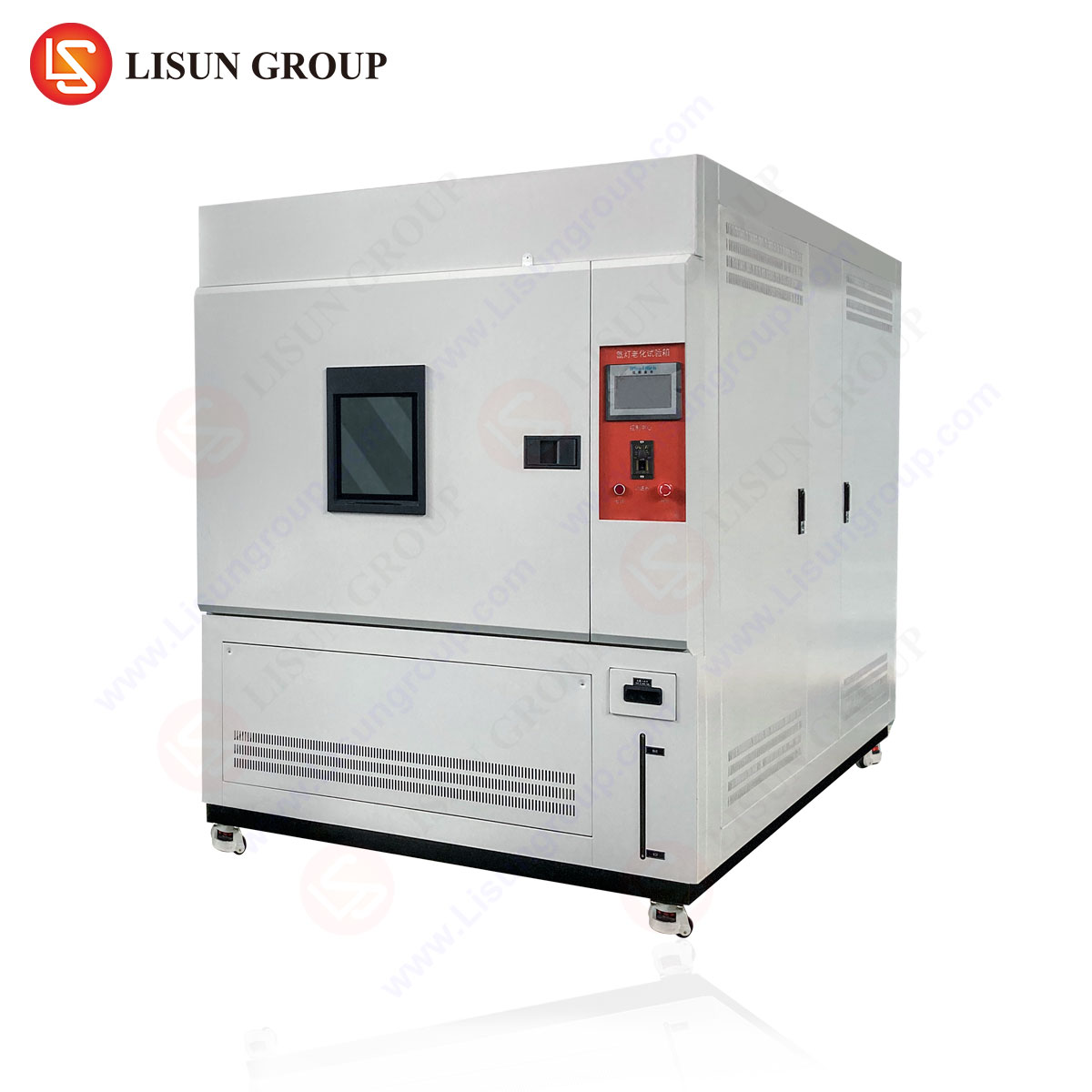
To execute ISO 4892-2 compliant testing with high fidelity, instrumentation must offer precision, reliability, and control. The LISUN XD-150LS Xenon Lamp Test Chamber is engineered to meet these stringent requirements, providing a controlled environment for accelerated weathering studies.
Testing Principles and Chamber Design: The XD-150LS utilizes a long-life, air-cooled xenon-arc lamp as the radiation source. Its optical system employs selectable filter combinations (e.g., Daylight, Window Glass) to modify the lamp’s spectral output per the standard’s requirements. A centrally mounted, rotating specimen rack ensures uniform irradiance on all samples. The chamber integrates independent control systems for irradiance (via a calibrated radiometer), Black Standard Temperature, chamber air temperature, and relative humidity. Programmable controllers allow for the setup of complex cyclic test profiles incorporating light, dark, and spray periods as mandated by ISO 4892-2 and other related standards like ASTM G155.
Key Specifications:
- Radiation Source: 1.5 kW Air-cooled Long-arc Xenon Lamp.
- Irradiance Control: Automatic, at 340 nm or 420 nm wavelength points. Adjustable range from 0.35 to 1.50 W/m²/nm (at 340 nm).
- Spectral Filters: Built-in filter wheel with multiple filter combinations.
- Temperature Range: BST: Ambient +10°C to 120°C (±2°C). Chamber Air: Ambient +10°C to 80°C (±1°C).
- Humidity Range: 10% to 95% RH (±5% RH).
- Water Spray System: Programmable, with controlled spray pressure and water purity.
- Specimen Capacity: Standard configuration for multiple flat panels or three-dimensional components.
Competitive Advantages in Industrial Application: The XD-150LS distinguishes itself through its balance of robust construction and precise control. Its air-cooled lamp system reduces operational complexity and cost compared to water-cooled alternatives. The integrated irradiance calibration system minimizes drift and ensures long-term repeatability. For industries such as automotive electronics and aerospace, where testing throughput and data reliability are critical, the chamber’s programmability and compliance with international standards provide a validated platform for material qualification and supplier quality audits.
Data Interpretation and Reporting Requirements
Results from ISO 4892-2 testing are quantitative and qualitative. Standard practice involves evaluating specimens at regular intervals against defined performance criteria. Common evaluation methods include:
- Colorimetry: Measuring ΔE (total color difference) using a spectrophotometer.
- Glossmetry: Tracking the percentage retention of specular gloss at 20°, 60°, or 85° angles.
- Visual Inspection: Documenting surface phenomena like chalking, cracking, blistering, or mold growth against photographic standards.
- Mechanical Testing: Assessing changes in tensile strength, elongation at break, or impact resistance.
The test report, a requirement of the standard, must comprehensively document all test parameters: chamber manufacturer and model (e.g., LISUN XD-150LS), filter type, irradiance level and control wavelength, temperature and humidity setpoints, cycle details, spray parameters, and any deviations from the standard. This meticulous documentation is vital for audit trails and technical dispute resolution.
Frequently Asked Questions (FAQ)
Q1: What is the typical lifespan of the xenon lamp in the LISUN XD-150LS, and how does lamp aging affect test consistency?
A: The xenon-arc lamp typically has a operational life of approximately 1,500 hours. As the lamp ages, its spectral output and intensity can drift. The XD-150LS mitigates this through its automatic irradiance control system, which continuously monitors and adjusts power to the lamp to maintain a constant irradiance at the user-selected wavelength (e.g., 340 nm), thereby ensuring consistent exposure conditions throughout the lamp’s life and across multiple tests.
Q2: For testing a medical device housing intended for indoor use near a window, which filter type should be selected in the XD-150LS?
A: For simulating exposure to sunlight filtered through window glass, the appropriate filter combination is the “Window Glass Filter.” This filter system selectively removes the short-wave ultraviolet radiation (below approximately 310 nm) that is blocked by typical soda-lime glass, providing a spectral match that is more representative of the device’s actual service environment than unfiltered xenon light.
Q3: How does controlling Black Standard Temperature (BST) differ from controlling Chamber Air Temperature, and why is BST often more critical?
A: Chamber Air Temperature controls the ambient air surrounding the specimens. Black Standard Temperature is measured by a sensor that absorbs radiation like a dark specimen. BST is often a better indicator of the actual surface temperature of an irradiated sample, which can be significantly higher than the ambient air due to radiant heating. Since degradation reaction rates are highly temperature-sensitive, precise BST control is crucial for achieving accurate and reproducible acceleration.
Q4: Can the XD-150LS chamber be used to run testing cycles defined in other standards, such as those from ASTM or AATCC?
A: Yes. The programmability of the XD-150LS allows users to configure complex test cycles that meet not only ISO 4892-2 but also other major international standards like ASTM G155 (xenon-arc exposure), AATCC TM16 (colorfastness to light), and various automotive OEM specifications. The key is the chamber’s ability to independently control and sequence irradiance, temperature, humidity, and spray parameters.
Q5: What are the primary considerations for sample preparation and mounting when testing irregularly shaped electrical components, such as connectors or sockets?
A: For three-dimensional components, it is essential to mount them in a manner that represents their worst-case service orientation to radiation. All critical surfaces should be exposed. The specimen rack must allow for adequate air circulation around the parts. Non-test surfaces may be masked with inert, UV-resistant material if necessary. The test report must detail the mounting methodology, as shadowing and heat buildup can significantly influence results.
